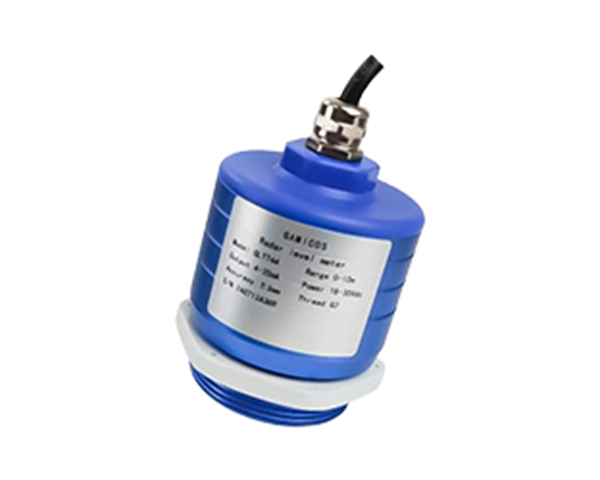
How to Protect Your Submersible Sensor from Lightning in Open-Field Installations
TIME: 2026.11.09AUTHOR: Olina LiNUMBER OF VIEWS 18
A lightning strike rarely destroys a submersible level sensor directly. The water is not the problem, and neither is the buried probe sitting quietly on the bottom of an open reservoir. The real killer is the surge that travels hundreds of meters of exposed signal cable, re-enters through the junction box, and finishes the job inside your data logger or PLC. If you have ever driven to a remote wellhead or river gauge after a summer storm and found a dead 4-20 mA loop, you already know how this story ends.
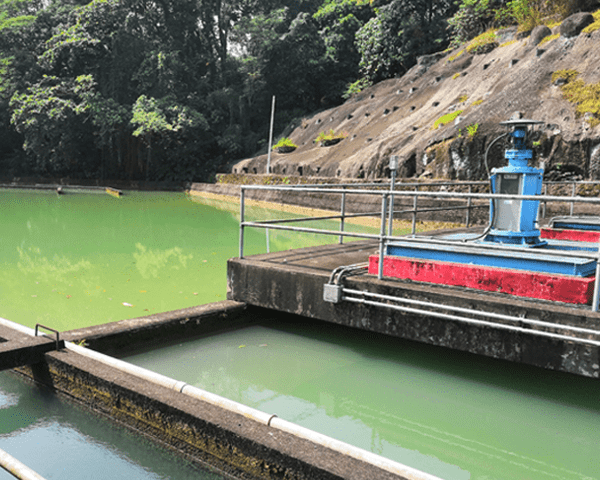
Open-field installations - rivers, lakes, reservoirs, irrigation canals, and remote water-diversion projects - combine the two worst ingredients for lightning damage: tall, isolated cabling and ungrounded or poorly grounded enclosures. This guide explains the physics in plain terms, walks through the protection strategies that actually work, and shows how to specify a sensor that survives the storm instead of becoming next season's spare-parts line item.
Why Open-Field Submersible Installations Are a Lightning Magnet
To protect a system, you first need to understand how lightning reaches it. A strike does not have to hit the tank. Four coupling mechanisms matter in the field:
Direct strike. Rare, but catastrophic. A bolt that hits the mast, pole, or nearby structure drives tens of kiloamperes into whatever is bonded to the same grounding system - including your sensor cable.
Conducted surge. The most common path. Lightning hits the ground or a power line kilometers away and the transient rides into your building along the same copper the signal cable shares. A single 4-20 mA wire running 300 m through open terrain is an excellent antenna and an even better conductor for the resulting ground-potential rise.
Inductive coupling. A nearby strike generates an intense, fast-changing magnetic field that induces thousands of volts onto any long loop of cable laid parallel to the ground. The longer the cable and the larger the loop area, the larger the induced voltage.
Ground-potential rise (GPR). When a strike injects current into the earth, local soil potential can rise tens of thousands of volts in microseconds. If the sensor is referenced to one ground and your logger to another, the difference appears across the loop and flashes over at the weakest insulation point.
The takeaway: your submersible sensor is rarely struck - it is connected to something that is.
The Anatomy of a Lightning-Induced Failure
Field engineers usually blame "lightning" for a failure that was really an inadequate grounding design. Understanding the typical sequence helps you fix the root cause rather than swap hardware repeatedly.
Lightning-induced failure anatomy — the typical sequence from surge entry to latent damage.
Stage
What Happens
Symptom at Commissioning
Surge enters cable
Transient travels along exposed signal / power wiring
Intermittent 4-20 mA dropout after storms
Flashover at enclosure
Voltage arcs to the PCB or terminal block at the junction box
Burnt trace, pitted terminal, dead transmitter
Ground-loop discharge
Potential difference between sensor ground and logger ground
Logger input card damaged, transmitter intact
Latent damage
Partial semiconductor stress that survives the strike
Slow drift or zero-shift weeks later
Note the last row. A sensor that "survived" a storm is often already degraded. A submersible transmitter with a tight long-term stability specification - in the range of +/-0.2% FS/year - gives you a baseline you can trend against; a sudden shift is your earliest warning of latent surge damage.
The Five-Layer Defense That Actually Works
No single device makes a system lightning-proof. Protection is a layered strategy, and every layer has to be continuous - a surge diverter is useless if the cable shield stops 50 meters short of it.
1. Bond a single, low-impedance ground electrode
Lightning current has to go somewhere, and you want it to reach earth through the lowest-resistance path you can build. Drive a copper or copper-bonded ground rod (typically 2.4 m, or a chemical ground electrode in high-resistivity soil) at the enclosure and tie it to the structure's main grounding grid. The goal is to keep every ground reference in the system at the same potential during the transient, so no dangerous voltage develops across the loop.
2. Install surge protective devices (SPDs) at both ends
Place a properly coordinated SPD at the field enclosure and a matching one at the control-room end. Use devices matched to your signal type:
Power side: a Type 2 SPD rated for your supply voltage, with a nominal discharge current of at least 10 kA per pole.
Signal side: gas-discharge or TVS-based diverters on the 4-20 mA, voltage, or RS485 line, clamping just above the normal operating range so the sensor sees a clean signal.
The diverters must connect to the bonded ground from step 1 with the shortest, straightest lead possible. A long "pigtail" lead defeats the whole device.
3. Control the cable shield - and only at one end
The cable shield is your first line of defense against inductive coupling, but it is also the most-miswired part of any installation. The classic field rule for analog loops:
Ground the cable shield at one end only (the control-room end) to drain induced noise without creating a 50/60 Hz ground loop.
For lightning, this rule gets nuanced: when shielding against a fast surge, an equipotential bond at both ends is preferable - provided both enclosures share the same bonded ground. Two ends, two independent grounds, is the worst configuration you can build.
Use armored or shielded signal cable, and bond the armor to ground at the enclosure. The shield only protects the conductors inside it if it is continuous end to end.
4. Break the loop where the cable leaves the field
The transition from outdoor cabling to indoor electronics is where surges get inside the building. Keep all outdoor and indoor cabling on opposite sides of the SPD / grounding busbar so surge current is diverted to earth before it reaches the PLC or logger. This is the core idea behind "zone-based" lightning protection: each boundary sheds part of the energy.
5. Route and isolate the cable physically
Avoid running the sensor cable parallel to power conductors; if you must cross, cross at 90 degrees.
Keep loops small. Every square meter of loop area is an antenna for induced voltage.
In open terrain, bury the cable rather than running it overhead when practical; earth shielding attenuates the magnetic field dramatically.
Why the Sensor Itself Matters for Open-Field Duty
Specification is the cheapest lightning insurance you can buy. In an exposed installation, choose a transmitter engineered for outdoor and harsh-environment service rather than adapting a laboratory-grade part. Three attributes matter most:
Sealed, ingress-protected housing. A submersible transmitter installed outdoors faces rain, condensation, and dust in addition to the probe-side water. An IP68 rating protects the probe end; a well-sealed field enclosure with a vent or drip loop protects the electronics end from moisture that silently corrodes the surge-protected circuitry.
Certified, rugged electronics. Explosion-proof and intrinsic-safety certification matters where the medium or site is hazardous, but the same robust potting and isolation that earns those certifications also gives the board a better chance to shrug off a transient.
A flexible, isolated output. A 4-20 mA two-wire loop with galvanic isolation is the field standard precisely because it tolerates noise, long runs, and ground differences. Where you must go digital, an RS485 output with proper line protection beats an unprotected voltage output every time over an open field.
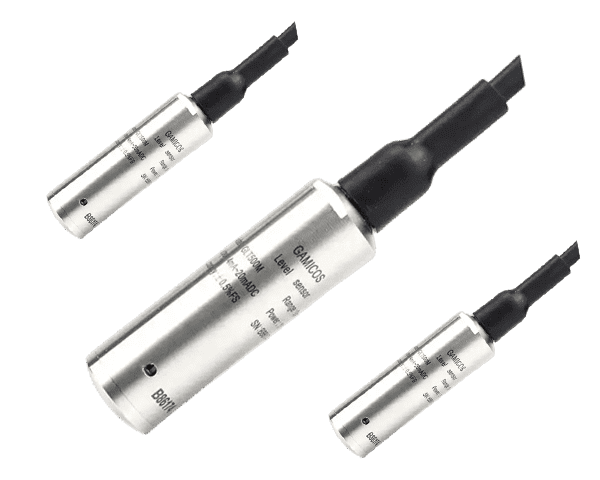
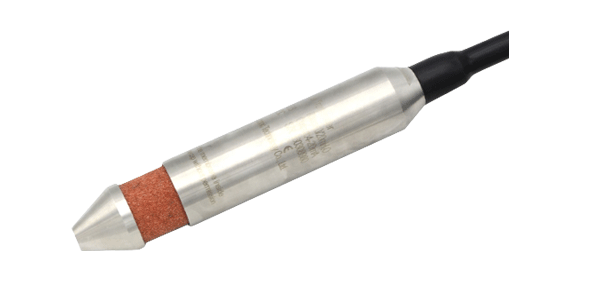
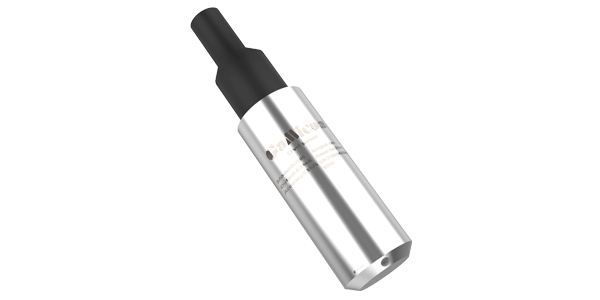
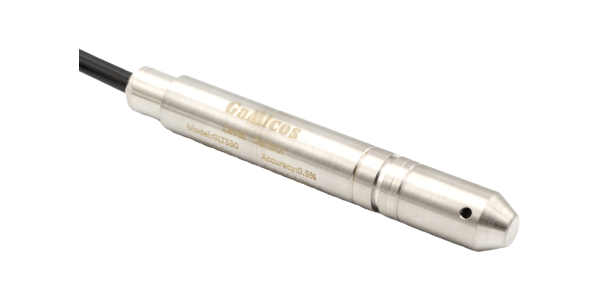
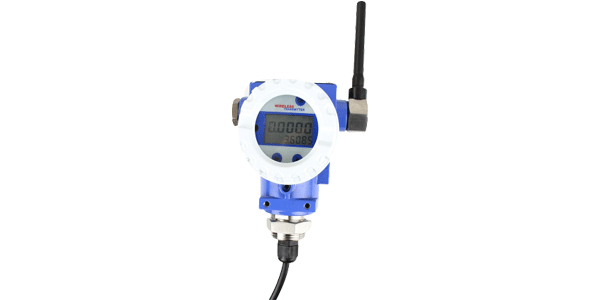
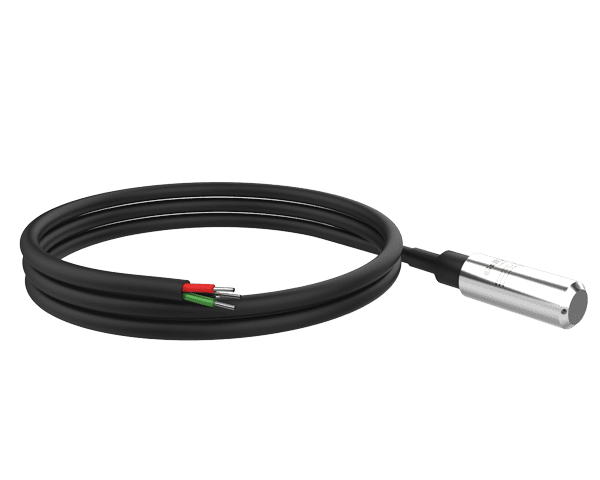
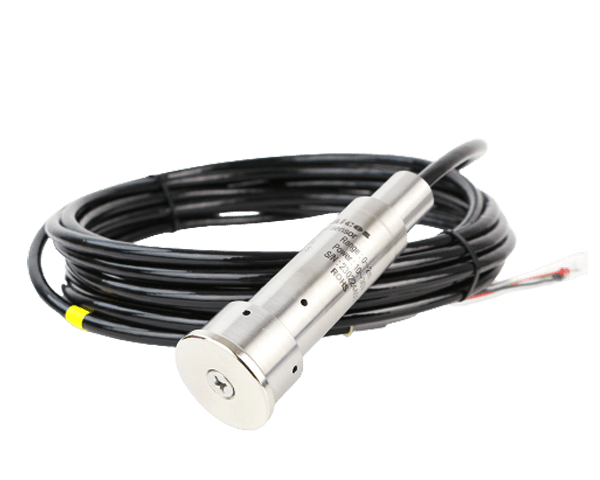
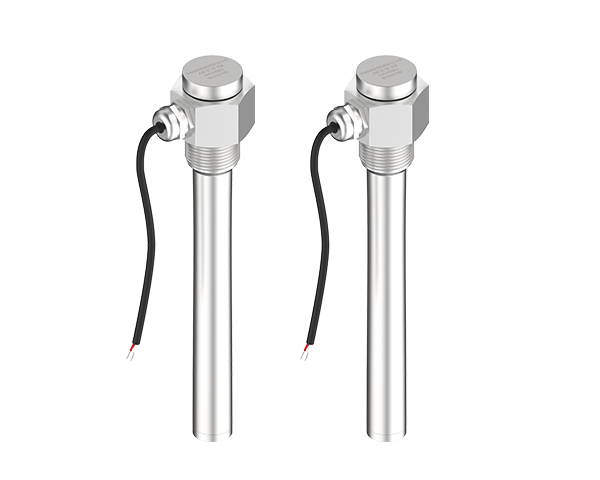
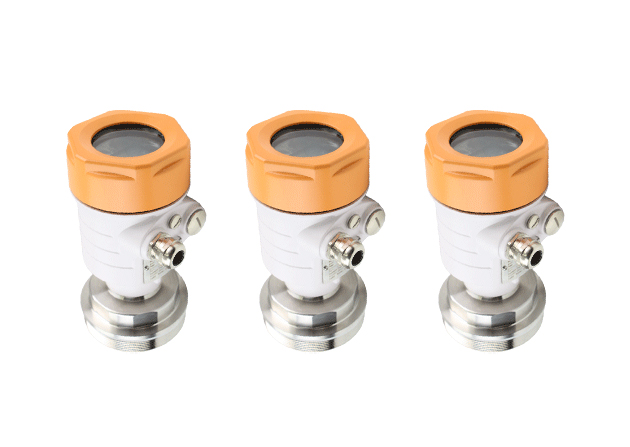
A good example of this outdoor-duty philosophy is the GaMicos GLT500 submersible level transmitter, designed specifically for exactly this class of open-field work - deep wells, river and lake monitoring, reservoirs, sewage, and remote irrigation and water-diversion projects. Its specification makes the protection logic concrete:
Open-field concerns mapped to GLT500 specifications.
Open-Field / Lightning Concern
How the GLT500 Responds
Moisture ingress at the probe
IP68 sealed submersible body
Hazardous or open outdoor sites
Explosion-proof, intrinsic-safety and CE certified electronics
Long exposed signal runs
4-20 mA (2-wire), 0-5/1-5 V, 0-10 V or isolated RS485 output options
Surge entry via the cable/enclosure
GaMicos flags outdoor duty explicitly - orders for outdoor areas should be marked "lightning," and the vendor recommends adding field surge-protection devices with reliable power-supply grounding
Physical shock at exposed gauge sites
Rated to 100 g shock and 20 g vibration
Detecting latent surge damage
+/-0.25% FS accuracy and +/-0.2% FS/year long-term stability give a tight, trendable baseline
Chemical / abrasion exposure
Housing in 304 or 316L SS with PE / PU / PTFE cable-jacket options
That "lightning" ordering note is the detail most vendors leave unsaid. GaMicos treats open-field installation as a distinct configuration - meaning the protection path (grounding, SPD coordination, isolation) is part of the design conversation from the moment you place the order, not something you improvise after the first storm kills the loop.
If you are deploying across reservoirs, river gauges, or long canal runs, this combination of an IP68 sealed body, isolated multi-format output, and an explicit outdoor/lightning-protected ordering option is the kind of baseline worth specifying from any manufacturer.
A Practical Protection Checklist
Run through this before you energize any open-field loop:
Single bonded ground electrode; enclosure, SPD ground bars, and cable armor all on one potential.
Type 2 SPD on the power line at the enclosure, discharge rating >= 10 kA/pole.
Signal-line SPDs at both field and control-room ends, matched to the output type.
Cable shield continuous end to end and grounded per your single-point / equipotential rule.
Outdoor and indoor cabling separated at the grounding busbar (zone boundary).
Cable routed away from power runs; loop area minimized; buried where feasible.
Sensor specified for outdoor duty (IP68, rugged, isolated output) and, where required, explicitly configured for lightning protection.
Baseline reading logged at commissioning so future drift flags latent damage.
Frequently Asked Questions
The sensor is underwater - isn't it automatically safe from lightning?
The probe is largely shielded by the water, but the cable and your electronics are not. Almost every "lightning killed my sensor" call is really "lightning killed the junction box or the logger input," with the current having traveled the cable to get there. Protect the loop, not just the probe.
Do I need a surge protector on a 4-20 mA two-wire loop?
Yes, in open terrain. A two-wire loop is not inherently surge-immune; a long run across open ground collects induced transients readily. Use a signal SPD clamped just above your normal 4-20 mA range, bonded to the same ground as everything else.
Should the cable shield be grounded at one end or both?
For normal analog noise, one end (control-room end) prevents ground loops. For genuine surge immunity, both ends - but only when both enclosures share a single bonded ground. Two ends on two independent grounds is the worst possible choice and actively invites damage.
A lightning rod on the pole solves the problem, right?
No. An air terminal intercepts direct strikes to the structure, but it cannot stop conducted or inductive surges along your cable, and a poorly bonded rod can actually raise ground potential near your enclosure. Use it as one layer, never as the whole design.
My sensor survived the storm. Can I trust it?
Not automatically. Partial semiconductor stress often survives the strike and then manifests as zero-shift or span drift over weeks. Trend a transmitter with a published long-term stability spec - a unit holding +/-0.2% FS/year makes a jump easy to spot - and inspect after major events.
Is RS485 better than 4-20 mA for lightning-prone sites?
On noise immunity, a properly isolated 4-20 mA loop is hard to beat because it is current-driven and tolerant of ground offsets. RS485 works well over distance but needs its own line protection and isolated transceivers. Either works - protection quality matters more than the protocol.
Summary
Lightning does not usually attack the submerged probe; it attacks the long, exposed path that connects the field to your control system - conducted surge, inductive coupling, and ground-potential rise. Reliable protection comes from a layered, continuous strategy: one bonded low-impedance ground, coordinated surge protective devices at both ends, disciplined single-point or equipotential shield grounding, zone boundaries that break the loop before it enters the building, and physical cable routing that minimizes loop area.
Specify the hardware for the duty as well as the chemistry. In open-field installations, that means an IP68-sealed, rugged, isolation-friendly transmitter configured for outdoor service - a class of device exemplified by the GaMicos GLT500, which couples an IP68 submersible body, isolated 4-20 mA/RS485 outputs, explosion-proof and intrinsic-safety certification, and an explicit "lightning" outdoor-ordering option with field surge-protection guidance. Get the grounding and SPD coordination right, choose a sensor designed for the open field, and the next storm becomes a non-event your maintenance budget will never hear about.
If you are planning an open-field level-monitoring deployment - river gauge, reservoir, well, or long canal run - share your cable run length, site grounding conditions, and hazardous-area classification with the GaMicos team, and they can confirm the right GLT500 configuration (including the lightning-protected outdoor build) against your actual site conditions.
Planning an open-field level monitoring deployment?