How to Select a Submersible Level Sensor for Hazardous Areas
TIME: 2026.11.18AUTHOR: OlinaNUMBER OF VIEWS 5
A submersible level sensor can only be used in a hazardous area if its entire electrical circuit is protected by a certified explosion-protection concept — most often intrinsic safety (Ex ia). The hazard zone (Zone 0, Zone 1 or Zone 2) does not change the sensor’s measuring principle; it dictates the protection level, the certification category, and the barrier or isolator you pair with it. Match the sensor to the liquid first, then match the protection concept to the zone, and the installation becomes both safe and compliant.
Why Hazardous Areas Are a Different Buying Decision Entirely
In a clean-water tank, a level sensor is a low-voltage measurement device. You drop it in, wire it up, read 4–20 mA and you are done. In a hazardous area the same probe is a potential ignition source: an electrical fault, a hot surface, or a spark at a connector can ignite the flammable gas, vapour or dust that surrounds it.
That single fact reframes the whole selection process. You are no longer asking only “will this survive the liquid?” but “will this, and everything wired to it, ever release enough energy — electrical or thermal — to ignite the surrounding atmosphere?” The medium, the zone classification, and the protection concept become three linked decisions that must all line up.
A submersible level sensor is genuinely convenient in these environments because it measures hydrostatic pressure at the bottom of the vessel — no moving parts, no penetrations at the top where vapour is richest, and no electronics sitting in the gas space. But convenience does not equal compliance. The protection concept is what makes it legal and safe.
First, Understand What Zone 0, Zone 1 and Zone 2 Actually Mean
The IEC 60079 / ATEX system classifies a hazardous area by how often a flammable atmosphere is present, not by how dangerous the substance is. Three zones apply to gases and vapours:
Zone 2 — Flammable atmosphere not expected in normal operation
If an explosive gas/air mixture occurs at all, it happens only infrequently and for a short time. This is the lowest-risk operating zone. Many tank vents, pump sumps near chemical storage, and bunded areas fall here.
Zone 1 — Flammable atmosphere likely in normal operation
An explosive atmosphere is expected to occur occasionally during regular running. The vapour space of an open chemical tank, the headspace of a fuel-transfer vessel, or the interior of a reactor during normal filling are typical Zone 1 locations.
Zone 0 — Flammable atmosphere present continuously or for long periods
An explosive gas/air mixture exists continuously, or for long, frequent periods — for example the permanent vapour space above a volatile solvent in a sealed tank, or inside a fuel storage vessel. Zone 0 is the highest-risk zone. Dust environments use a parallel scheme — Zone 20, 21, 22 — but this guide focuses on the gas/vapour zones a submersible sensor most often meets.
The practical rule: the lower the zone number, the more robust the required protection. A device approved for Zone 0 can usually be brought down into Zone 1 and Zone 2 as well; a device rated only for Zone 2 cannot be installed in Zone 0.
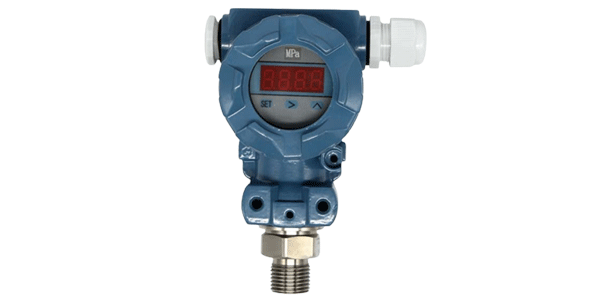
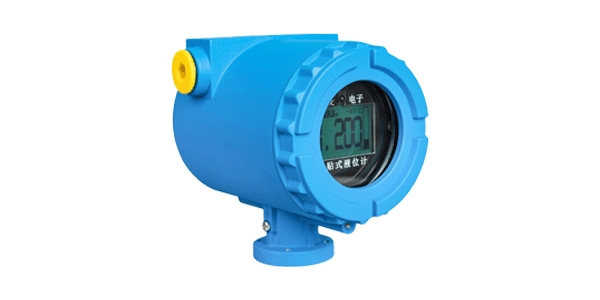
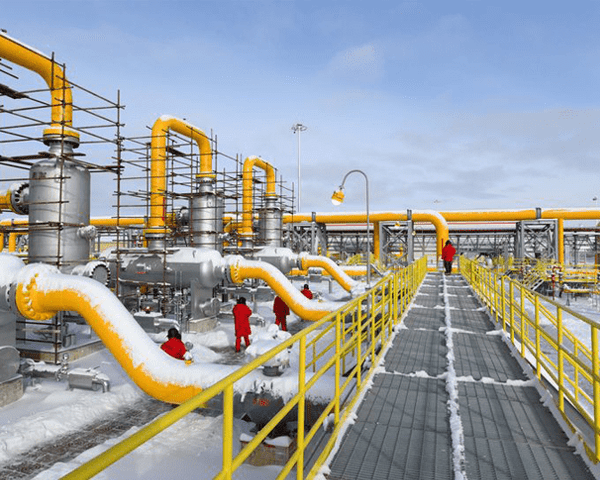
Image 1 — suggested: zone boundaries — Zone 0 inside the vessel, Zone 1 at openings, Zone 2 around it.
The Protection Concepts: How a Submerged Probe Is Made Safe
Three explosion-protection methods dominate submersible level measurement. You choose the concept the zone requires, then buy a sensor certified to that concept.
Intrinsic Safety — “ia”, “ib”, “ic”
Intrinsic safety limits the electrical energy in the circuit so that no spark or hot spot can ever carry enough energy to ignite the atmosphere, even under fault. This is the only concept permitted in Zone 0 when the higher “ia” level is used.
Ex ia — safe with two independent faults; mandatory for Zone 0.
Ex ib — safe with one fault; acceptable for Zone 1.
Ex ic — normal-operation safety; for Zone 2.
In practice, an intrinsically safe submersible sensor is wired through a galvanic isolator / intrinsic-safety barrier mounted in the safe area. The isolator caps the voltage and current that can ever reach the hazardous side, so the probe itself can be a simple, fully sealed passive device sitting in the liquid.
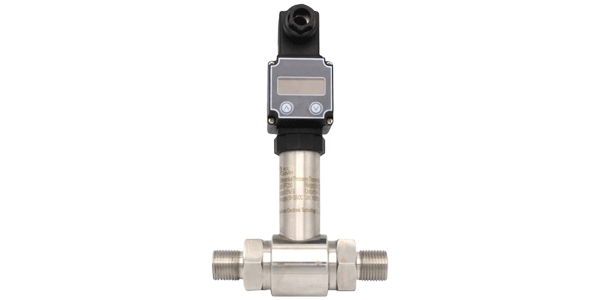
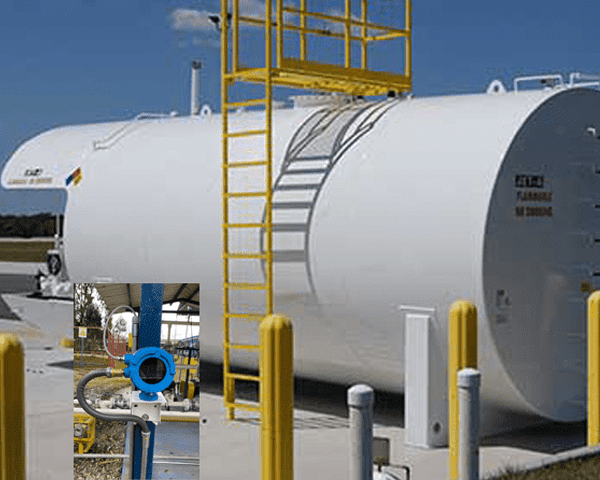
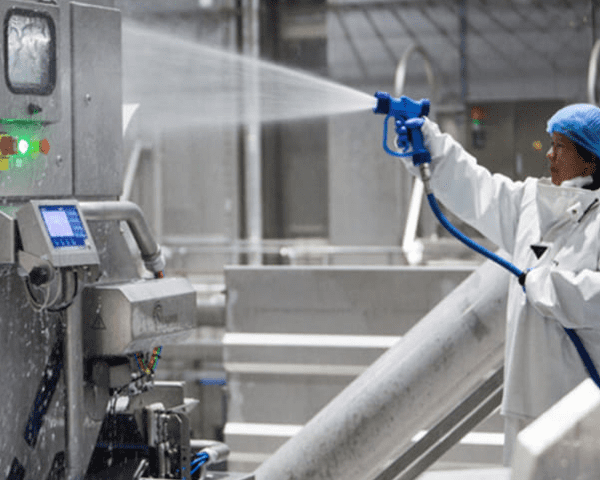
Image 2 — suggested: IS loop — probe in the zone, galvanic isolator on the safe side, then the PLC.
Flameproof / Pressurised Enclosure — “Ex d”
The electronics are housed in a strong enclosure that contains any internal explosion without letting flame escape. Common for the junction box or transmitter housing at the top of the probe, but the cable entry and temperature class still have to match the gas group.
Encapsulation and Increased Safety — “Ex m”, “Ex e”
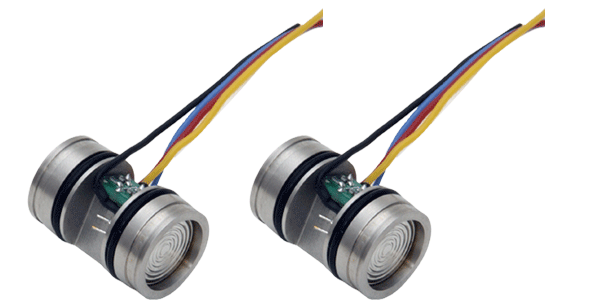
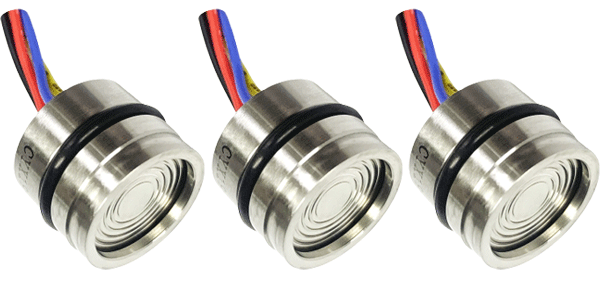
The sensing element is potted inside resin (Ex ma for Zone 0), and terminals are designed so no sparking occurs. Encapsulation suits the submerged probe body extremely well because the whole electronics package is already sealed in a potting compound for water resistance.
Reading the Certification Marking Correctly
A correct marking answers every question at once. It looks something like this:
II 2G Ex ia IIC T6 Gb
Group II — surface (non-mining) industry. Group I is mining.
Category 2G / 1G / 3G — 1G for Zone 0, 2G for Zone 1, 3G for Zone 2 (gas).
Ex ia / ib / ic — the protection concept and safety level.
IIC — the gas group. IIA (propane-like), IIB (ethylene), IIC (hydrogen/acetylene) — IIC is the most demanding; a device certified for IIC covers IIA and IIB too.
T6 — temperature class (T1–T6). T6 means the surface never exceeds 85 °C, the safest; it must stay below the auto-ignition temperature of the specific gas.
Gb / Ga — equipment protection level, matching the zone.
Buy the sensor whose category, concept, gas group and temperature class all cover — or exceed — the zone and substance you actually have. A marking that is one level weak anywhere in the string is a failed inspection and an unsafe installation.
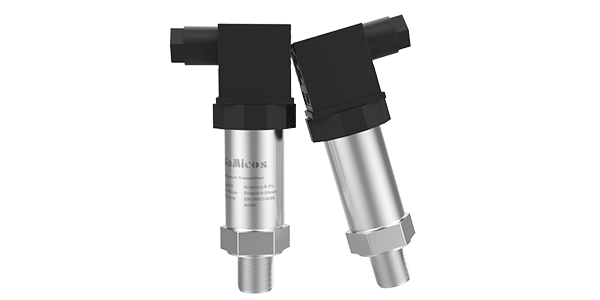
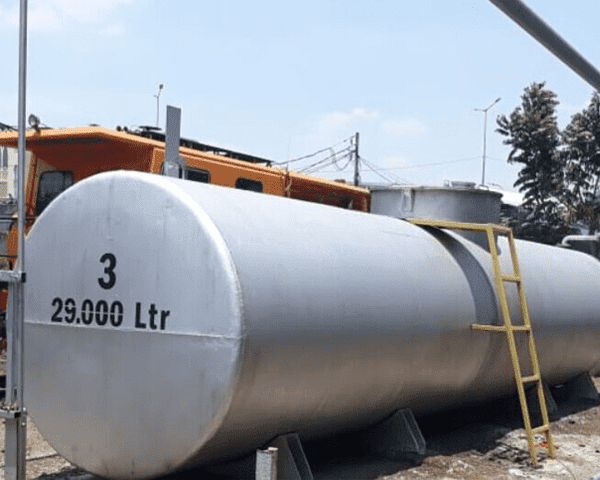
Image 3 — suggested: annotated nameplate — each field of the marking string mapped to what it controls.
Match the Sensor Body to the Medium — Then Certify It for the Zone
Here is where the physical hardware decision and the electrical-safety decision have to meet. Hazardous-area storage almost always involves a chemically aggressive or flammable medium, so the sensor housing material must survive it and the certification must suit the zone. Two examples from our own range show how these two layers combine.
For water-based and non-corrosive hazardous-area duty: GLT500 Water Tank Level Sensor
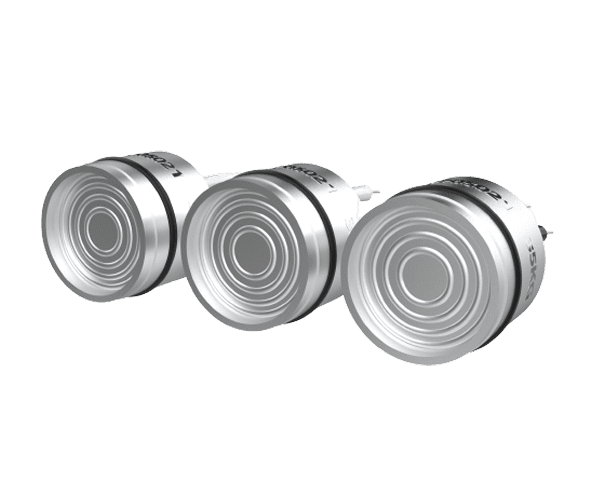
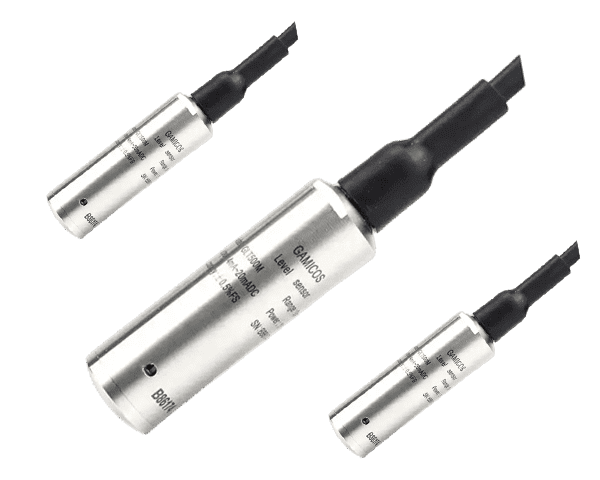
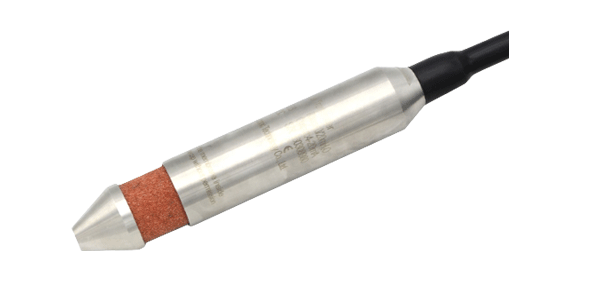
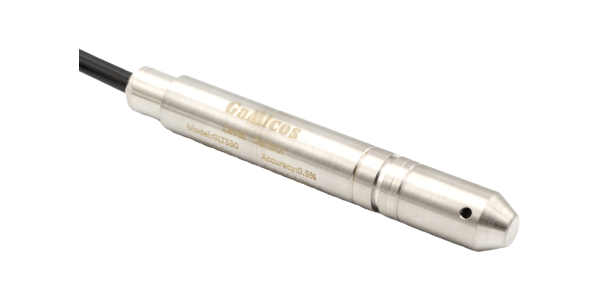
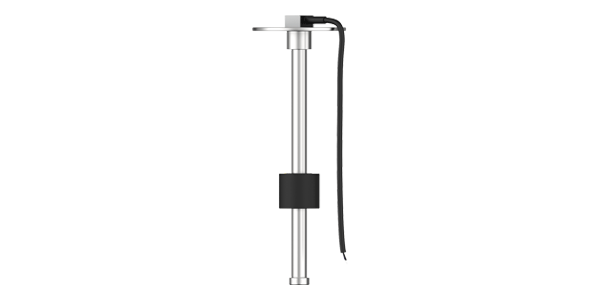
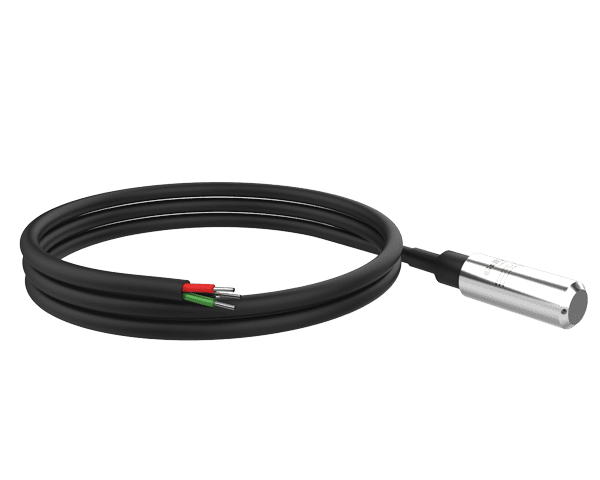
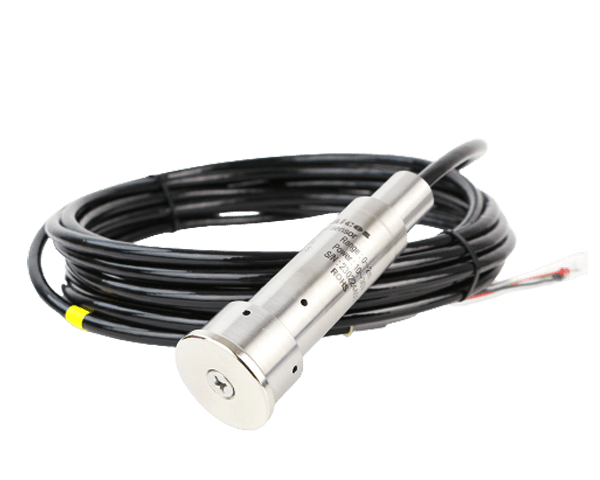
The GLT500 is a 316L stainless-steel, IP68 submersible level sensor covering 0–200 m with 4–20 mA or RS485 output. In most water, well, river and dam installations the surrounding area is non-hazardous, so no Ex marking is needed. But water level measurement also appears inside or adjacent to classified zones — a fire-water ring main routed through a fuel depot, a ballast or condensate sump in a Zone 2 process area, a bunded rainwater pit beneath a solvent store. In those cases the GLT500’s sealed, passive, low-power probe is exactly the right element to place behind an intrinsic-safety isolator: its rugged 316L body handles the liquid for years, while the barrier on the safe side supplies the Zone 2 (and, with the right isolator, deeper) protection concept. You specify the sensor for the liquid and the isolator for the zone.
GLT500 — 316L body, IP68, 0-200 m, 4-20 mA or RS485.
For corrosive, often flammable chemical liquids: GLT570 Anti-Corrosion Submersible Level Sensor
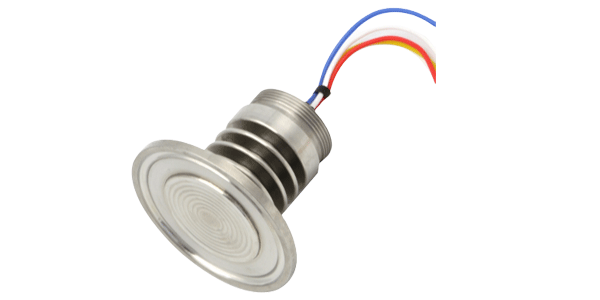
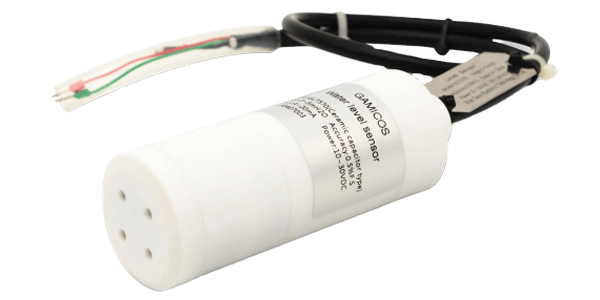
Aggressive media — acids, plating baths, solvent blends, petrochemical condensates — are the classic hazardous-area application, and they attack ordinary stainless. The GLT570 solves the chemical half of the problem with a PTFE or PVDF housing shell and a 0–50 m range, so the probe body itself is inert to media that would eat a 316L case in weeks. Because so many of these liquids also generate flammable vapour, the GLT570 is the natural base platform for a Zone 1 or Zone 2 chemical-tank installation: the fluoropolymer shell survives the liquid, and you complete the circuit with an intrinsically safe galvanic isolator sized to the zone and gas group. Chemical compatibility picks the sensor; the certification and isolator make it zone-legal.
GLT570 — PTFE / PVDF shell, 0-50 m, OEM options.
The takeaway: choose the housing that the medium demands, then specify the protection concept and isolator that the zone demands. They are two independent but inseparable layers of the same purchase.
A Zone-by-Zone Selection Cheat Sheet
Minimum protection concept, category and EPL for each gas zone.
Factor
Zone 2
Zone 1
Zone 0
Explosive atmosphere
Rare, short
Likely in normal use
Continuous / long periods
Minimum concept
Ex ic, Ex n, Ex e
Ex ib, Ex ia
Ex ia only
ATEX / IEC category
3G
2G
1G
EPL
3G / Gc
2G / Gb
1G / Ga
Submersible probe
Sealed probe + safe-area barrier
Sealed/potted probe + IS isolator
Fully potted Ex ia probe + certified IS isolator
Typical media
bunded water, condensate sumps
open chemical tanks, solvent vapour
volatile-solvent vapour space, fuel
Sensor fit (our range)
GLT500 behind a Zone-2 isolator
GLT570 (PTFE/PVDF) + IS isolator
custom Ex-ia probe + ia isolator
Design and Installation Practices That Keep the System Compliant
Buying a certified device is only half the job; how you install it determines whether the protection survives.
Separate intrinsically safe from non-IS wiring. IS loops must be physically and colour-separated from power cables so a fault cannot induce a high-energy spark on the safe side.
Match the barrier to the cable capacitance/inductance. Every IS isolator has a maximum allowable cable capacitance (Ca) and inductance (La). A long, undersized or wrong-type cable breaks the intrinsic safety and voids the certification.
Respect the gas group and temperature class. A T6 device is safe where T3 is required, never the reverse; IIC covers IIA/IIB, never the reverse.
Seal the cable entry with a certified gland. The probe’s cable gland must be rated for the zone and gas group, and maintain the enclosure IP rating.
Use a properly earthed reference. Submersible pressure sensors need atmospheric reference; in a sealed flammable vessel this must be handled without creating an ignition path.
Document and inspect. Keep the certificate, wiring diagram, and installation notes; hazardous-area installations are inspected and must be traceable to the certification.
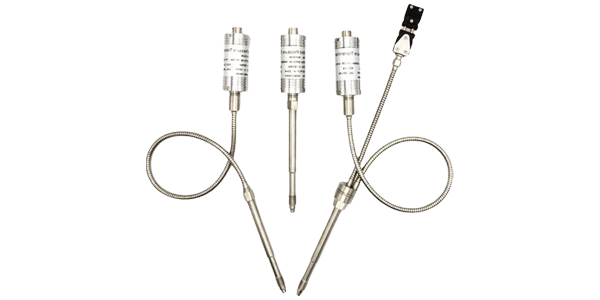
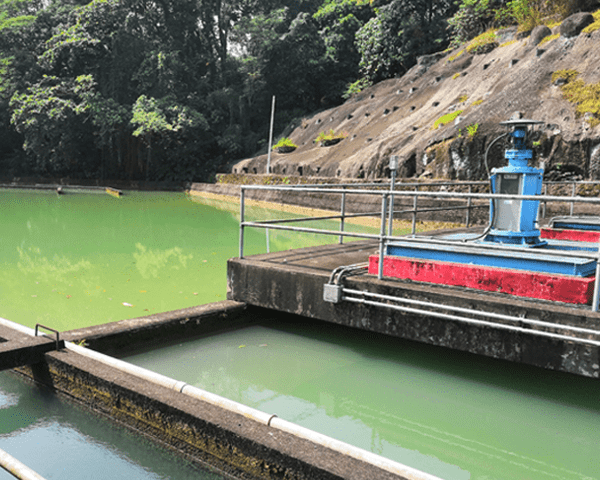
Image 4 — suggested: installation — certified gland, IS wiring separated and colour-coded.
Frequently Asked Questions
Can a submersible level sensor be used in Zone 0?
Yes — but only as a certified Ex ia (Category 1G) intrinsically safe circuit, powered through an appropriate intrinsic-safety isolator. A standard, non-certified submersible sensor can never go in Zone 0, however rugged or sealed its housing is.
Does an IP68 rating make a sensor explosion-proof?
No. IP68 means the body is watertight against immersion; it says nothing about ignition risk. Intrinsic safety (Ex ia/ib/ic) and IP sealing are completely different standards and both are usually required together in a hazardous area.
Is Zone 1 harder to satisfy than Zone 2?
Yes. Zone 1 expects a flammable atmosphere to occur in normal operation, so it requires at least Ex ib / Category 2G protection, versus Ex ic / Category 3G for Zone 2. Devices approved for the lower-numbered zones can generally be used in higher-numbered zones, but not the other way round.
Do I still need an isolator if the sensor is “intrinsically safe”?
Yes. “Intrinsically safe” describes a whole circuit, not just the probe. The probe is the field half; the galvanic isolator / barrier in the safe area is the other half. Install one without the other and the circuit is not intrinsically safe.
Which housing material is best for a corrosive flammable liquid?
For aggressive chemical media a fluoropolymer housing — PTFE or PVDF — outlasts stainless steel and is the better base for a Zone 1/2 installation. Our GLT570 Anti-Corrosion Submersible Level Sensor uses exactly this PTFE/PVDF construction, and it is wired with an IS isolator to satisfy the zone.
What is the difference between ATEX and IECEx?
ATEX is the European directive-based certification; IECEx is the international scheme. Both follow the IEC 60079 series for the zone/protection logic, so the technical markings are largely comparable — choose whichever your site’s jurisdiction requires.
The Short Version
Selecting a submersible level sensor for a hazardous area is two decisions stacked in one purchase. First pick the housing your liquid demands — rugged 316L for water and mild duty, as in the GLT500 Water Tank Level Sensor, or inert PTFE/PVDF for corrosive and flammable chemicals, as in the GLT570 Anti-Corrosion Submersible Level Sensor. Then pick the protection concept and certification your zone demands — Ex ic / Category 3G for Zone 2, Ex ib / 2G for Zone 1, and Ex ia / 1G intrinsically safe for Zone 0 — and complete every intrinsically safe circuit with a correctly sized galvanic isolator. Get both layers right, respect the gas group and temperature class, install with certified glands and separated IS wiring, and your submersible level measurement is both accurate and genuinely explosion-safe.
For project-specific hazardous-area selection — matching zone, gas group, medium and output signal to a certified configuration — contact our engineering team and we will specify the correct sensor and isolator combination for your application.