Why Some Submersible Sensors Are Only for Fresh Water
TIME: 2026.11.24AUTHOR: OlinaNUMBER OF VIEWS 9
If you have ever ordered a submersible level sensor for a crude oil application, only to have it fail within weeks, you already know the answer to this question the hard way. The sensor did not fail because it was "bad." It failed because it was engineered for a completely different chemical environment — and the salesperson who sold it to you either did not know the difference or did not care.
The truth is that "submersible level sensor" is not a single product category. It is a family of instruments that share a measurement principle (hydrostatic pressure) but diverge sharply in materials, sealing, and cable construction. A unit that runs flawlessly for a decade in a municipal water tower can dissolve, swell, or short-circuit in a matter of days if dropped into a crude oil sump or a produced-water separator.
This article explains exactly why that happens, what separates a fresh-water sensor from an oil-compatible one, and how to specify the right unit so you do not end up replacing sensors every quarter.
316Lminimum wetted material for oil
FKM / FFKMseals and O-rings, not nitrile
20–40 %purchase-price premium of the oil-rated unit
The Core Problem: Liquids Are Not Interchangeable
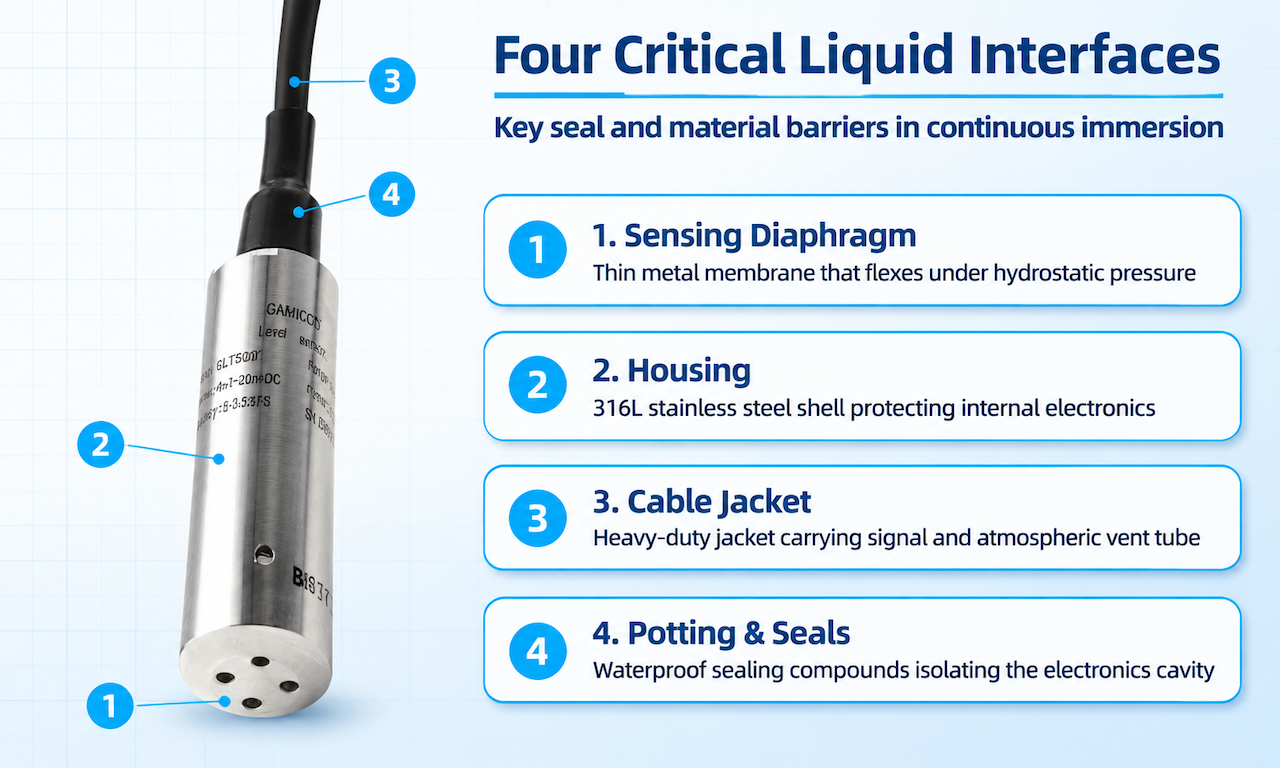
A submersible level sensor has four critical interfaces with the liquid it is measuring:
The sensing diaphragm — the thin metal membrane that flexes under pressure
The housing — the outer shell that protects the internal electronics
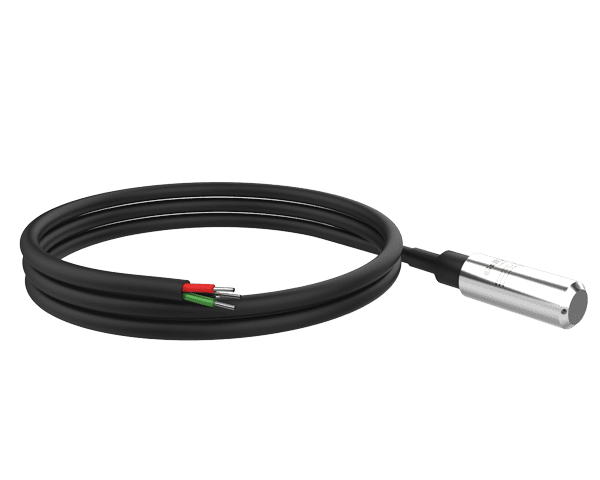
The cable jacket — the insulation that carries signal and vent while submerged
The potting and seals — the compounds that keep liquid out of the electronics cavity
Four interfaces — diaphragm, housing, cable jacket, potting and seals.
In fresh water, all four can be relatively inexpensive. Standard 304 stainless steel resists corrosion. PVC or standard polyurethane cable jacketing holds up. Silicone-based potting compounds remain stable. The chemistry is benign.
Crude oil, refined hydrocarbons, and produced water are not benign. They are aggressive solvents, they carry abrasive solids, and in many cases they contain hydrogen sulfide (H₂S), chlorides, or acids. Every material that works in water can fail in oil — and the failure mode is rarely obvious until it is too late.
What Actually Happens When You Use the Wrong Sensor
Understanding the failure modes is the fastest way to understand why the distinction matters.
Cable Jacket Swelling and Signal Loss
This is the most common failure in hydrocarbon service. Standard polyurethane or PVC cable jacketing absorbs light hydrocarbons. The jacket swells, becomes gelatinous, and loses its mechanical integrity. Within weeks, the cable is soft enough to crush under its own weight or the pressure of a pump intake. Once the jacket is compromised, oil wicks along the conductor strands and into the junction box — and the signal is gone.
An oil-compatible sensor uses a jacket rated for hydrocarbon exposure: typically a specialized polyurethane blend, PTFE (Teflon), or cross-linked polyethylene that resists swelling.
Diaphragm Corrosion and Drift
Fresh-water sensors often use 304 stainless steel diaphragms. In crude oil service — especially produced water from oilfield operations — chlorides and H₂S attack 304 SS rapidly. The diaphragm pits, thins, and eventually develops micro-leaks. The symptom is gradual: the reading drifts, becomes noisy, or suddenly jumps. By the time you notice, the sensor is already compromised.
Oil-compatible sensors specify 316L stainless steel as a minimum, and in high-chloride or H₂S environments, duplex stainless steel, Hastelloy C-276, or gold-plated diaphragms.
Seal and Potting Degradation
Hydrocarbons are solvents. Standard silicone or epoxy potting compounds can soften, crack, or dissolve when continuously exposed to crude oil or refined products. Once the potting degrades, the seal between the cable and the housing fails, and liquid enters the electronics cavity.
Oil-rated sensors use fluoroelastomer (Viton/FKM) or perfluoroelastomer (FFKM) seals and oil-resistant potting compounds that remain dimensionally stable in hydrocarbon service.
O-Ring Failure at the Cable Entry
Even if the housing and cable are rated for oil, a single standard nitrile (Buna-N) O-ring at the cable entry point can be the weak link. Nitrile swells in aromatic hydrocarbons. A swollen O-ring loses its compression force, and the seal fails. This is why oil-compatible sensors specify fluorocarbon or FFKM O-rings throughout — including the cable gland.
How to Specify an Oil-Compatible Submersible Sensor
When you are ordering a sensor for crude oil, refined products, or any hydrocarbon application, these are the non-negotiable specifications. If any one of them is missing, the sensor is not rated for the duty.
Component-by-component: what fresh water tolerates, and what hydrocarbon service demands.
Component
Fresh Water
Crude Oil / Hydrocarbons
Housing material
304 SS acceptable
316L SS minimum; duplex or Hastelloy for H₂S/chlorides
Diaphragm material
304 SS or 316L
316L SS minimum; gold-plated or Hastelloy for aggressive service
Cable jacket
PVC or standard PU
Oil-resistant PU, PTFE, or cross-linked PE
Seals and O-rings
Nitrile (Buna-N) acceptable
Viton (FKM) or FFKM (Kalrez) required
Potting compound
Standard silicone/epoxy
Oil-resistant epoxy or fluoroelastomer-based
Cable vent
Standard vent tube
Vented with hydrophobic membrane (prevents oil wicking)
Ingress protection
IP68
IP68 with oil-service validation
Where the GLT500 Fits in This Picture
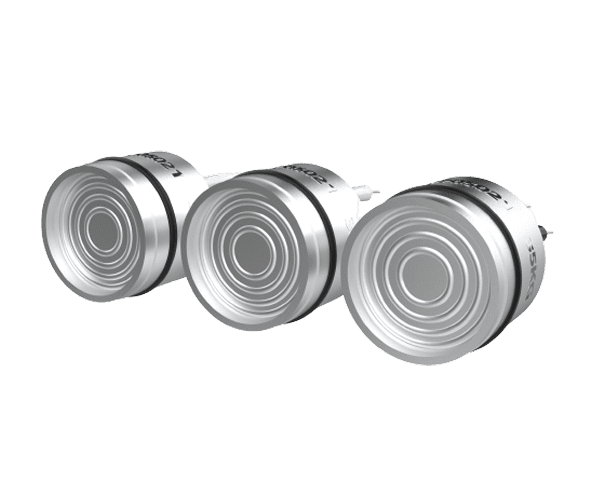
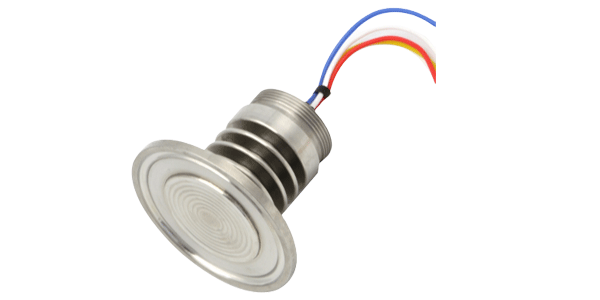
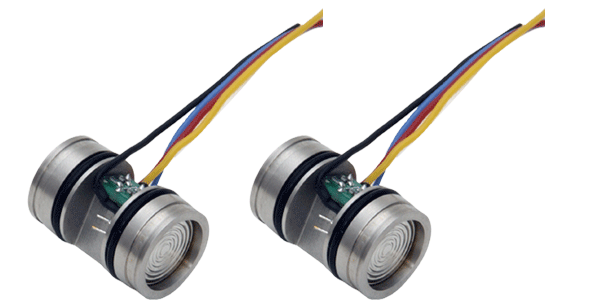
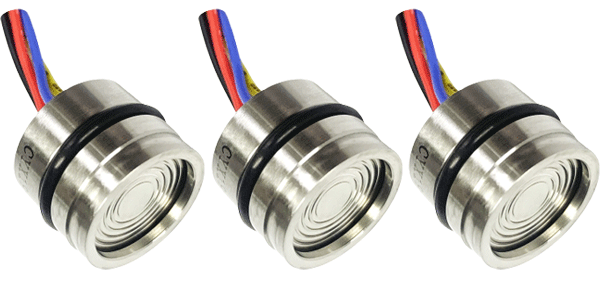
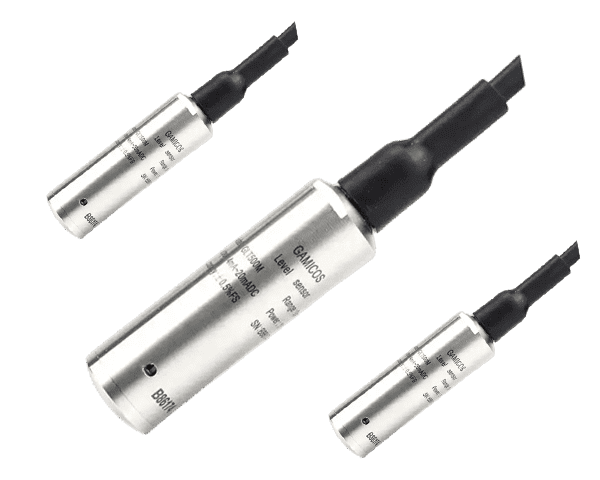
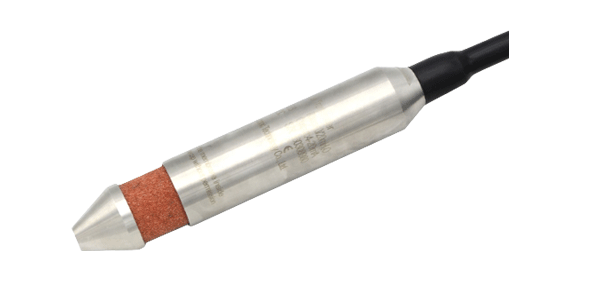
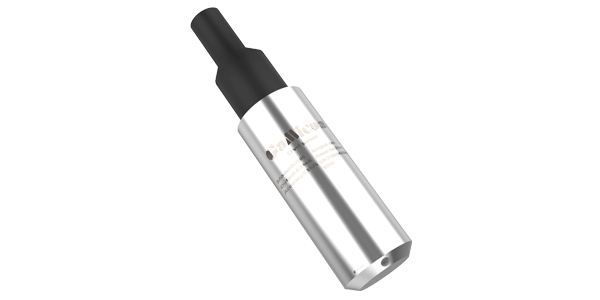
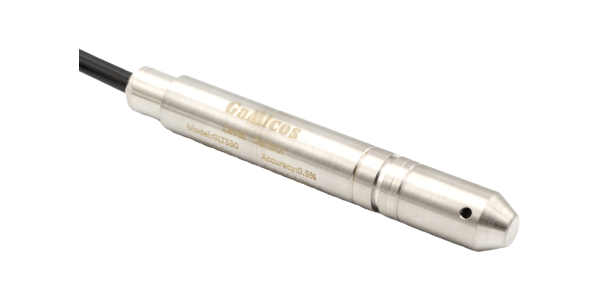
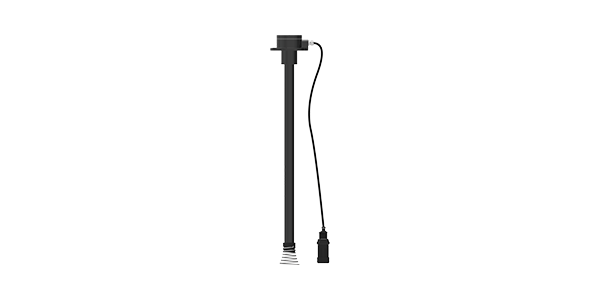
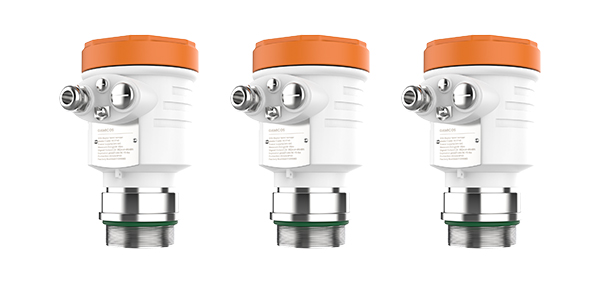
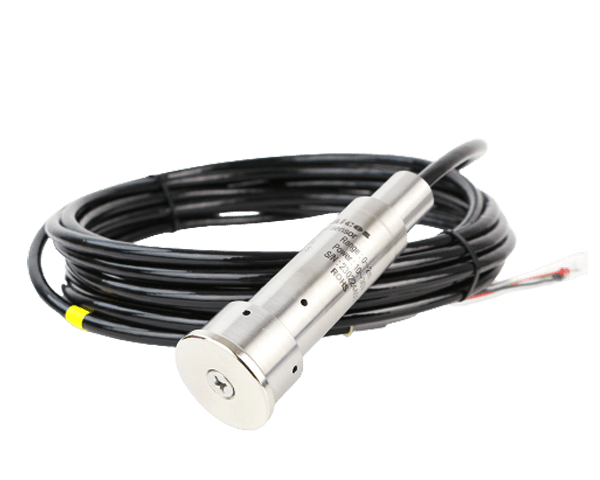
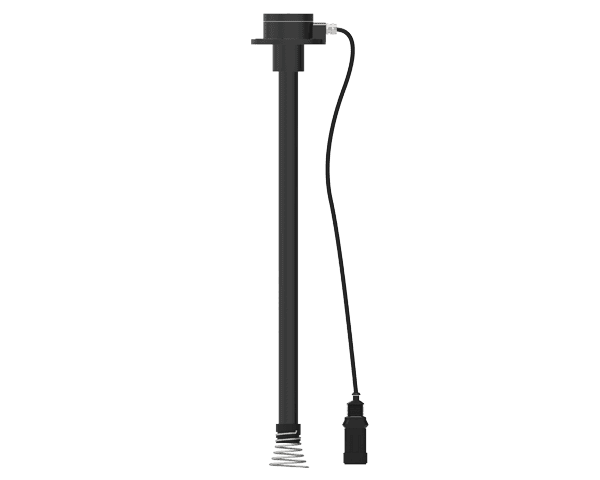
The GLT500 is not a fresh-water-only sensor. Its standard configuration — 316L stainless steel housing and diaphragm, oil-resistant cable jacketing, and fluorocarbon seals — makes it suitable for crude oil, produced water, and refined hydrocarbon service without modification.
This is one reason the GLT500 has become the default choice in oilfield applications. In produced-water separators, tank batteries, and mud pits, the sensor is continuously exposed to a mixture of crude, brine, and solids. The 316L wetted materials resist chloride pitting. The oil-resistant cable jacket does not swell. The anti-clogging pressure port prevents solids from packing into the sensing face — a critical feature in oilfield brine where scale and sand are constant.
For applications involving H₂S or high-temperature crude, the GLT500 can be specified with enhanced metallurgy and high-temperature seals. The point is that the base platform is already oil-rated; you are not starting from a fresh-water design and trying to patch it.
The Cost of Getting This Wrong
The price difference between a fresh-water sensor and an oil-compatible one is typically 20–40% at the point of purchase. That gap seems significant until you calculate the cost of failure.
A failed sensor in a crude oil application does not just mean replacing the unit. It means:
Downtime while the tank or vessel is taken offline for retrieval
Labor cost for a technician to pull, inspect, and replace the unit — often in hazardous-area conditions requiring permits
Process disruption if the level reading was feeding a pump control loop or a custody-transfer calculation
Safety risk if the failure was undetected and the tank overfilled or ran dry
In a single refinery or production facility, a single sensor failure can cost more than the entire purchase-price premium of specifying the correct unit from the start. Multiply that across a fleet of tanks, and the economics become unambiguous.
Frequently Asked Questions
Can I use a fresh-water sensor in diesel or gasoline?
No. Diesel and gasoline are aggressive solvents that will swell standard cable jacketing and degrade standard seals. Any refined hydrocarbon product requires an oil-compatible sensor with the same material specifications as crude oil service.
What about hydraulic oil or lubricating oil?
Hydraulic and lube oils are generally less aggressive than crude or refined fuels, but they still require oil-resistant seals and cable jacketing. A fresh-water sensor is not rated for continuous immersion in any petroleum-based fluid.
Is the GLT500 ATEX or IECEx certified for hazardous areas?
The GLT500 is available with hazardous-area certifications for use in explosive atmospheres. If your application involves crude oil, gasoline, or other flammable liquids, specify the certified variant — a standard industrial sensor is not rated for Zone 0 or Zone 1 areas.
Can one sensor handle both water and oil in the same facility?
Yes, if it is specified for oil service. An oil-compatible sensor with 316L wetted materials and fluorocarbon seals will perform correctly in fresh water as well. The reverse is not true — a fresh-water sensor cannot be used in oil.
How do I know if my application involves H₂S?
If you are measuring produced water, crude oil from a sour well, or any fluid from a reservoir known to contain sulfur compounds, assume H₂S is present unless your process chemistry team confirms otherwise. H₂S requires specific metallurgy (NACE MR0175 / ISO 15156 compliant) and should be specified at the time of order.
The Bottom Line
Submersible level sensors are not universal. The materials that survive a decade in a water tower will fail in months — sometimes days — in crude oil. The difference is not a marketing claim. It is a matter of metallurgy, polymer chemistry, and seal design.
If your application involves any hydrocarbon — crude, refined, produced water, or even hydraulic fluid — specify an oil-compatible sensor from the start. The GLT500's standard 316L construction, oil-resistant cable, and fluorocarbon sealing make it ready for hydrocarbon duty without modification.
The 20% premium you pay at the counter is the cheapest insurance you will ever buy against the downtime, labor, and safety costs of a sensor that was never designed for the liquid it was dropped into.
Measuring crude, produced water or refined product?