IP Rating for Submersible Sensors: IP68 Is Not One Number
TIME: 2026.11.24AUTHOR: Olina LiNUMBER OF VIEWS 7
If you have ever ordered a submersible level sensor rated "IP68," dropped it into a 30-meter well, and watched it fail within months, you have already discovered the inconvenient truth about IP ratings: IP68 is not a single, universal standard. It is a label with a built-in escape clause — and the manufacturer who wrote the datasheet gets to decide what that clause means.
Two sensors can both carry the IP68 badge. One might survive three years of continuous submersion in a deep well. The other might start leaking after a week. The difference is not marketing. It is test depth, test duration, and the sealing architecture underneath the label.
This article explains exactly how IP68 works, why the number alone is meaningless without context, and how to specify a submersible sensor that will still be measuring when you come back to check it.
1 bar / 10 mdepth becomes pressure
1 m / 30 minthe IPX7 floor IP68 must beat
2 numbersdepth + duration to demand
What IP68 Actually Means (And What It Does Not)
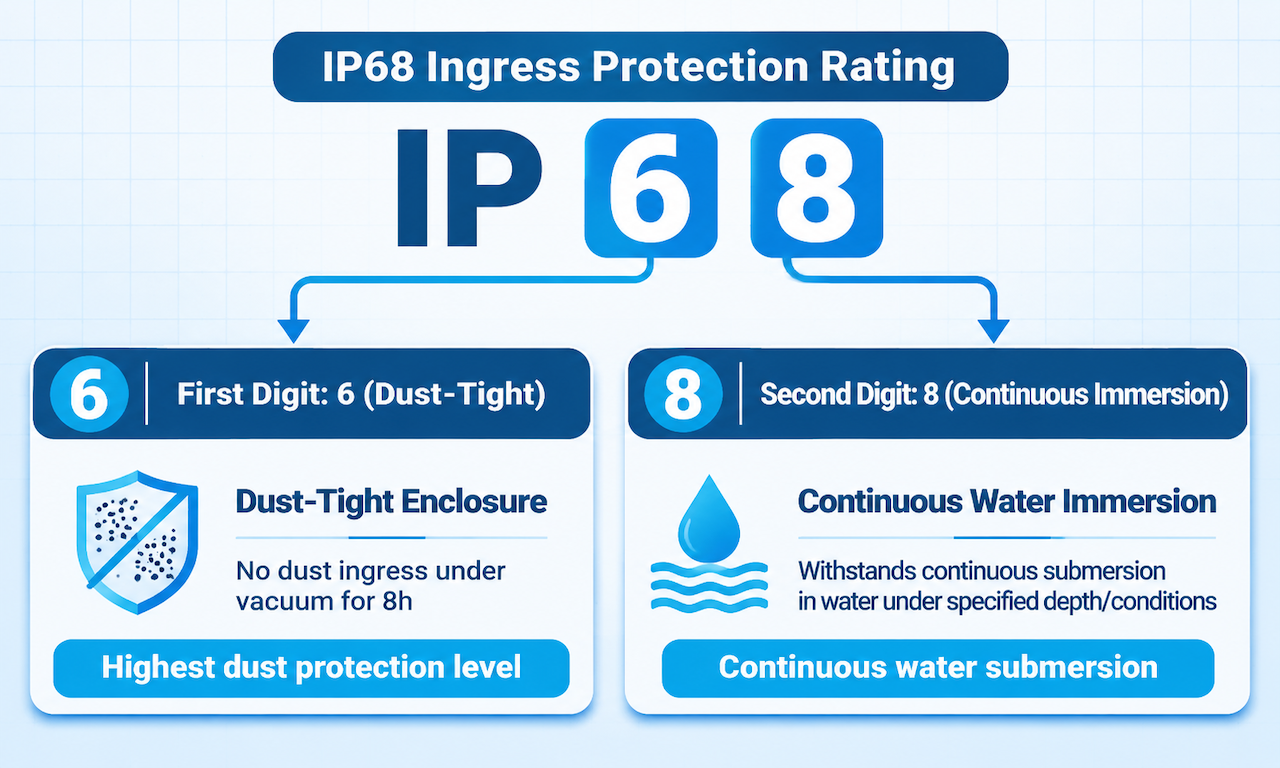
The IP code — Ingress Protection — is defined by IEC 60529 (and its Chinese equivalent, GB/T 4208). The two digits tell you two different things:
First digit (6): Dust protection. A "6" means the enclosure is completely dust-tight. No dust ingress under vacuum for 8 hours. This is the highest dust rating available, and it is unambiguous.
Second digit (8): Water protection. An "8" means the device can withstand continuous immersion in water — but only "under conditions specified by the manufacturer."
That last phrase is the entire problem. IEC 60529 does not define a specific depth or duration for IP68. It only requires that the conditions be more severe than IPX7 (which is 1 meter for 30 minutes). Beyond that, the manufacturer chooses the test parameters and declares them.
So when a datasheet says "IP68," it is technically incomplete. The meaningful specification is "IP68, tested at X meters for Y hours." Without those two numbers, the rating tells you almost nothing about real-world performance.
IP code anatomy — digit one is fixed, digit two leaves depth and time to the maker.
The Depth Problem: 1.5 Meters vs. 30 Meters
Pressure increases by approximately 1 bar for every 10 meters of water depth. A sensor tested at 1.5 meters experiences about 1.15 bar of absolute pressure. A sensor deployed at 30 meters experiences about 4 bar — nearly 3.5 times the force pressing against every seal, every weld, and every square centimeter of the housing.
A sensor that passes an IP68 test at 1.5 meters has demonstrated nothing about its ability to hold that seal at 30 meters. The O-ring compression that keeps water out at shallow depth may be insufficient under the higher differential pressure of a deep well. The housing may flex microscopically. The cable entry point — the most common failure location — may begin to weep.
This is why serious industrial sensor manufacturers specify their IP68 rating with a depth: "IP68, 3 m/24 h" or "IP68, 200 m continuous." If the datasheet does not state the depth, assume the test was shallow — and do not deploy it deep.
The Duration Problem: 30 Minutes vs. Three Years
Even if a sensor passes at the correct depth, the test duration matters enormously. Most IP68 certification tests run for 30 minutes to 24 hours. Some manufacturers push to 168 hours (7 days) as a benchmark of long-term sealing quality. But a submersible level sensor in a municipal well or a groundwater monitoring bore does not run for 24 hours. It runs for years.
Short-duration tests catch gross manufacturing defects: a pinhole in a weld, a mis-seated O-ring, a crack in the potting compound. They do not catch the slow failure modes that kill sensors in the field:
Seal creep: Elastomeric O-rings slowly deform under constant pressure, losing compression force over months
Potting degradation: Epoxy or silicone compounds can absorb trace moisture over long periods, eventually allowing capillary wicking along internal conductors
Cable jacket diffusion: Hydrocarbons and certain chemicals can slowly permeate even "resistant" jacketing, degrading insulation over years
Galvanic corrosion: In seawater or mineral-rich groundwater, dissimilar metals in the housing or cable armor can corrode over time, compromising the seal at the cable entry
A sensor tested for 30 minutes will pass all of these scenarios. A sensor tested for 1,000+ hours of continuous submersion — or backed by long-term field data — gives you a much more honest picture of what will happen when you leave it in the ground for three years.
What Separates a Real IP68 Sensor from a Label
When you are evaluating submersible level sensors, the IP68 number on the datasheet is the starting point, not the conclusion. Here is what actually determines whether the sensor will survive continuous submersion at depth.
1. Sealing Architecture
The weakest link in most submersible sensors is the cable-to-housing transition. A simple O-ring seal at the cable gland is adequate for shallow, short-term immersion. For deep or long-term duty, you need a multi-stage seal: an O-ring at the gland, a potting compound filling the cable entry cavity, and — ideally — a laser-welded or fully potted housing with no threaded joints at all.
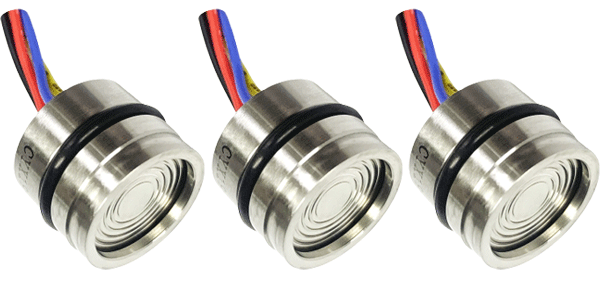
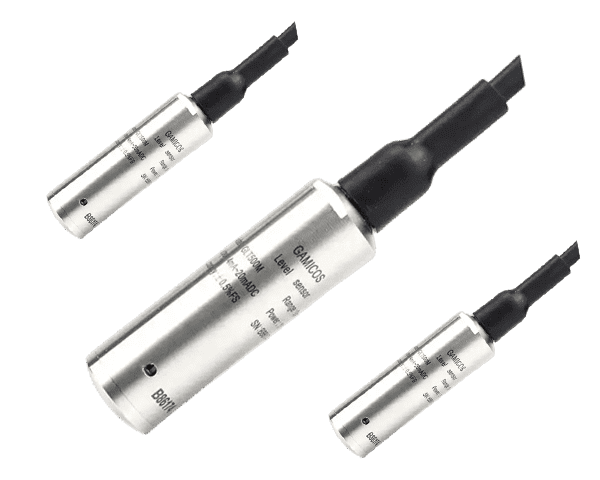
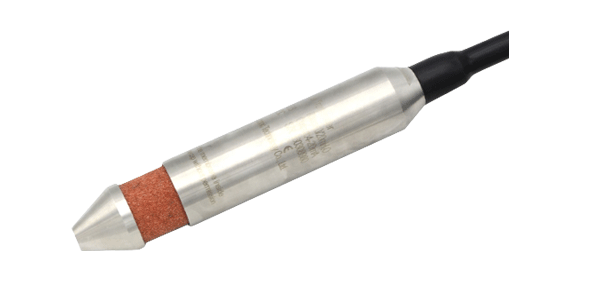
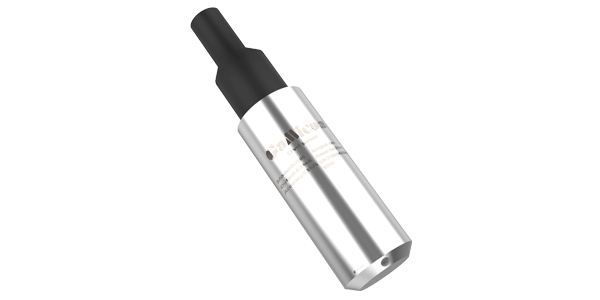
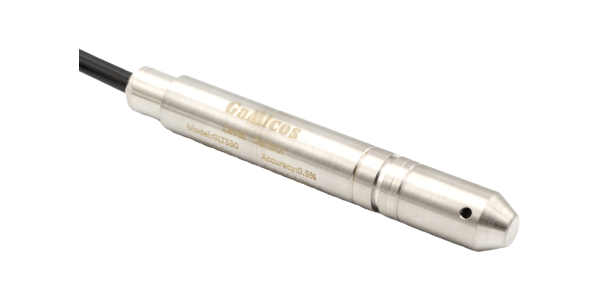
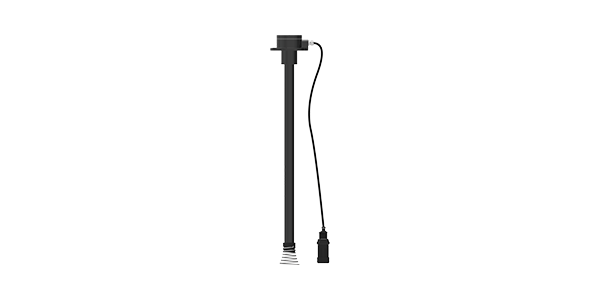
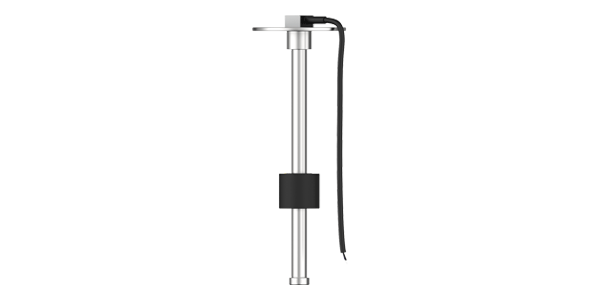
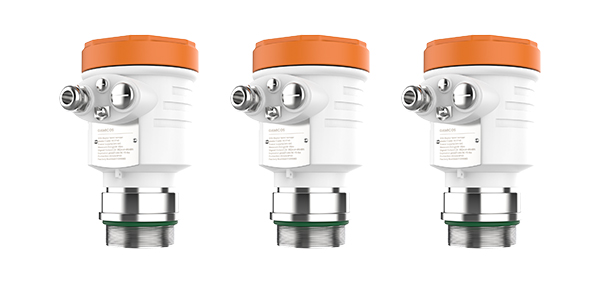
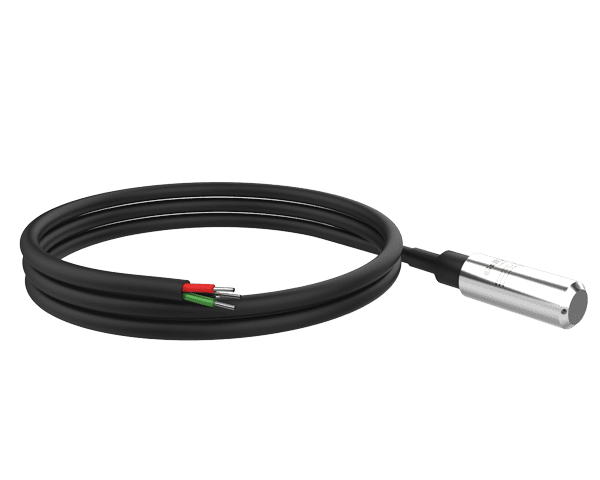
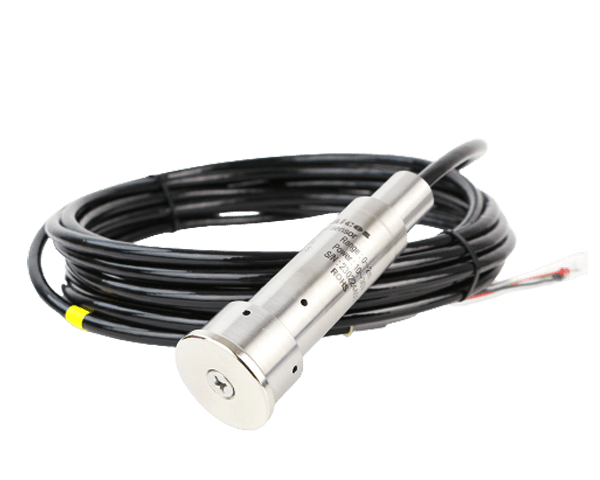
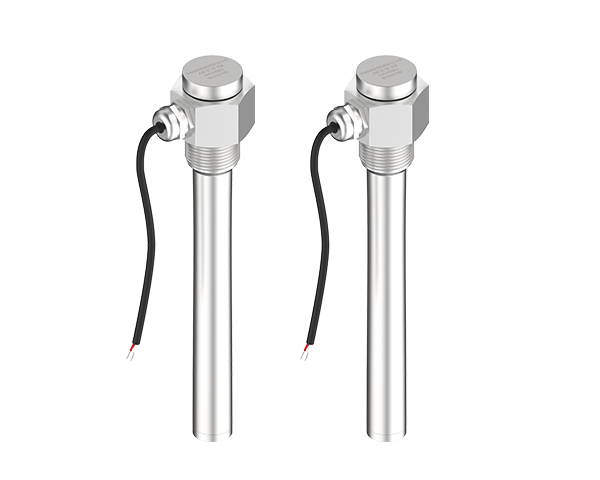
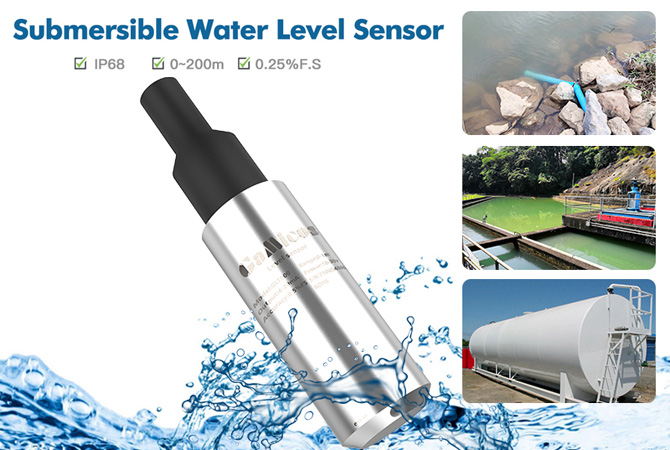
The GLT500 uses a fully potted, all-stainless housing with no threaded joints on the wetted section. The cable entry is sealed with a fluorocarbon O-ring and back-filled with oil-resistant potting compound. This architecture is designed for continuous submersion, not just a 30-minute lab test.
GLT500 — fully potted 316L body, fluorocarbon O-ring at the cable entry.
2. Housing Material and Construction
304 stainless steel is adequate for fresh water at shallow depth. For deep wells, seawater, or corrosive environments, 316L is the minimum specification. In high-chloride or H₂S service, duplex stainless steel or Hastelloy may be required.
Equally important is how the housing is assembled. Laser welding produces a continuous, hermetic seam with no crevices for corrosion to initiate. Threaded joints with O-rings are easier to manufacture but introduce a potential leak path that can degrade over years of thermal cycling and pressure exposure.
3. Cable Construction
The cable is not an accessory. In a submersible sensor, it is part of the pressure-sealed assembly. A standard PVC jacket will absorb water and hydrocarbons over time. A polyurethane (PU) jacket is significantly more resistant, but not all PU is equal — some formulations are rated for fresh water only, while others are specified for oil and chemical service.
For deep or long-term deployment, look for a cable with:
Aramid or steel wire tensile reinforcement (to prevent stretching under its own weight at depth)
A hydrophobic vent tube (to allow atmospheric reference without allowing liquid ingress)
A jacket material matched to your specific fluid (PU for water, specialized PU or PTFE for oil)
4. Potting and Internal Protection
The internal electronics of a submersible sensor are typically potted in epoxy or silicone to prevent condensation and provide mechanical protection. But potting compounds vary widely in their long-term water resistance. Some absorb trace moisture over years, eventually creating a conductive path. High-quality industrial sensors use moisture-resistant, oil-resistant potting compounds specifically formulated for continuous submersion.
How to Read an IP68 Datasheet Like an Engineer
When you are comparing submersible level sensors, ignore the marketing copy and go straight to these five data points. If any of them are missing, ask the manufacturer directly.
Five datasheet fields to check before you trust the IP68 badge, and the answer that should stop you.
What to Look For
Why It Matters
Red Flag
Test depth (e.g., "3 m" or "200 m")
Determines whether the sensor is rated for your actual installation depth
Datasheet says "IP68" with no depth specified
Test duration (e.g., "24 h" or "168 h")
Indicates whether the seal was tested under sustained pressure or just a quick dip
No duration given, or duration is only 30 minutes
Housing construction
Laser-welded or fully potted housings outperform threaded joints for long-term submersion
Threaded housing with a single O-ring seal
Cable jacket material
Must match your fluid: PU for water, specialized PU/PTFE for oil
Generic "PVC" or unspecified jacket material
Potting compound
Must be rated for continuous submersion in your specific fluid
No mention of potting material or its chemical resistance
Frequently Asked Questions
Is IP68 better than IP67?
For submersible applications, yes — but only if the IP68 test conditions are actually appropriate for your duty. IP67 is defined as 1 meter for 30 minutes. IP68 must exceed that, but the manufacturer chooses how much. An IP68 sensor tested at 1.5 meters for 1 hour is only marginally more robust than an IP67 sensor. An IP68 sensor tested at 200 meters for continuous submersion is in a different class entirely.
Can I use an IP68 sensor in seawater?
IP68 tests are typically conducted in fresh water. Seawater is more corrosive and conductive. If you are deploying in seawater, you need a sensor with 316L or better wetted materials, a corrosion-resistant cable jacket, and — ideally — a manufacturer who has validated the sensor in actual seawater service, not just a fresh-water lab test.
Does IP68 cover the cable too, or just the sensor head?
This is a critical distinction. Some manufacturers rate only the sensor probe as IP68 and use a standard, non-submersible cable. For continuous submersion, the entire assembly — probe, cable, and connector — must be rated for the duty. The GLT500's cable is an integral part of the sealed assembly, with a submersible-rated jacket and a hydrophobic vent path.
What if my well is 50 meters deep but the sensor is only tested to 10 meters?
Do not deploy it. The pressure at 50 meters is approximately 5 bar. A seal that holds at 1 bar may not hold at 5 bar over months of continuous exposure. Specify a sensor rated for at least your maximum operating depth, with margin.
Can I repair a submersible sensor that has failed its IP68 seal?
In most cases, no. Once water has entered the housing, the internal electronics are compromised. Corrosion begins immediately, and the potting compound may already be degraded. Replacement is almost always more reliable and more economical than repair.
The Bottom Line
IP68 is a useful label, but it is not a promise. It is a starting point for a conversation about test depth, test duration, sealing architecture, and material compatibility. A sensor that survives 30 minutes at 1.5 meters in a lab is not the same instrument as one designed for three years at 50 meters in a municipal well.
When you specify a submersible level sensor, ask for the full IP68 test parameters — depth and duration — and insist on a sealing architecture built for continuous submersion, not just a certification test. The GLT500's fully potted 316L housing, oil- and water-resistant cable, and multi-stage sealing are engineered for the years of continuous duty that a datasheet test can only simulate for a few hours.
The difference between a sensor that lasts and one that fails is not the IP number on the label. It is what is underneath it.