A buyer's checklist for matching wetted materials, range, output signal and protection rating to the liquid and site you actually have.
Technical buying guide · GAMICOS
Choosing the right submersible level sensor is not just about picking a model from a catalog. The wrong choice can lead to inaccurate readings, frequent maintenance, premature failure, or even safety risks. Before you place an order, ask yourself these seven questions. They will help you match the sensor to your application, avoid hidden costs, and make procurement faster and more reliable.
Quick answer: the seven questions at a glance
Summary of the seven specification decisions covered in this guide.
|
#
|
Question
|
What to confirm
|
Typical answer
|
|
1
|
What liquid are you measuring?
|
Name, composition, solids, corrosiveness, hygiene class
|
316L stainless steel wetted parts handle a broad range of aggressive media
|
|
2
|
What measuring range is required?
|
Maximum depth, minimum level, fluctuation, flood risk
|
A 0–200 mH2O range family covers shallow tanks through deep boreholes
|
|
3
|
What output signal does your system need?
|
PLC/SCADA input, cable run, protocol
|
4–20 mA, 0–10 V, RS485 Modbus or SDI-12
|
|
4
|
What accuracy do you actually need?
|
Control tolerance, billing use, acceptable drift
|
±0.25% FS with ±0.2% FS/year long-term stability
|
|
5
|
What is the installation environment like?
|
Location, flow and waves, weather, debris, hazardous area
|
IP68, −30 °C to 80 °C, slim body for narrow wells
|
|
6
|
What protection and material compatibility are required?
|
Medium aggressiveness, drinking-water contact, certification
|
IP68 plus 316L SS, intrinsic safety / explosion proof, CE
|
|
7
|
What are your maintenance and lifecycle expectations?
|
Access, calibration interval, spares, support, OEM scope
|
Low annual drift, available spare cables, documented service support
|
1. What Liquid Are You Measuring?
The first and most important question is: what is the sensor actually touching?
Submersible level sensors are used in many different liquids, including:
-
Clean water
-
Wastewater and sewage
-
Rainwater and stormwater
-
Diesel, oil, and fuel
-
Chemical solutions
-
Food-grade liquids
-
Groundwater and well water
-
Industrial process liquids
The liquid type directly affects the choice of wetted materials, cable type, and sensor design. For example, wastewater may contain solids that can damage delicate parts, while chemical liquids may require corrosion-resistant materials. If the sensor is used in fuel or oil, compatibility with hydrocarbons becomes critical.
Always confirm
-
The liquid name and composition
-
Whether it contains solids, sludge, or oil
-
Whether it is corrosive, abrasive, or viscous
-
Whether it is potable water, wastewater, or an industrial chemical
A sensor that works perfectly in clean water may fail quickly in aggressive chemicals or dirty wastewater. This is why material compatibility should be your first screening criterion — sensors built with 316L stainless steel wetted parts, for instance, can handle a much broader range of aggressive media than those made with standard materials.
2. What Is the Required Measuring Range?
Measuring range determines how deep the sensor can be installed and how accurately it can read the liquid level.
Common submersible level sensor ranges
-
0–5 m
-
0–10 m
-
0–20 m
-
0–50 m
-
0–100 m
-
Custom ranges for deep wells or tanks
If the range is too short, the sensor cannot measure the full tank or well depth. If the range is much higher than needed, you may lose measurement resolution and accuracy.
Before selecting a range, check
-
Maximum liquid depth
-
Minimum liquid level
-
Tank, well, sump, or river depth
-
Whether the liquid level fluctuates frequently
-
Whether there is a risk of flooding above the normal level
For deep wells, choose a sensor with enough range and a cable that can handle long-distance installation. For shallow tanks, a lower-range sensor may provide better accuracy. Many modern level transmitters offer a wide pressure range from 0 to 200 mH2O, which covers everything from small water tanks to deep boreholes in a single product family — simplifying procurement and spare parts management.
3. What Output Signal Does Your System Need?
The output signal must match your control system, PLC, SCADA, data logger, or display instrument. Choosing the wrong output can make installation difficult or require extra converters.
Common output signals compared
Output signal options and where each is normally used.
|
Output signal
|
Typical use
|
Notes
|
|
4–20 mA
|
Industrial control systems
|
Most common for long-distance transmission
|
|
0–10 V
|
PLCs and local displays
|
Suitable for shorter distances
|
|
RS485 Modbus
|
Digital monitoring systems
|
Allows multi-sensor communication
|
|
SDI-12
|
Environmental and hydrological monitoring
|
Often used in wells and rivers
|
|
0–5 V
|
Small controllers
|
Less common in industrial applications
|
If your system already uses 4–20 mA, choose a sensor with a 4–20 mA output. If you need remote monitoring or digital communication, RS485 Modbus or SDI-12 may be more suitable.
Also confirm
-
Power supply voltage
-
Cable length
-
Signal transmission distance
-
Whether a digital protocol is required
-
Whether the sensor needs to connect directly to a PLC or cloud gateway
Flexibility here matters. Some manufacturers now offer sensors with multiple output options — 4–20 mA, 0–10 V, and RS485 — all in one housing, so you can pick the configuration that fits your existing infrastructure without swapping out the entire sensor.
4. What Accuracy Do You Actually Need?
Not every application requires high-precision measurement. However, choosing accuracy too low can cause control errors, while choosing accuracy too high may increase cost unnecessarily.
Typical accuracy levels
-
±0.5% FS
-
±0.25% FS
-
±0.1% FS
-
Higher accuracy for specialized industrial or environmental applications
FS means full scale. For example, if a sensor has a 10 m range and ±0.25% FS accuracy, its possible error is related to the full 10 m range, not only the current liquid level.
Choose accuracy based on your real needs
-
Basic tank monitoring may not need very high accuracy.
-
Process control, dosing, or billing applications usually require higher accuracy.
-
Environmental monitoring may require stable long-term performance.
-
Flood warning systems need reliable readings during rapid level changes.
Also consider long-term stability. A sensor with good stability can maintain accuracy over time and reduce recalibration frequency. Look for specifications that guarantee annual drift no worse than ±0.2% FS per year — this is a hallmark of quality transmitters built for continuous duty.
5. What Is the Installation Environment Like?
Installation environment has a major impact on sensor performance and service life.
Ask these questions
-
Is the sensor installed in a tank, well, river, sump, or open channel?
-
Is the installation fixed or temporary?
-
Is there strong water flow, waves, or turbulence?
-
Will the sensor be exposed to sunlight, rain, or freezing temperatures?
-
Is there mud, sand, debris, or biological growth?
-
Is the area hazardous or explosive?
For wells, a slim sensor body and durable cable are important. For wastewater sumps, the sensor should resist fouling and mechanical damage. For rivers and open channels, protection against debris and fast water flow is essential. For fuel tanks, explosion-proof or intrinsically safe designs may be required.
Cable quality is also part of the installation environment. The cable should resist moisture, oil, abrasion, and long-term submersion. In cold regions, low-temperature cable performance should be checked. In hot environments, heat resistance becomes more important.
This is where IP68 protection rating becomes non-negotiable for any submersible application. Additionally, check the operating temperature range — sensors rated for −30 °C to 80 °C can handle most outdoor and industrial environments without performance degradation.
6. What Protection and Material Compatibility Are Required?
Submersible level sensors must survive continuous contact with liquids. That is why protection rating and material selection matter.
Protection and material checklist
-
IP68 protection for long-term submersion
-
Stainless steel housing for general water applications
-
Chemical-resistant materials for aggressive liquids
-
Oil-resistant cables for fuel and oil measurement
-
Food-grade materials for drinking water or food processing
-
Anti-corrosion design for wastewater and chemical tanks
If the sensor will be used in seawater, brine, or strong chemicals, standard materials may corrode over time. If the sensor is used in drinking water, confirm that the materials meet local safety and hygiene requirements.
Also check the mechanical details
-
Seal design
-
Cable entry structure
-
Pressure resistance
-
Temperature range
-
Resistance to condensation inside the cable
Certifications matter too. In hazardous environments, look for intrinsic safety (explosion-proof) certification and CE marking — these ensure the sensor has been independently tested and meets international safety and electromagnetic compatibility standards. The relevant references are IECEx for explosion-protected equipment, IEC 60529 for the IP code and EU CE marking for electromagnetic compatibility.
7. What Are Your Maintenance and Lifecycle Expectations?
The cheapest sensor is not always the most cost-effective. Maintenance, calibration, downtime, and replacement costs should all be considered.
Think about
-
How often the sensor can be accessed for maintenance
-
Whether cleaning or calibration is easy
-
Whether spare parts are available
-
Whether the supplier provides technical support
-
Whether the sensor can work continuously for long periods
-
Whether the application requires remote diagnostics
In wastewater or sludge applications, sensors may need periodic cleaning. In deep wells, maintenance is more difficult, so reliability becomes more important. In remote monitoring projects, stable long-term performance can save significant labor costs.
Confirm before purchasing
-
Expected service life
-
Calibration interval
-
Warranty terms
-
Availability of replacement cables or sensors
-
Supplier response time
-
Documentation such as datasheets, certificates, and installation guides
Many industrial buyers also value suppliers that offer OEM customization — the ability to tailor cable length, housing material, or output signal to your exact specification rather than accepting an off-the-shelf compromise.
Meet the GAMICOS GLT500: A Submersible Level Sensor Built for Real-World Conditions
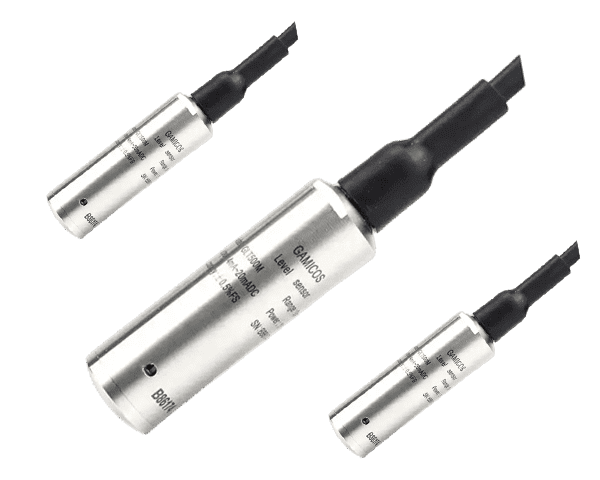
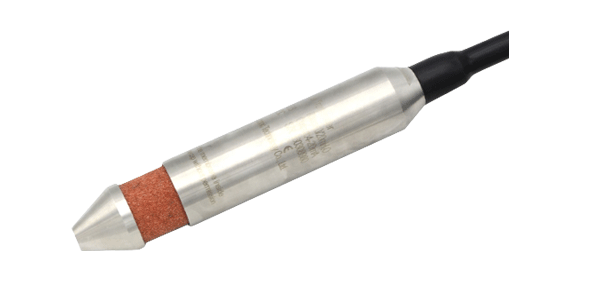
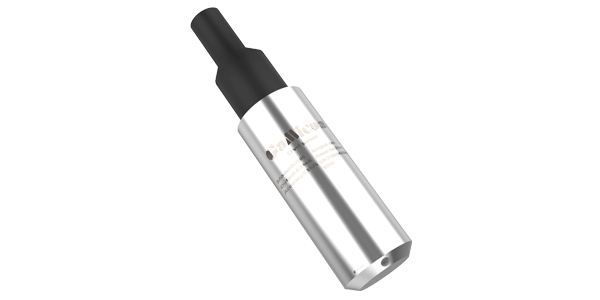
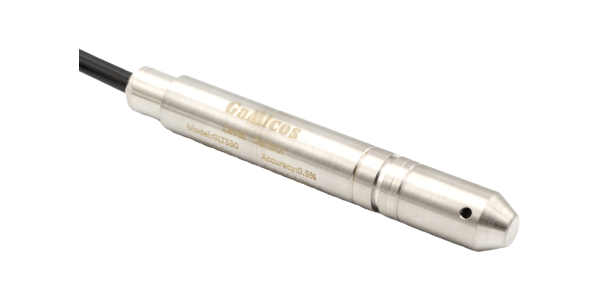
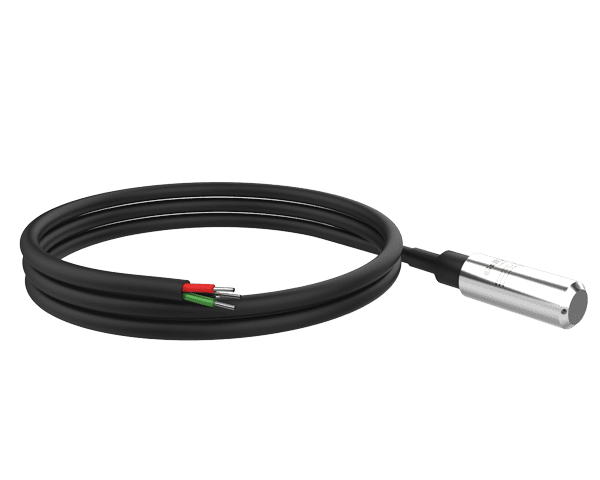
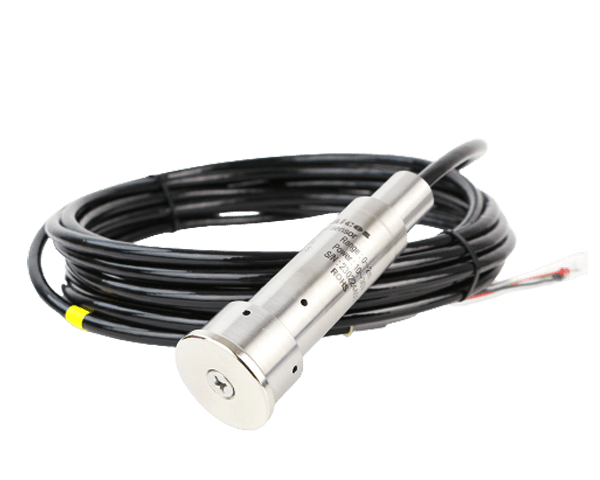
After walking through these seven questions, you probably have a clearer picture of what you need. Let us introduce a product that checks nearly every box: the GAMICOS GLT500 submersible level transmitter.
Why the GLT500 Stands Out
The GLT500 is engineered for versatility and durability across the widest possible range of applications — from deep well monitoring and river hydraulic observation to sewage treatment and reservoir management. Here is what makes it a compelling choice:
Broad Pressure Range for Every Scenario
With a pressure range spanning 0 to 1 mH2O up to 200 mH2O, the GLT500 covers everything from shallow open-channel flow to deep borehole measurement. You can standardize on one product family across multiple projects, simplifying procurement and inventory.
Accuracy That Holds Up Over Time
The GLT500 delivers ±0.25% FS accuracy (with ±0.5% FS standard version also available) and maintains long-term stability of ±0.2% FS per year. That means less frequent recalibration and more reliable data — critical for process control, billing, and environmental monitoring where drift costs money.
Flexible Output, Seamless Integration
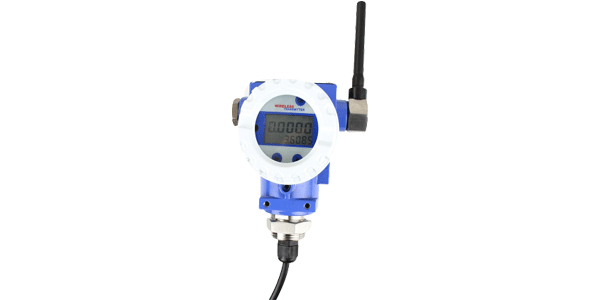
Whether your PLC speaks 4–20 mA, your SCADA system prefers 0–10 V, or you need digital communication via RS485, the GLT500 offers multiple output options: 4–20 mA, 0–5 V, 1–5 V, 0–10 V, 0.5–4.5 V, and RS485. The two-wire circulating loop is non-polarity, making wiring straightforward and reducing installation errors.
Built to Survive
-
IP68 protection ensures the sensor can be submerged continuously without water ingress
-
316L stainless steel wetted parts resist corrosion from a broad spectrum of media — ideal for wastewater, seawater, and chemical environments
-
Operating temperature range of −30 °C to 80 °C handles extreme cold and heat
-
High-intensity gas-filled cable provides superior protection against moisture and chemical attack
-
Intrinsic safety certification, explosion-proof certification, and CE marking give you confidence in hazardous environments
Compact Design, Wide Application
With a slim Φ27 mm body and 2088 housing, the GLT500 fits easily into narrow wells and tight spaces. It is widely used in:
-
Deep well level measurement
-
Hydraulic monitoring in rivers and seas
-
Sewage treatment plants
-
Muddy liquid level measurement
-
Liquid reservoir management
-
Water-saving irrigation systems
-
Water diversion projects
OEM Support for Custom Needs
Not every project fits a catalog spec. GAMICOS offers OEM customization — whether you need a specific cable length, a particular housing material (304 SS or 316L SS), or a custom pressure range, they can tailor the GLT500 to your exact requirements.
GLT500 Technical Specifications at a Glance
GLT500 submersible level transmitter — key specifications.
|
Specification
|
Detail
|
|
Sensor type
|
Pressure type (gauge)
|
|
Pressure range
|
0~1 mH2O to 200 mH2O
|
|
Accuracy
|
±0.5% FS (standard) / ±0.25% FS (optional)
|
|
Long-term stability
|
±0.2% FS/year
|
|
Protection rating
|
IP68
|
|
Operating temperature
|
−30 °C ~ 80 °C
|
|
Compensated temperature
|
−10 °C ~ 70 °C / −40 °C ~ 125 °C
|
|
Output signals
|
4~20 mA, 0~5 V, 1~5 V, 0~10 V, 0.5~4.5 V, RS485
|
|
Power supply
|
12~30 VDC / 5 VDC
|
|
Medium compatibility
|
316L stainless steel
|
|
Housing material
|
304 SS / 316L SS
|
|
Cable options
|
PE / PU / PTFE
|
|
Certifications
|
Intrinsic safety, explosion proof, CE
|
|
Dimensions
|
Φ27 × 103 mm (2088 housing)
|
|
OEM
|
Available
|
Frequently Asked Questions
Can a submersible level sensor be used in seawater?
Yes, but material selection is critical. Standard stainless steel may corrode in seawater over time. Choose a sensor with 316L stainless steel wetted parts and verify the cable is rated for saltwater exposure. The GLT500, for example, uses 316L SS throughout its medium-contact components, making it suitable for seawater and brine applications.
What does IP68 mean for a submersible sensor?
IP68 is the highest standard for dust and water protection. “6” means completely dust-tight, and “8” means the device can be continuously submerged in water under conditions specified by the manufacturer. For any long-term submersible application, IP68 should be your minimum requirement.
How often does a submersible level sensor need calibration?
Quality sensors with good long-term stability — such as those rated at ±0.2% FS per year — may only need calibration every 1–2 years depending on the application. Harsh environments or sensors with lower stability ratings may require more frequent calibration. Always check the manufacturer’s specification for recommended calibration intervals.
Can I use a submersible level sensor in a flowing river?
Yes. For flowing water applications, it is recommended to install the sensor inside a protective pipe or casing with intake holes to dampen the effect of waves and currents. Some sensors, like the GLT500, are specifically designed for river and lake monitoring and come with installation guidelines for flowing water conditions.
What is the difference between gauge pressure and absolute pressure level sensors?
A gauge pressure sensor measures pressure relative to atmospheric pressure — this is the most common type for submersible level measurement since it measures the weight of the liquid column above it. An absolute pressure sensor measures relative to a vacuum and is rarely needed for open-tank or well applications. The GLT500 is available in both gauge and absolute configurations.
Ready to Find Your Ideal Level Sensor?
Selecting the right submersible level sensor does not have to be complicated. By answering these seven questions upfront, you eliminate guesswork and ensure the sensor you choose will perform reliably in your specific application.
If you are looking for a versatile, certified, and long-lasting submersible level transmitter, explore the GAMICOS GLT500 — engineered for accuracy, built to survive, and customizable to your exact needs.
Contact GAMICOS today for a free consultation and quote
Our team will help you select the perfect configuration and get your project running faster.
References
-
IEC 60529 — Degrees of protection provided by enclosures (IP Code). CSA Group store.
-
IECEx System — Certification to standards relating to equipment for use in explosive atmospheres. iecex.com.
-
European Commission — CE marking. ec.europa.eu.
-
GAMICOS — GLT500 submersible water tank level sensor, product specifications. gamicos.com.