Installing a magnetostrictive level transmitter correctly — right probe length, vertical alignment, shielded wiring, solid grounding and a verified zero — is what delivers drift-free measurement with resolution down to 0.15 mm for years of maintenance-light operation. This guide walks engineering and procurement teams through installation best practices, maintenance and troubleshooting, and selection criteria.
01Best Practices for Installing Magnetostrictive Level Transmitters
Measurement accuracy, service life and overall reliability all depend directly on how well a magnetostrictive level transmitter is installed. Following a structured process reduces the risk of mistakes and secures dependable performance from commissioning through years of continuous use.
Pre-installation site assessment
Before mounting the transmitter, review the tank geometry, fluid properties and site environment. Measure the tank height accurately — this determines probe length. A probe that is too short stops measuring part of the range, while one that is too long makes installation harder and costs more. Confirm the process temperature range, viscosity, corrosiveness and vapour pressure.
Corrosive liquids require special probe materials such as Hastelloy or stainless steel 316L to prevent premature failure. Extreme temperatures call for transmitters rated for the process and floats that tolerate the operating temperature. Identify possible interference sources — large electrical equipment or radio-frequency devices that could disturb the signal — and make sure there is enough clearance for probe insertion and future servicing access.
Step-by-step installation procedure
Level the mounting flange with a spirit level and tighten to the specified torque before inserting the probe.
Mount the transmitter vertically so the probe projects down into the tank and the float can travel freely without binding on the probe. To prevent leaks, secure the fixing flange with seals rated for your process conditions. Wire the transmitter according to the manufacturer's instructions, and route cables away from high-voltage power lines to avoid electromagnetic interference. Use shielded cable when working near motors or variable-frequency drives.
Ground the electronics properly to protect the circuit and stabilise the signal. Configure the output settings — 4-20mA scaling, digital addressing or protocol parameters — to match your control system. Complete the initial zeroing by placing the float at the bottom of the tank and adjusting the zero point through the device interface. Set the full-scale span by moving the float to its highest level and adjusting again. With these two points set, the linear output is accurate across the entire measuring range.
Avoiding common installation pitfalls
Several familiar mistakes degrade performance. Float binding happens when the probe is not aligned correctly — use spirit levels to keep the probe perfectly straight during mounting. Excessive mechanical stress from over-tightened fittings can bend the probe or damage internal parts, so follow the torque specification exactly. Signal errors caused by electrical noise from nearby equipment are prevented by keeping the distances recommended in the technical documentation.
Ground loops degrade measurement quality and appear when grounding is done incorrectly. Where the process temperature differs significantly from ambient, the electronics may need insulation or heat tracing to keep working properly. Addressing these points during installation keeps the system running smoothly from the start and avoids costly downtime and rework. The GLT621/622 sensors offer a flexible probe option for tanks with internal obstacles, while rigid probes suit simple installations. Corrosion-resistant materials serve the chemical industry, where volatile or aggressive fluids make standard materials fail.
Pitfall
Root cause
Corrective action
Float binding
Probe not vertically aligned
Level the probe with a spirit level during mounting
Probe bending or internal damage
Over-tightened fittings
Follow the published torque specification exactly
Signal noise
Electrical interference from nearby equipment
Keep recommended clearances and use shielded cable
Ground loops
Improper grounding
Apply single-point grounding as specified by the manufacturer
Electronics overheating or condensation
Process-to-ambient temperature difference
Insulate or heat-trace the electronics housing
02Maintaining and Troubleshooting Magnetostrictive Level Transmitters
Magnetostrictive transmitters need less attention than most competing technologies, but a defined inspection and troubleshooting routine extends service life and keeps measurements trustworthy.
Routine maintenance practices
Carry out regular visual inspections for damage, corrosion or build-up on the exterior
Clean the probe exterior with solvents compatible with both the probe material and the process chemistry
Verify that electrical connections remain tight and free from corrosion, especially in wet areas
Inspect cable insulation for wear that could cause short circuits or signal loss
Periodically validate calibration by comparing transmitter output against a known level reference
Apply firmware updates when the manufacturer releases improvements, bug fixes or added protocol support
Diagnosing and resolving common issues
Work through possible causes systematically. Signal drift or sudden reading changes often point to a float problem — confirm the float moves freely and is not stuck or obstructed, and check for nearby equipment that could create magnetic interference affecting the float magnets. Incorrect span settings produce wrong values, so verify configuration parameters against the real tank dimensions. Electronics stop performing correctly outside their rated ranges, so monitor both ambient and process temperatures against the specified limits.
If problems persist after these checks, use the diagnostic tools included with advanced units, which are effective at identifying failed components or configuration errors. When an internal component fails beyond field repair, contact your supplier promptly. GAMICOS provides full technical support to resolve complex issues quickly and keep production running. Because magnetostrictive technology relies on a measurement principle with no contact or wear, the GLT621/622 sensors retain their mechanical integrity over time. That stability eliminates drift and the frequent re-tuning other sensor types require, which substantially lowers total cost of ownership.
03Selection and Procurement Guide
Selecting the right transmitter means weighing technical specifications, supplier capability and purchasing practicality against project requirements and budget.
Critical selection criteria
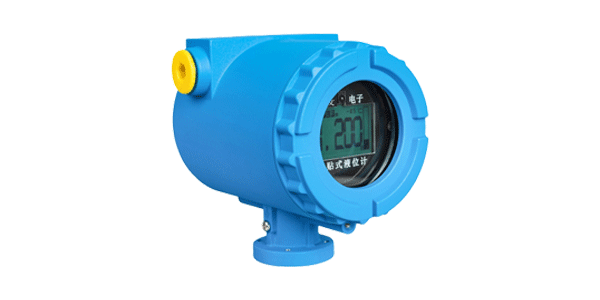
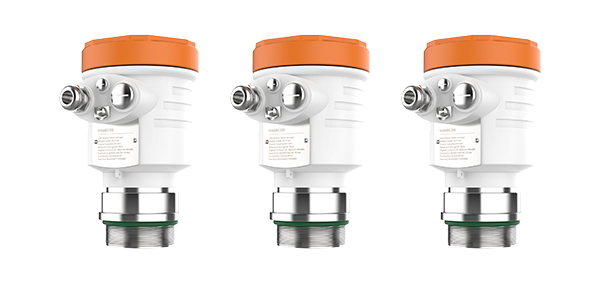
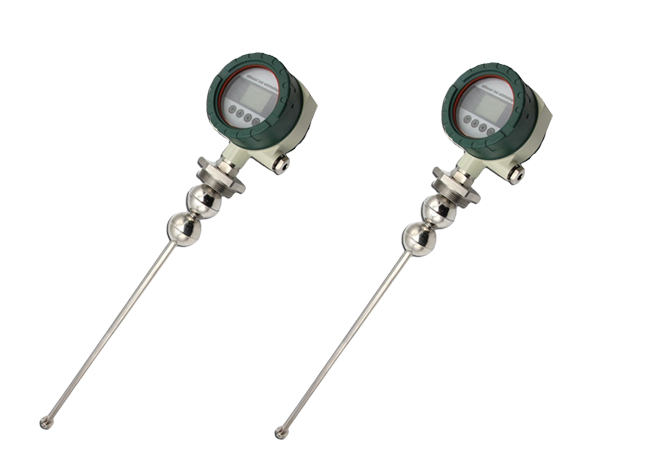
GLT621 magnetostrictive level transmitter — 0.15 mm resolution, no drift, no routine calibration.
Accuracy requirements differ by application: pharmaceutical batch handling demands tighter limits than bulk fuel storage. Most magnetostrictive level transmitters are accurate to within 0.5mm to 1mm, while high-end types such as the reach 0.1mm for critical measurements. Measuring range must cover tank level plus a safety margin — standard lengths run from 300mm to 6000mm, with custom lengths available. Confirm the signal output matches your existing control system: 4-20mA analog, HART, Modbus or Profibus.
Material selection follows fluid compatibility. Aggressive chemicals need specialist metals, while water and oil products work with standard stainless steel. In regulated industries certification matters: CE marking for European markets, FM or CSA approval for hazardous locations in North America, and ATEX certification for explosive atmospheres. Verify that certificates match the classification of the installation site and local regulations.
Parameter
Selection question
GLT621 / GLT622
Resolution
How fine must the reading be?
Up to 0.15 mm
Accuracy
Is this a critical batch or bulk storage?
Down to 0.1 mm for critical measurements
Measuring range
What is tank height plus safety margin?
300–6000 mm standard, custom lengths available
Output signal
What does the control system accept?
4-20mA, HART, Modbus, Profibus
Wetted materials
What does the fluid attack?
Stainless steel 316L, Hastelloy, titanium
Certification
How is the site classified?
CE, FM / CSA, ATEX
Comparing suppliers and procurement strategies
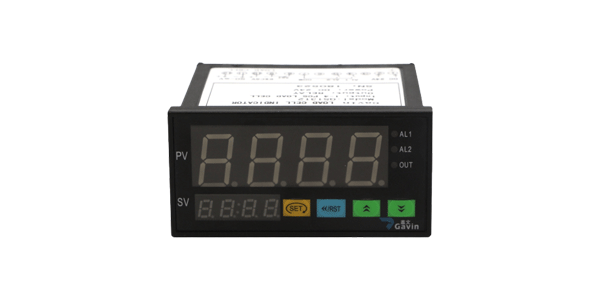
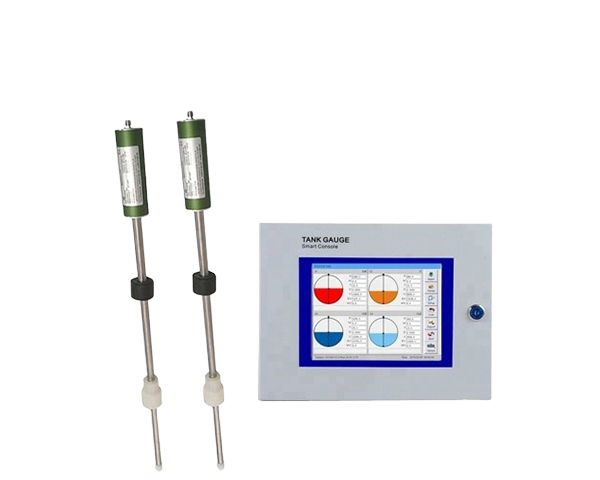
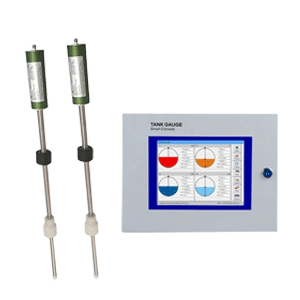
Probes plus smart console: real-time inventory visibility across multiple tanks.
Major automation suppliers such as Siemens, Endress+Hauser, Vega, Honeywell and Emerson build capable products with extensive support networks and warranties of 12 to 24 months. Procurement managers increasingly also weigh specialised manufacturers like GAMICOS, which combine advanced technology, open customization and competitive pricing.
When evaluating providers, check how quickly after-sales support responds — technical help during commissioning keeps installations from stalling. Bulk ordering lowers unit cost, and multi-site or phased rollouts can be arranged at volume rates. Delivery lead times range from immediate for stock items to 4–8 weeks for custom configurations, so align purchase plans with project timelines. Minimum order quantities can be difficult for smaller projects; suppliers with low or no MOQ stay flexible for pilot programmes and retrofits.
GAMICOS specialises in OEM and ODM services, giving distributor partners fully customised solutions covering sensor lengths, output protocols, mounting options and branded packaging. Its products ship to more than 100 countries and serve industries from chemical processing to offshore platforms.
Customization and application-specific considerations
Complex applications often need answers that catalogues do not carry. Multi-interface detection — monitoring more than one liquid layer simultaneously — requires sensors that handle multiple floats, offered in the GLT621/622 line. Installations in hazardous areas need explosion-proof housings and wiring approved for Zone 0 or Division 1 safety. High temperatures and pressures call for special materials and ruggedised housings.
Hygienic food and pharmaceutical applications require sanitary certification and smooth, polished surfaces that prevent bacterial growth. Where customization is needed, work with manufacturers that run their own engineering teams and flexible production. GAMICOS maintains a dedicated R&D department and multiple patents, enabling rapid prototyping and scalable output for specific project requirements. Suppliers holding ISO 9001 certification and products rated to recognised ingress protection standards IEC 60529 give procurement teams verifiable quality evidence.
04Conclusion
Magnetostrictive level transmitters are among the most accurate, stable and flexible level devices available for demanding industrial settings. Following a structured installation process secures best performance, and low maintenance requirements keep lifecycle costs down. On the procurement side, matching technical needs, supplier capability and customization options keeps investment aligned with business goals. The GLT621/622 line exemplifies next-generation magnetostrictive design, combining high-resolution measurement, multi-interface capability and durable construction to meet strict process requirements.
05FAQ
How do temperature fluctuations affect magnetostrictive level transmitter accuracy?
Changes in temperature affect both mechanical and electronic parts. Most industrial-grade transmitters work consistently from −40°C to +85°C, and some types tolerate higher. Process temperature alters float density and probe dimensions, but quality devices include temperature compensation that holds accuracy within ±1mm across the rated range.
Can magnetostrictive transmitters handle corrosive or aggressive fluids?
Yes. The non-contact measurement principle limits fluid exposure. The GLT621/622 series offers corrosion-resistant probe materials such as Hastelloy, titanium and stainless steel 316L, capable of handling acids, caustics and organic solvents common in chemical processing. Float materials must also be compatible — use chemical resistance charts to select the right combination.
What are typical lead times and warranty coverage?
Standard catalog configurations usually ship within one to two weeks from suppliers holding stock. Customized solutions requiring specific probe lengths, materials or certifications typically take 4 to 8 weeks depending on complexity. Warranty coverage ranges from 12 to 24 months and covers manufacturing defects and parts that fail under normal use; service contracts and extended warranties add protection for critical applications.
GAMICOS, a leading Chinese OEM, manufactures corrosion‑resistant submersible level transmitters (GLT570) for harsh industrial environments. Combining ceramic/PTFE technology, customizable venting cables, and full OEM support, the company serves automation, chemical, water, and energy sectors globally. Backed by ISO/CE certifications and responsive after‑sales, GAMICOS offers cost‑efficient alternatives to major Western brands