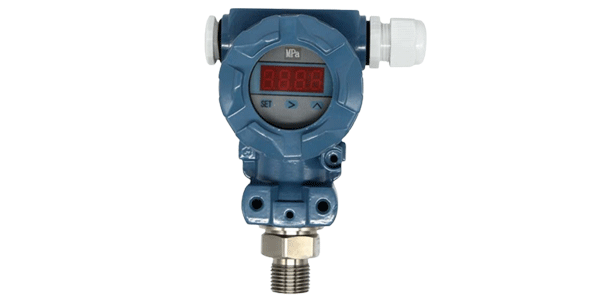
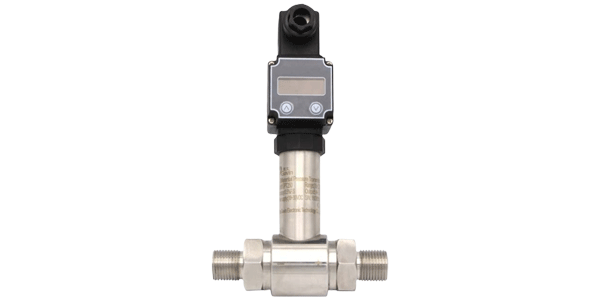
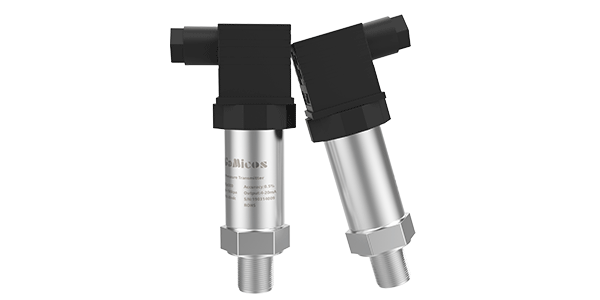
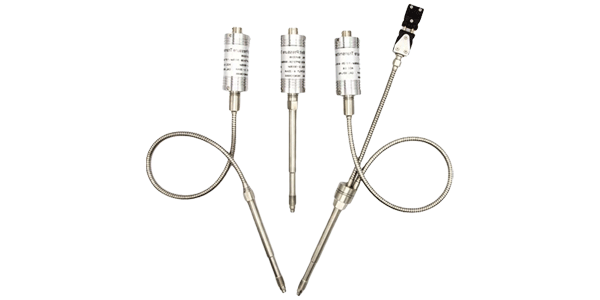
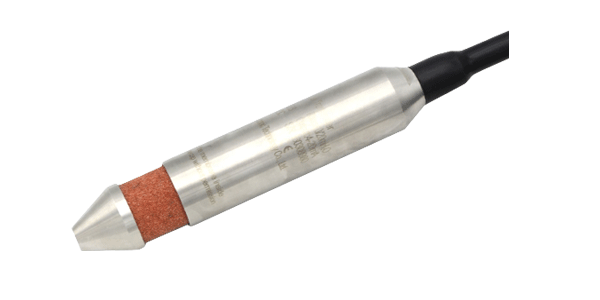
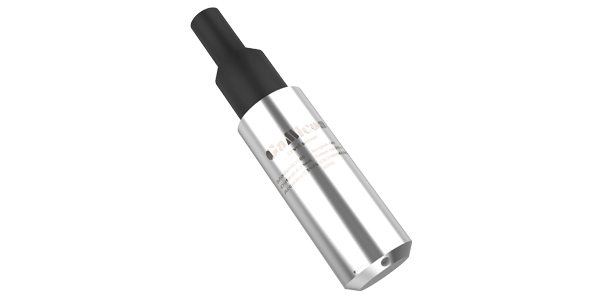
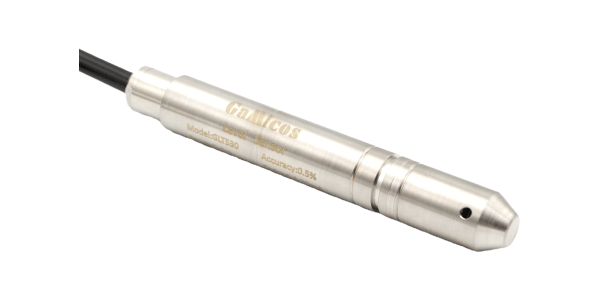
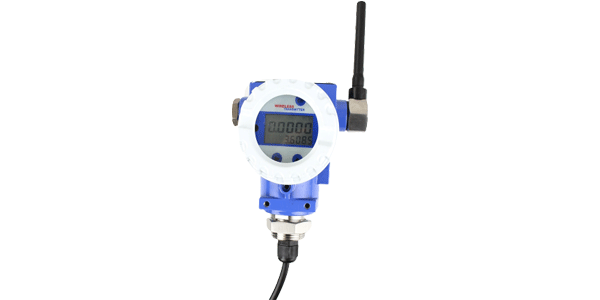

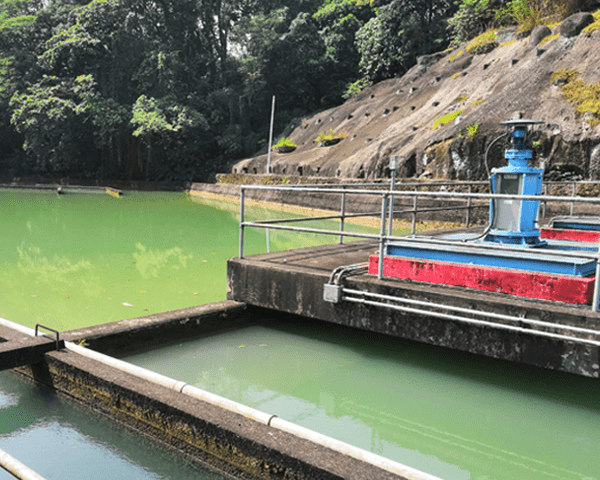
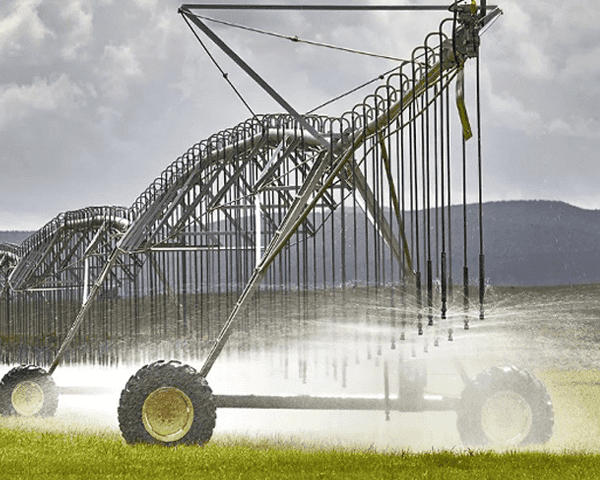
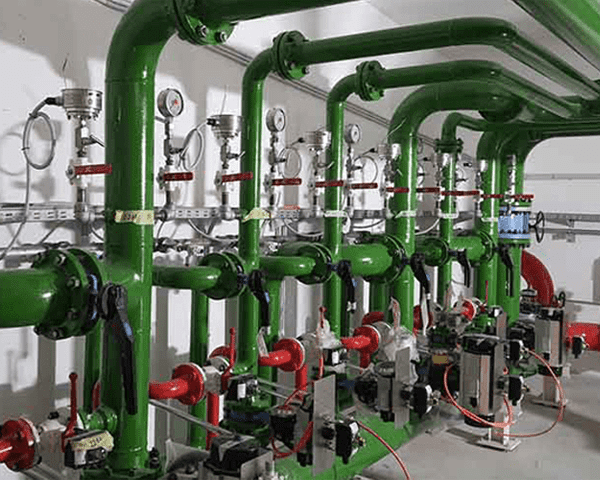
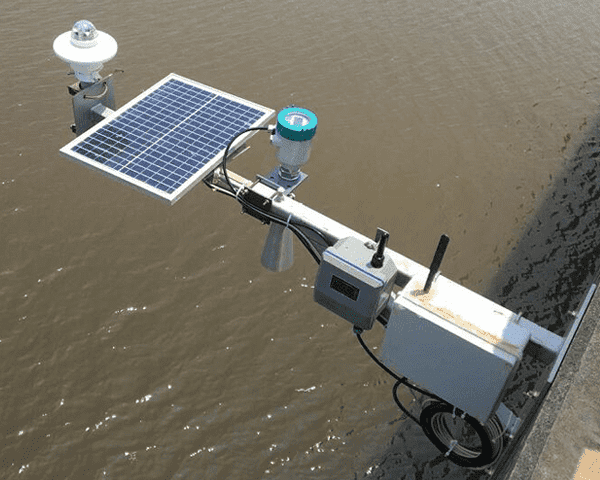

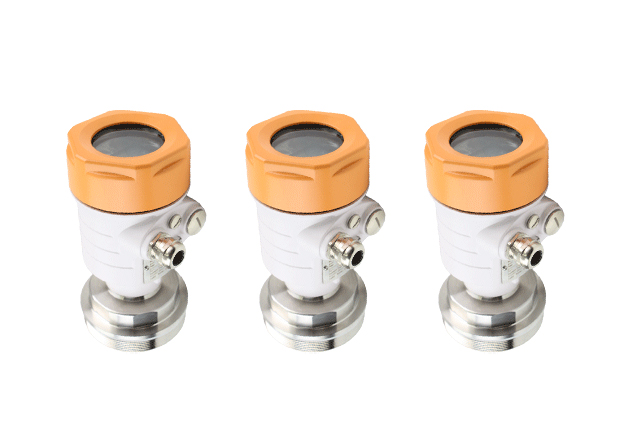
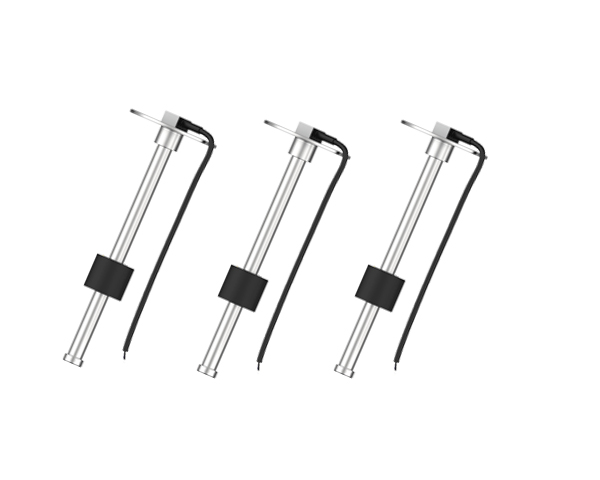
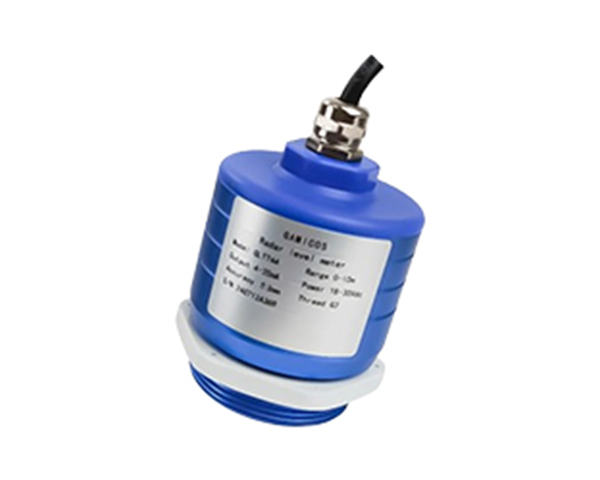
So, how do you determine whether your application requires a standard, lightning-protected, or explosion-proof sensor? This guide will help you navigate these critical choices and understand where advanced solutions like the GLT500 level transmitter fit into the equation.
Understanding Hazardous Areas and Sensor Requirements
A “hazardous area” is any location where fire or explosion hazards may exist due to flammable gases, vapors, liquids, combustible dust, or ignitable fibers. However, hazards can also include environmental threats like lightning strikes, corrosive media, and physical impact.
The core function of a specialized sensor is to operate safely within these conditions without becoming an ignition source or failing prematurely.
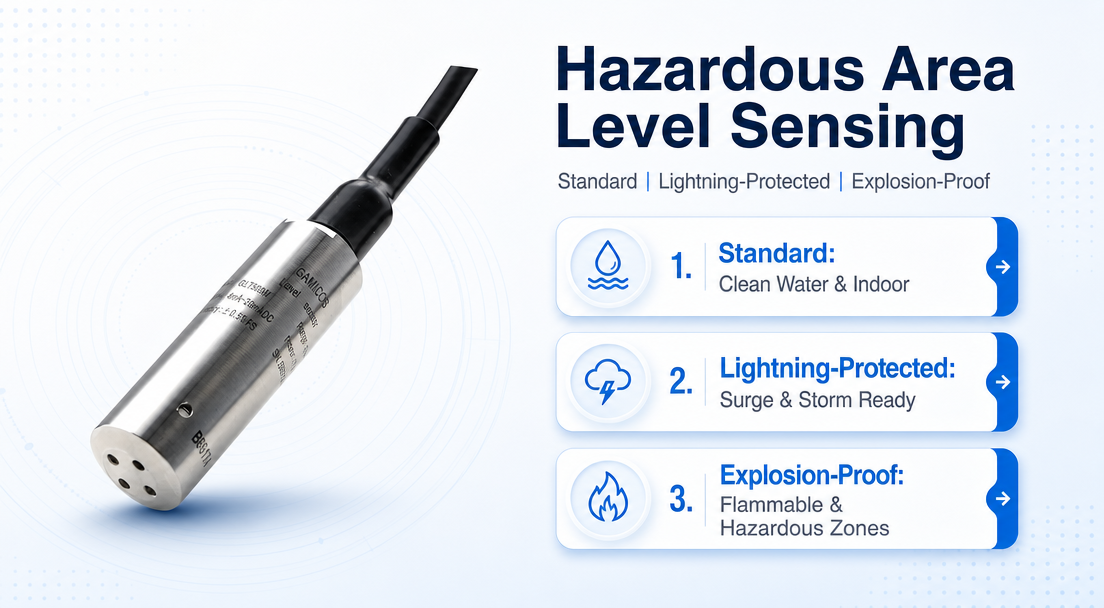
Standard Sensors: For Benign Environments
Standard submersible sensors are designed for general-purpose applications in non-hazardous locations.
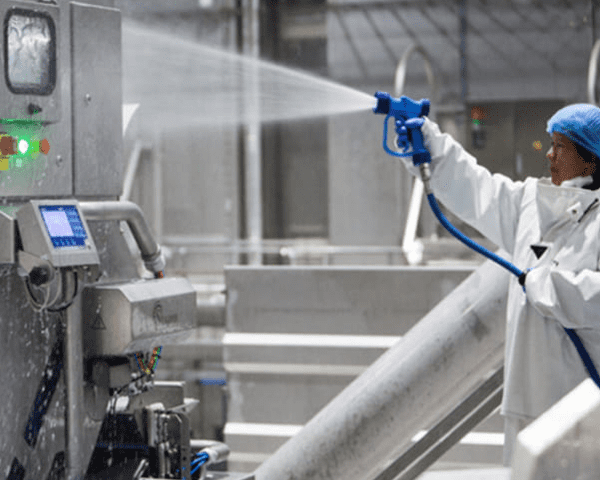
- Typical Applications: Freshwater tanks, non-aggressive liquid storage, clean water reservoirs, and controlled indoor environments.
- Key Characteristics: They offer basic ingress protection (like IP68) and are built with standard materials like 304 stainless steel. They lack the specialized certifications and robust construction needed for more demanding settings.
- The Risk: Using a standard sensor in a hazardous area can be dangerous. It is not designed to contain an internal explosion or withstand external threats like lightning, making it a potential ignition source.
Lightning-Protected Sensors: Essential for Outdoor Installations
For sensors installed in open or exposed areas, lightning is a significant and often overlooked threat. A direct strike or a nearby surge can send a massive voltage spike through the sensor’s cabling, instantly destroying the electronics.
- Typical Applications: Rivers, lakes, reservoirs, coastlines, open-air wastewater treatment ponds, and water diversion projects.
- Key Characteristics: These sensors incorporate built-in surge and lightning protection circuits. This feature is crucial for ensuring the longevity and reliability of the instrument in outdoor environments where storms are common.
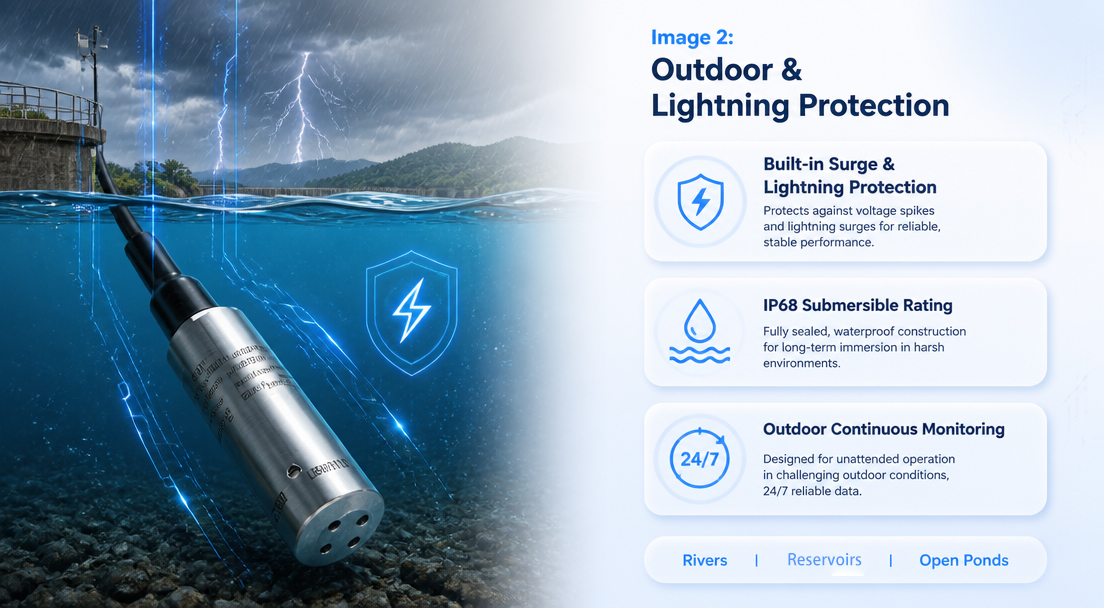
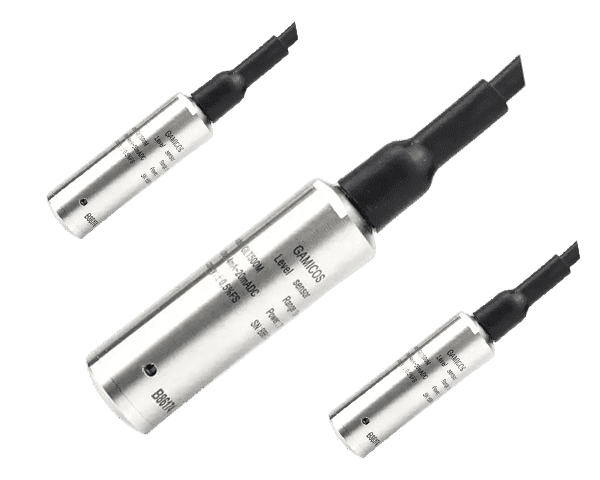
The GLT500 Advantage: The GLT500 is explicitly designed for these challenging outdoor applications. The installation guidelines for the GLT500 recommend that for installations in thunder-prone areas, orders should be marked with the “lightning” option. This integrated protection, combined with a robust IP68 rating, ensures the sensor can withstand harsh weather and electrical transients, protecting your investment and ensuring continuous data collection.
Explosion-Proof Sensors: Non-Negotiable for Flammable Atmospheres
This is the highest level of protection for sensors operating in areas with flammable gases, vapors, or dust. An explosion-proof sensor is engineered to contain any spark or explosion that might occur inside its housing, preventing it from igniting the surrounding hazardous atmosphere.
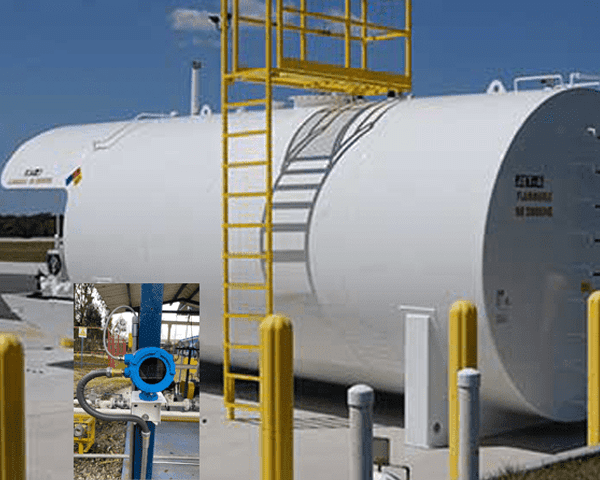
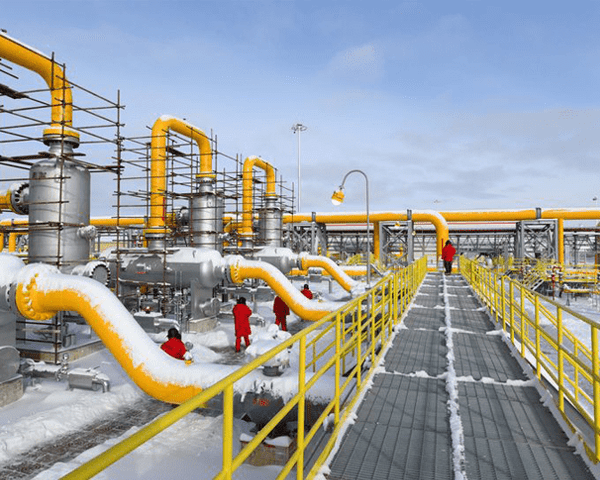
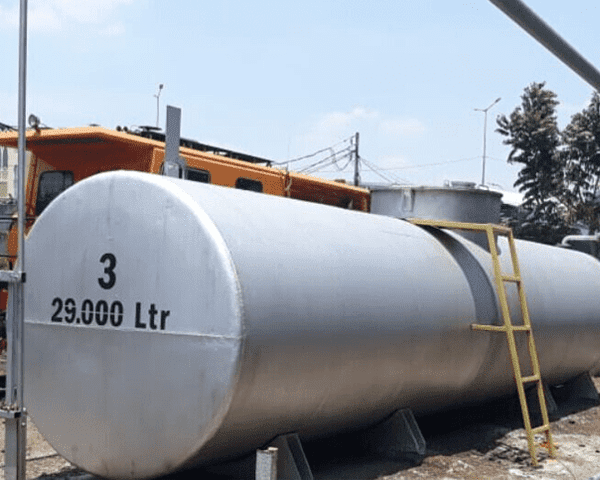
- Typical Applications: Sewage treatment plants (which can produce methane), oil and gas facilities, chemical processing plants, fuel storage tanks, and mining operations.
- Key Characteristics: These sensors have incredibly durable, heavy-duty housings, often made from stainless steel like 316L. They are certified to strict international standards (such as ATEX, IECEx, or UL) that verify their ability to operate safely in explosive atmospheres.
The GLT500 Advantage: The GLT500 doesn’t just stop at lightning protection. It is also available with explosion-proof certification. This makes it an exceptionally versatile and safe choice for applications like sewage treatment, where both corrosive media and potentially explosive gases are
present. When you select the explosion-proof option for the GLT500, you are ensuring that the sensor itself will not become the cause of a disaster, providing a critical layer of safety for personnel and facilities.
Comparison Table: Choosing the Right Protection Level
| Feature | Standard Sensor | Lightning-Protected Sensor | Explosion-Proof Sensor |
|---|---|---|---|
| Primary Use Case | Benign, indoor, non-hazardous liquids | Outdoor, exposed locations prone to storms | Areas with flammable gases, vapors, or dust |
| Key Threat Mitigated | Water ingress (basic) | Voltage surges from lightning strikes | Internal sparks igniting external atmosphere |
|
Typical Certifications |
IP68 | IP68 + Surge Protection | IP68 + ATEX, IECEx, UL, etc. |
| Example Applications | Water tanks, irrigation | Rivers, reservoirs, coastlines | Sewage plants, oil & gas, chemical processing |
| GLT500 Availability |
Yes (Standard Model) |
Yes (Mark “Lightning” on order) | Yes (Explosion-Proof Certification) |
How to Choose the Right Sensor for Your Application
The decision comes down to a thorough risk assessment of your specific installation environment.
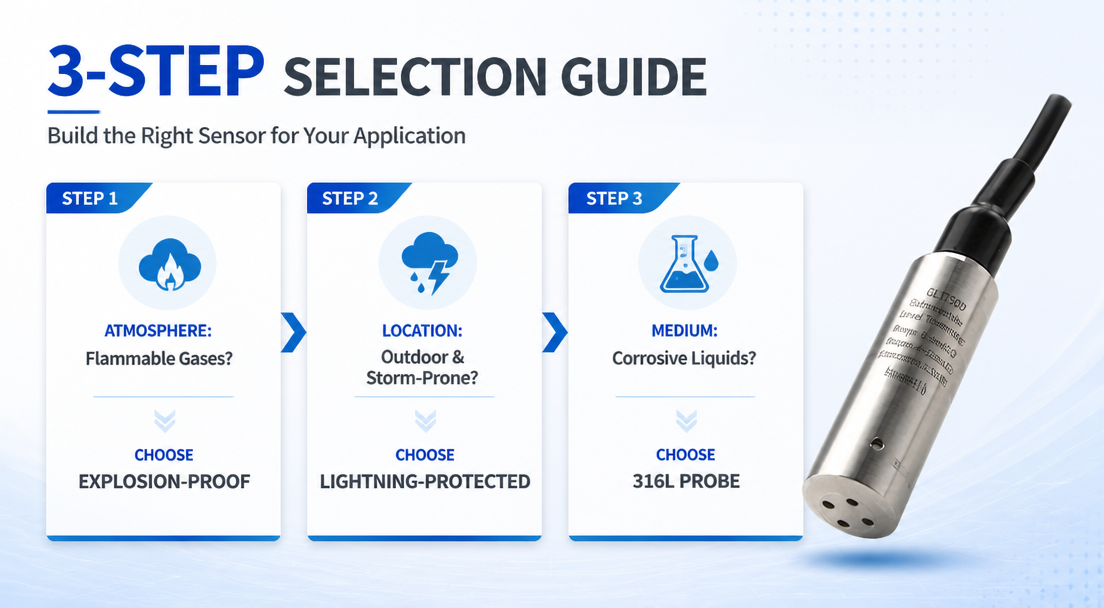
- Assess the Atmosphere: Are there flammable gases, vapors, or combustible dust present? If yes, an explosion-proof sensor is mandatory. The GLT500’s explosion-proof certification makes it a prime candidate for these high-risk zones.
- Evaluate the Location: Is the sensor installed outdoors where it could be exposed to thunderstorms? If yes, lightning protection is a critical investment. The GLT500 offers this as a key feature to ensure reliability in applications like river and reservoir monitoring.
- Consider the Medium: Is the liquid corrosive, like sewage or certain chemicals? The GLT500 is built with a 316L stainless steel probe, offering excellent resistance to abrasion, oil, acid, and alkali, making it suitable for harsh media where standard 304SS sensors would fail.
Final Thoughts
Don’t let a lower upfront cost compromise the safety and integrity of your operation. Choosing the correct level of protection for your submersible sensor is a decision that safeguards your assets, your data, and most importantly, your people.
Whether you need the standard reliability for a clean water tank, the storm-ready resilience of lightning protection for a reservoir, or the critical safety of an explosion-proof design for a sewage plant, the GLT500 level transmitter offers a configurable and certified solution. By understanding your specific hazards, you can select a sensor that doesn’t just measure the level but also stands as a guardian of your process safety.
Frequently Asked Questions
What is a hazardous area?
A “hazardous area” is any location where fire or explosion hazards may exist due to flammable gases, vapors, liquids, combustible dust, or ignitable fibers. However, hazards can also include environmental threats like lightning strikes, corrosive media, and physical impact.
When can I use a standard submersible sensor?
Standard submersible sensors are designed for general-purpose applications in non-hazardous locations. Typical applications include freshwater tanks, non-aggressive liquid storage, clean water reservoirs, and controlled indoor environments. They offer basic ingress protection (like IP68) and are built with standard materials like 304 stainless steel. They lack the specialized certifications and robust construction needed for more demanding settings.
When do I need a lightning-protected sensor?
For sensors installed in open or exposed areas, lightning is a significant and often overlooked threat. A direct strike or a nearby surge can send a massive voltage spike through the sensor’s cabling, instantly destroying the electronics. Typical applications include rivers, lakes, reservoirs, coastlines, open-air wastewater treatment ponds, and water diversion projects.
When is an explosion-proof sensor required?
An explosion-proof sensor is required in areas with flammable gases, vapors, or dust. It is engineered to contain any spark or explosion that might occur inside its housing, preventing it from igniting the surrounding hazardous atmosphere. Typical applications include sewage treatment plants (which can produce methane), oil and gas facilities, chemical processing plants, fuel storage tanks, and mining operations.