LPG and Liquid Level Sensor
Liquefied petroleum gas (LPG) as a green energy, is widely used in the areas like industrial production, city gas, etc. The operational safety and measurement accuracy of storage tanks are directly related to enterprise profitability and public safety. Recent years, many countries require precisely that the LPG storage tanks must be equipped with liquid level measurement devices that have the features of high accuracy, intrinsically safe. At the same time, the products should meet the strict requirements of high pressure (usually 0.8-1.6MPa), low temperature (Partial applications - 40℃), strong corrosion (Contains trace amounts of hydrogen sulfide).
In the current market of LPG level measurement, the traditional float type and differential pressure level gauge have the problems of insufficient accuracy (error ±1.0%-1.5% FS), easy aging and leakage of seals and frequent maintenance, which are incompatible with the dual requirements of safety redundancy and measurement accuracy. With the advancement of refined LPG trade settlement and standardized safety production, measurement equipment with inherent safety, high precision, and low maintenance characteristics has become a core requirement for industry upgrading.
Industrial Pain point
When measuring level of the LPG storage tanks, the customers commonly meet the following pain points:
1.
Insufficient accuracy: The density of LPG can be easily affected by temperature and pressure, and the traditional liquid level sensor cannot compensate for the parameter changing in real time, causing large errors, affect inventory accounting and production scheduling, and may even lead to safety hazards such as overloading and empty tanks.
2.
High safety risks: LPG is flammable and explosive. Traditional level meters, with their mechanical structure or non-explosion-proof design, are prone to generating sparks in high-pressure, flammable environments such as storage tanks, posing an explosion risk and failing to meet the stringent intrinsic safety standards of the petrochemical industry.
3.
High maintenance costs:Traditional liquid level meters can be easily affected by corrosive medium and crystallization. Frequent problems such as float jamming and sensor wear require frequent tank shutdowns for maintenance, which not only increases maintenance costs but also affects production continuity.
4.The demand for multi-parameter measurement is difficult to meet: customers not only need liquid level data, but also need to acquire parameters such as LPG temperature at the same time. Traditional solutions require multiple instruments, which are complicated to install and have poor data synchronization, making it difficult to achieve integrated monitoring.
Product Recommendation
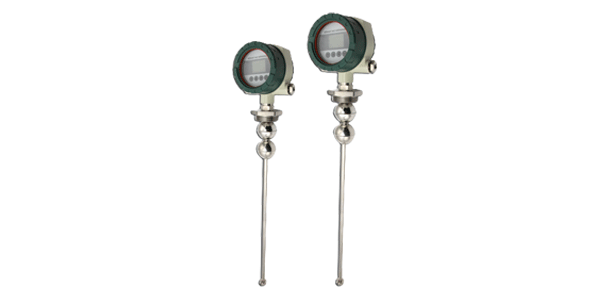
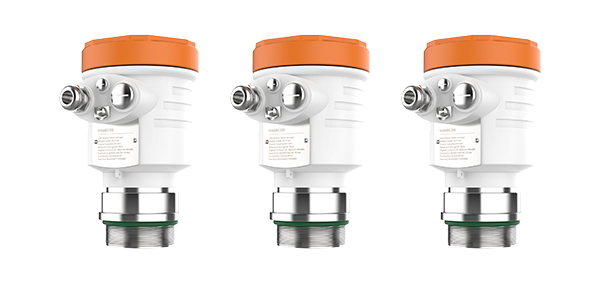
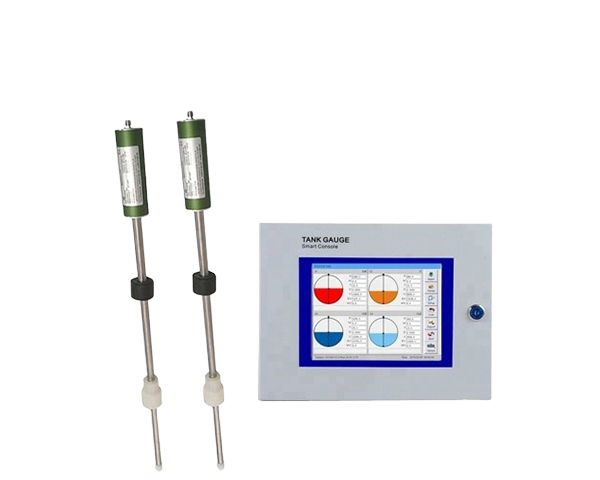
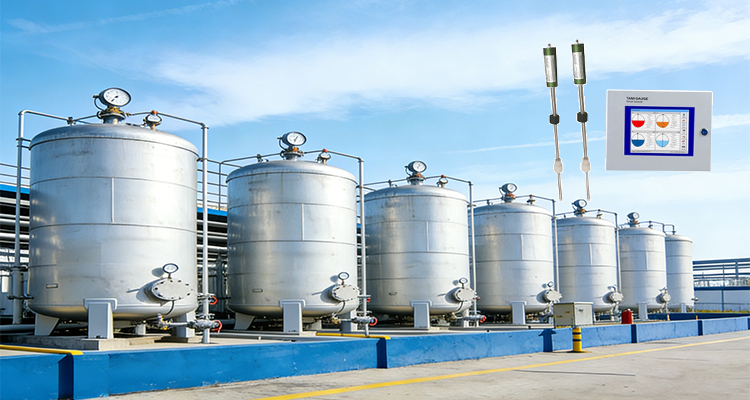
For the specific operating conditions and customer pain points of LPG storage tanks, the GLT622 magnetostrictive level meter is recommended. Its core advantages and functions are as follows:
Working Principle
The magnetostrictive level meter is designed based on the magnetostrictive effect and consists of a probe (waveguide), a float (with a built-in permanent magnetic ring), and an electronic transmitter (circuit unit). The electronic transmitter sends current pulses to the probe, generating a magnetic field that propagates along the waveguide. When the pulsed magnetic field meets the permanent magnetic field of the float, an instantaneous torsional wave pulse is generated, which returns to the electronic transmitter along the waveguide at the speed of sound. By accurately measuring the time difference between pulse transmission and reception, and combining this with the known wave velocity, the liquid level can be calculated. Simultaneously, a temperature sensor can be integrated within the probe, enabling integrated measurement of both liquid level and temperature.
Core Advantages
1.
High accuracy and stability:Measurement accuracy can reach ±0.5mm with high resolution, and is not affected by factors such as LPG medium density changes, tank vibration, and electromagnetic interference, ensuring long-term accurate and reliable liquid level data. 。
2.
Intrinsically safe design: It adopts non-contact measurement, with no mechanical friction between the float and the probe rod, and has intrinsically safe explosion-proof certification. It is suitable for high-pressure, flammable and explosive environments in LPG storage tanks, fundamentally eliminating safety hazards.
3.
Multi-parameter integrated measurement: A single instrument can simultaneously output liquid level and temperature signals, meeting customers' multi-parameter monitoring needs and reducing the number of instruments and installation costs.
4.
Low cost maintenance and long service life: With no mechanical transmission parts, it has strong corrosion and anti-crystallization capabilities, is suitable for LPG media environments, and can operate stably for a long time, significantly reducing maintenance frequency and costs.
Customer Case
Application Background
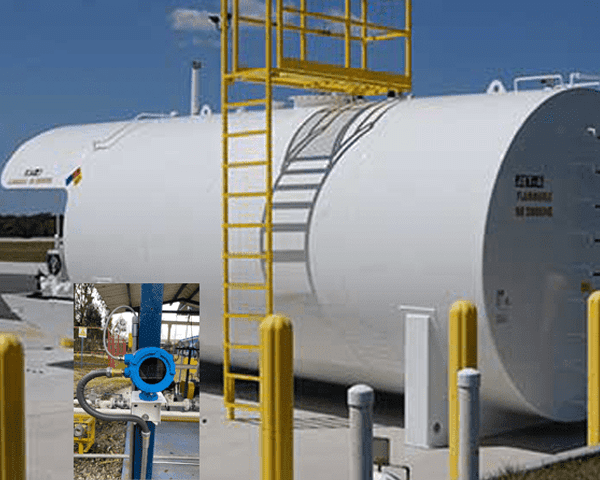
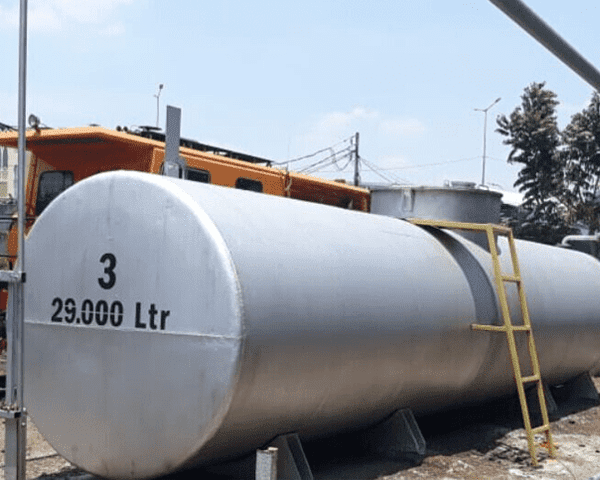
An LPG refueling station has multiple LPG storage tanks, each with a capacity of 15,000L, used to store LPG components such as propane and butane. Previously, differential pressure level gauges were used, which suffered from large measurement errors, susceptibility to medium crystallization, and frequent maintenance, severely impacting production safety and inventory management efficiency. Therefore, an upgrade to the level measurement solution is urgently needed.
Plan implementation
1.
Instrument Selection and Installation: Based on the tank specifications and LPG medium characteristics, an intrinsically safe explosion-proof magnetostrictive level meter is selected. The probe is made of corrosion-resistant 316L material, and the float is compatible with the LPG density range. No modification to the tank structure is required during installation. The instrument is fixed to the pre-installed DN100 mounting flange on the top of the tank, the probe is vertically inserted into the tank, and the wiring is connected to the control panel in the control room.
2.
Parameter calibration and debugging: After installation, the instrument is calibrated on-site. The tank and probe data are set based on the tank's geometry and volume gauge to ensure measurement accuracy meets requirements. Simultaneously, the remote data transmission function is debugged to enable real-time uploading and display of liquid level and temperature data.
Effects
1.
Significantly improved measurement accuracy: The measurement error of the magnetostrictive level meter is controlled within ±0.5mm, which is more than 90% higher than the original differential pressure level gauge (error ±10mm). This greatly improves the accuracy of inventory accounting and avoids safety risks such as overfilling and empty tanks.
2.
Safety performance has been comprehensively upgraded: intrinsically safe explosion-proof design and non-contact measurement completely eliminate the risk of sparks, significantly improve the safety of tank operation, meet the safety standards of the petrochemical industry, and no safety accidents have occurred.
3.
Maintenance costs are significantly reduced: the instrument has no malfunctions within 6 months of operation and does not require tank shutdown for maintenance, reducing maintenance costs by 80% compared to the original solution and ensuring production continuity.
4.
Management efficiency optimization: The integrated measurement and remote monitoring functions enable real-time monitoring and data recording of LPG tank levels and temperatures, providing accurate data support for production scheduling and inventory management, increasing inventory turnover by 15% and production efficiency by 10%.