





Industry Background
Inventory accuracy at the station level directly drives both profitability and regulatory compliance, yet industry loss rates remain far above the benchmark. There are over 1.5 million retail fuel stations worldwide, handling roughly 300 million liters of fuel transactions daily. According to data from the International Petroleum Association, the industry benchmark for fuel shrinkage is below 0.3%, but actual loss rates in many regions range from 0.5% to 1.2% — stemming from evaporation, leaks, theft, and measurement errors.
Regulatory pressure is tightening worldwide. The U.S. EPA enforces strict leak detection rules for underground storage tank (UST) systems, requiring inventory reconciliation accuracy within ±0.1%. The EU mandates groundwater and leak monitoring through environmental directives. While regulatory pressure varies in emerging markets, inventory loss directly erodes already thin retail margins, making precision management a strong business imperative regardless of jurisdiction.
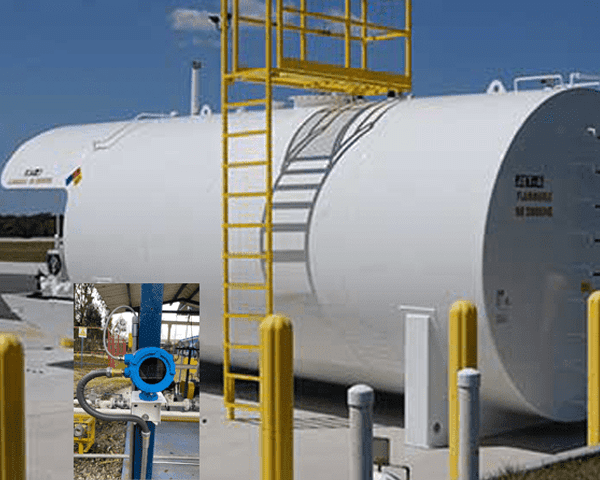
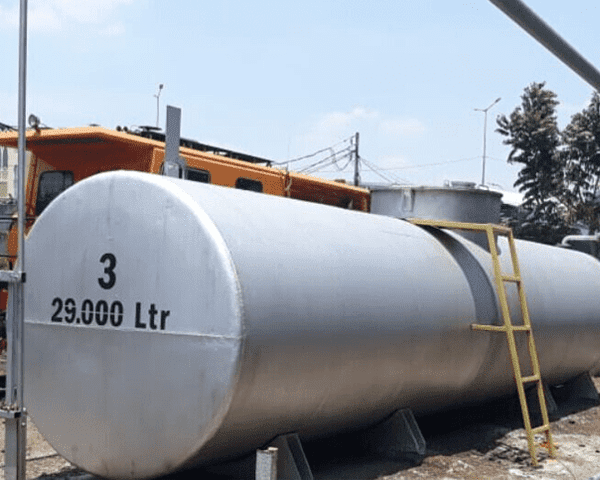
Underground tanks present unique measurement challenges: they are inaccessible for visual inspection, fuel density changes significantly with temperature (requiring volume correction), and groundwater ingress can create a water bottom layer that inflates apparent inventory levels if not detected. Together, these factors make high-accuracy, multi-parameter, remotely readable level monitoring a standard — not optional — component of modern station operations.
Key Industry Pain Points
Five systemic problems prevent service stations from reconciling fuel inventory to the liter, tracking losses, and proving discrepancies.
Insufficient accuracy for liter-level reconciliation
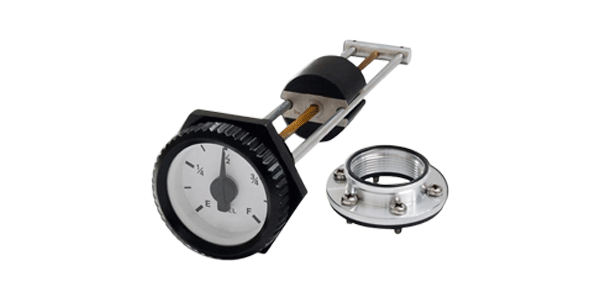
Fuel retailing operates on razor-thin margins — often just a few cents per liter. Traditional mechanical float gauges, limited by their mechanical linkages and scale resolution, typically have errors of ±10 liters or more. For a 30,000-liter tank, this margin is large enough to mask small-scale theft or slow leaks over months, leaving operators without a reliable inventory baseline.
Inability to distinguish oil from water, leading to systematic overstatement of inventory
Underground tanks are constantly exposed to groundwater. Weld seam aging, manhole seal failures, or breather valve leaks allow water to enter. Since water is denser than gasoline or diesel, it settles at the bottom, forming a separate water layer. Single-parameter level gauges measure only total liquid height — they cannot tell oil from water. Operators order replenishment based on inflated numbers, only to discover significant shortages during physical reconciliation, with no way to trace when or why the loss occurred.
Temperature-induced volume fluctuations distort cross-seasonal reconciliation
The coefficient of volumetric expansion for fuel is approximately 0.001/°C — a 10 °C change shifts volume by about 1%. In regions with large daily or seasonal temperature swings, fuel temperature inside tanks can vary from 0 °C to 60 °C, producing volume changes of up to 6%. Without temperature correction to a standard reference (15 °C or 20 °C), delivered quantities, sales figures, and remaining stock will never balance, making financial reconciliation a persistent headache.
Lack of continuous data records makes theft and leaks difficult to prove
Manual daily reporting captures only opening and closing levels — leaving a complete blind spot in between. Nighttime siphoning, dispenser meter tampering, and slow seepage all occur during these unmonitored hours. Even when operators sense something is wrong, they lack the time-series data to pinpoint when anomalies happened. Without this evidence, they cannot pursue legal action against thieves or implement targeted internal controls. Industry data shows that such losses at mid-to-large chains can reach millions of dollars annually.
Disconnected data silos prevent closed-loop reconciliation
Fuel moves from tanker truck to underground storage, through piping to dispensers, and finally to the customer's vehicle. This chain involves three separate metering systems — receiving, storage, and sales — each with its own data format and accuracy. The three sets of numbers rarely match, and managers cannot tell whether discrepancies stem from measurement error, operational loss, or fraud. Risk management becomes guesswork.
Product Recommendation: GLT622 Magnetostrictive Level Transmitter
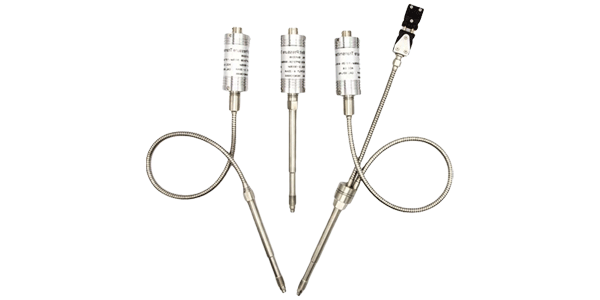
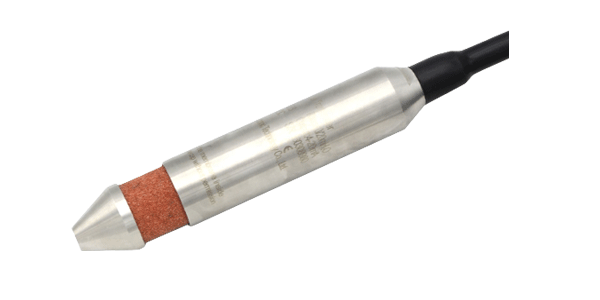
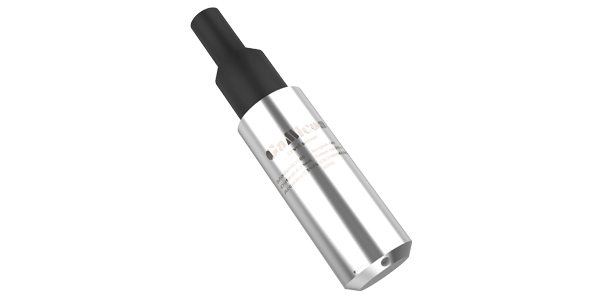
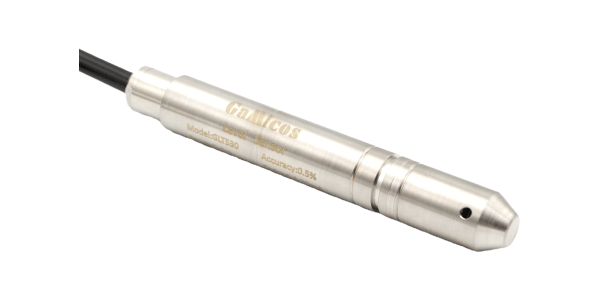
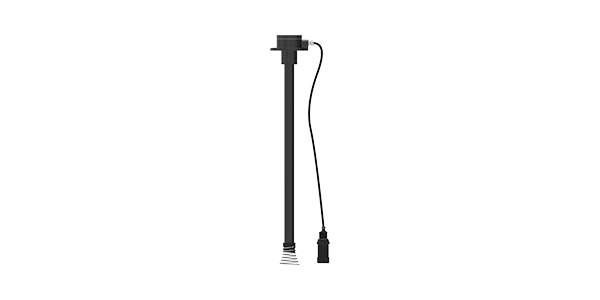
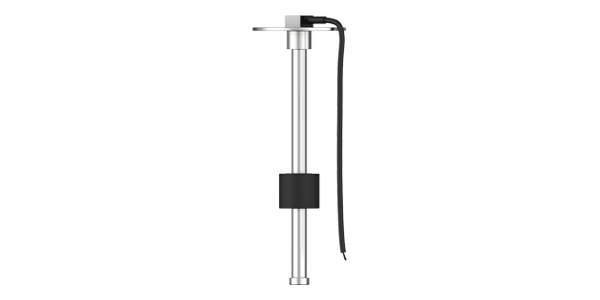
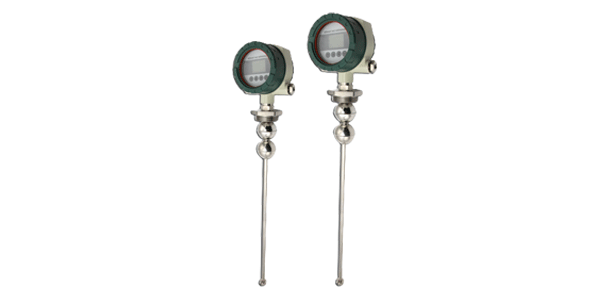
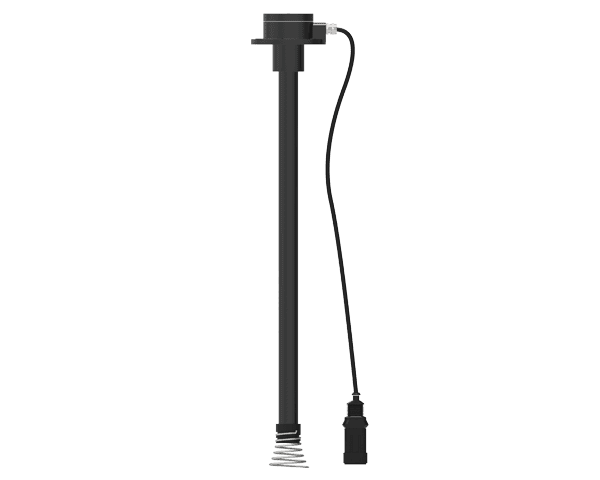
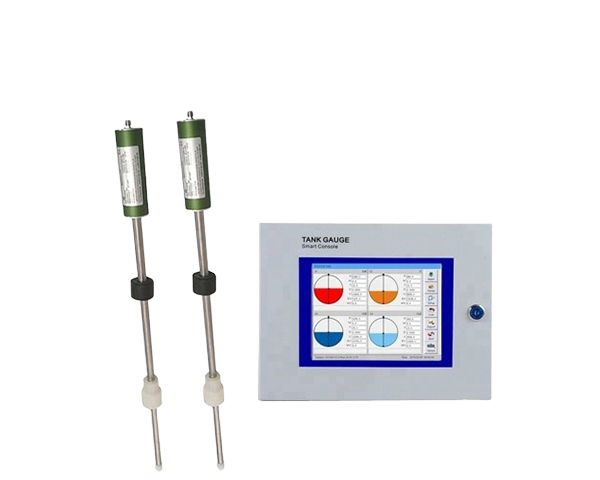
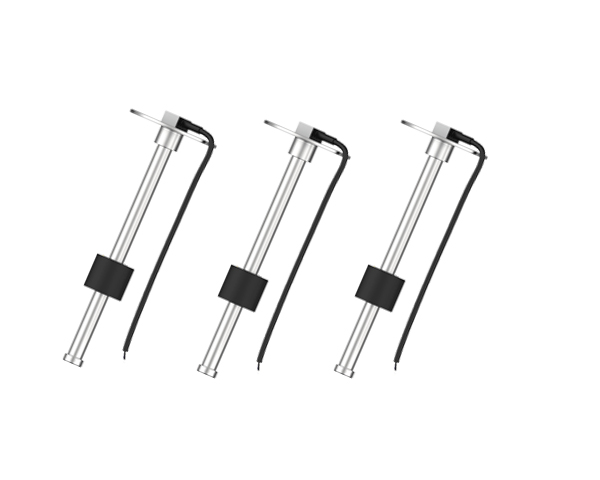
The GLT622 is a magnetostrictive level transmitter developed by GAMICOS for high-accuracy inventory management in service stations, depots, and chemical storage tanks. It simultaneously outputs fuel level, water level, and temperature data, providing a complete raw measurement set for inventory management systems.
Core Operating Principle
The GLT622 operates on the magnetostrictive effect — a true time-based measurement that needs no analog calibration and is inherently immune to long-term zero drift. Inside the probe, a magnetostrictive waveguide wire runs along its length. Magnetic floats designed to ride on the liquid surface slide along the outside of the probe. The electronics module sends a current pulse down the waveguide, generating a circular magnetic field around it. When this field reaches the position of a float, it interacts with the float's permanent magnet, creating a torsional stress wave that travels back up the waveguide at a fixed sonic speed.
Because both the current pulse speed and the return wave speed are known constants, precise timing of the roundtrip interval yields the float's absolute position relative to the reference point. By using two floats on the same probe — one for fuel and one for water, each with different densities so they sit at the fuel surface and the fuel-water interface respectively — the system independently measures both oil and water levels in real time.
Key Product Features
- Millimeter-level absolute accuracy ±0.5 mm accuracy with 0.01 mm resolution — capable of resolving volume changes of less than 1 liter. This is an order-of-magnitude improvement over traditional float gauges (±10 liters), providing a reliable baseline for theft detection, leak early-warning, and precise inventory control.
- Dual-float design for independent oil/water interface detection The same probe houses both a fuel float and a water float, tracking the fuel surface and the fuel-water interface separately. The system outputs net fuel height (total liquid minus water layer), completely eliminating the overstatement caused by bottom water accumulation.
- Multi-point temperature measurement and volume correction Built-in temperature sensors along the probe measure fuel temperature at multiple depths and calculate an average. Combined with the volumetric expansion coefficient, the system automatically converts actual volume to net standard volume at reference temperature (15 °C or 20 °C), ensuring cross-seasonal and day-night comparability.
- Five parameters from a single device Simultaneous output of fuel level, water level, average temperature, gross volume, and standard volume — covering inventory management, leak monitoring, and environmental compliance with one installation, avoiding duplicate investment.
- No moving-part wear, long-life, maintenance-free Only the floats move with liquid level — no gears, linkages, or potentiometers to wear out. The 316 stainless steel probe rod and NBR floats withstand long-term exposure to gasoline, diesel, and fuel additives, with extremely low failure rates — critical for underground tanks where servicing is difficult after installation.
Customer Case Study: Inventory Management Upgrade for a Major Latin American Fuel Station Chain
20 retail stations · 80 underground tanks · from manual float-gauge reporting to fully digital, data-driven inventory control.
Background
This chain operates 20 retail stations in a Latin American country, with 80 underground tanks storing gasoline and diesel. The region has a subtropical climate with average annual temperatures of 25–35 °C and significant daily and seasonal temperature variation.
Before the upgrade, the company relied entirely on manual daily reports combined with mechanical float gauges. Key problems included:
- Inventory measurement errors of ±10 liters, preventing accurate reconciliation
- An annual fuel loss rate of 0.5%, equivalent to approximately $2 million
- Frequent nighttime theft at multiple sites with no evidence to support prosecution
- Undetected bottom water that led to environmental fines after an inspection
- A mere 78% match rate among receiving, inventory, and sales data, making financial closure impossible
Solution
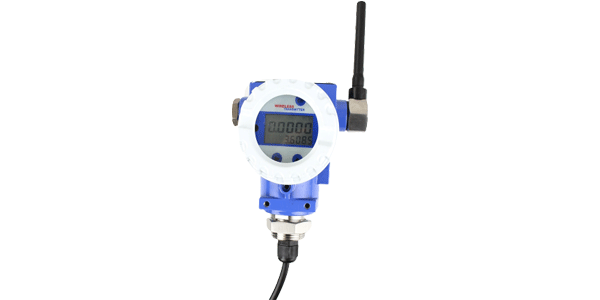
Each of the 20 stations received one GLT622 ATG system, consisting of a GLT622-C console plus four GLT622 probe rods inserted vertically through the tank manhole to the bottom. Measurement data from the four tanks was transmitted to the console via RS485 for processing and volume calculation.
| Product Model | GLT622 Magnetostrictive Level Transmitter |
|---|---|
| Measuring Range | 0–2.5 m |
| Accuracy | ±0.5 mm |
| Output Parameters | Fuel level / Water level / Temperature / Volume |
| Output Signal | RS232 Modbus-RTU |
| Explosion Proof | Ex ib IIC T6 (Intrinsic Safety) |
| Quantity Deployed | 80 units (covering 20 stations) |

Results
Inventory accuracy improved 10-fold and annual fuel losses dropped by $1.68 million within the first year of operation.
| Metric | Before | After | Improvement / Savings |
|---|---|---|---|
| Inventory Accuracy | ±10 L (±0.2%) | ±1 L (±0.02%) | 10× improvement |
| Fuel Shrink Rate | 0.5% ($2.0M) | 0.08% ($0.32M) | $1.68M annual savings |
| Theft Losses | Frequent, unprovable | Nearly eliminated | ~$0.8M recovered |
| Environmental Fines | $20k–$30k/year | 0 | Reduced to zero |
| Data Reconciliation Match Rate | 78% | 99.5% | Closed-loop achieved |
Qualitative Benefits
- Operations shifted from experience-based to fully data-driven. Regional managers can now monitor real-time inventory across all 20 stations and 80 tanks from their mobile devices.
- Continuous time-series data provided a complete evidentiary chain for theft, leading to multiple successful prosecutions when combined with video surveillance.
- The project earned a "Technology Advancement Award" from the local retail industry association, enhancing the company's technical reputation.
- Transparent, standardized inventory management increased franchisee confidence, supporting further network expansion.
Summary
The GLT622 delivers value in service-station inventory management by solving two core problems simultaneously: measuring with precision and providing clear visibility. ±0.5 mm absolute accuracy gives you a trustworthy baseline for reconciliation. The dual-float design eliminates systematic bias from bottom water. Multi-point temperature compensation ensures cross-seasonal data comparability. And continuous timestamped records turn previously untraceable losses into specific, provable, manageable events.
The payback period for this project was 6–8 months, with an annual ROI exceeding 500% thereafter. This solution has since been replicated across retail station networks in multiple countries and is equally suitable for depots, marine fuel bunkers, and industrial storage tanks where high accuracy and leak monitoring are critical.
Frequently Asked Questions
How does the GLT622 distinguish fuel from water in an underground tank?
The GLT622 uses a dual-float design: a fuel float rides on the fuel surface and a water float sits at the fuel-water interface. Because the floats have different densities, the probe independently measures fuel level and water level in real time and outputs net fuel height (total liquid minus the water layer), eliminating inventory overstatement caused by bottom water accumulation.
Why is temperature correction necessary for fuel inventory reconciliation?
Fuel has a volumetric expansion coefficient of approximately 0.001 per °C, so a 10 °C change shifts volume by about 1%. Tank temperatures can range from 0 °C to 60 °C across seasons, producing volume changes of up to 6%. Built-in multi-point temperature sensors let the GLT622 convert actual volume to standard volume at a reference temperature (15 °C or 20 °C), keeping delivered quantities, sales figures and remaining stock comparable across seasons.
What accuracy does the GLT622 achieve?
The GLT622 delivers ±0.5 mm absolute accuracy with 0.01 mm resolution, capable of resolving volume changes of less than 1 liter — an order-of-magnitude improvement over traditional mechanical float gauges, which typically have errors of ±10 liters or more.
Is the GLT622 certified for hazardous-area installation?
The GLT622 carries an intrinsic safety explosion-proof rating of Ex ib IIC T6, suitable for the hazardous environment of underground fuel storage tanks at service stations.
Where can the GLT622 solution be applied beyond service stations?
Beyond retail station networks, the solution is suitable for depots, marine fuel bunkers, and industrial storage tanks where high-accuracy level measurement and leak monitoring are critical.
Ready to bring liter-level accuracy to your fuel inventory?
Contact GAMICOS to evaluate how the GLT622 can reduce shrinkage, eliminate oil/water misreading and close the loop between receiving, storage and sales data at your stations.
Contact details to be confirmed by site operator before publishing.