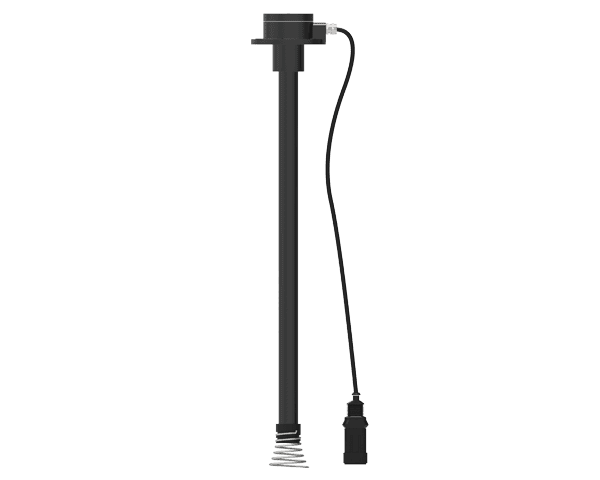
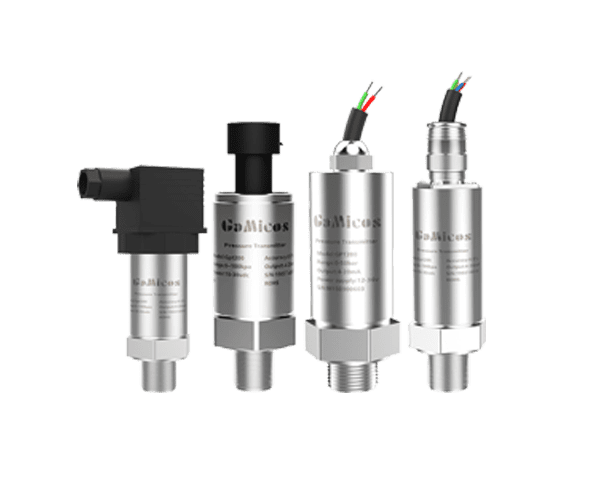
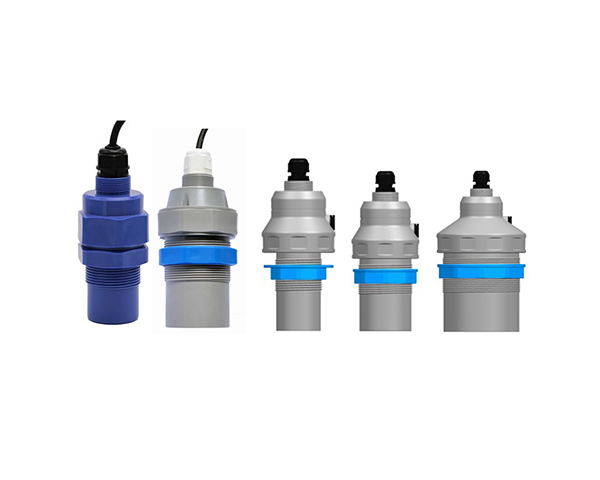
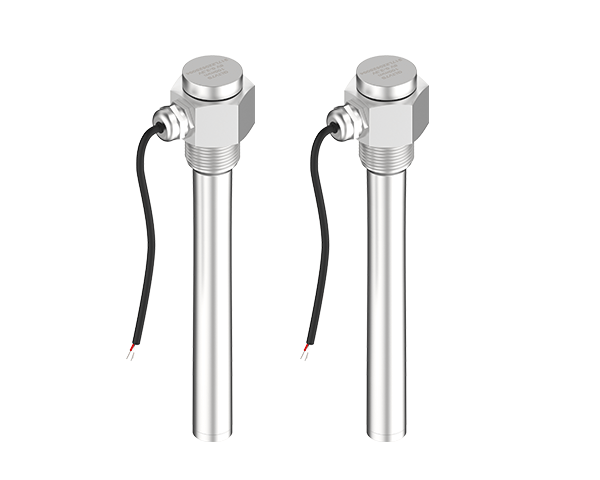
GLT500 Submersible Level Transmitter for Municipal Fire Water Reservoir Monitoring
TIME: 2026.08.12NUMBER OF VIEWS 167
Reliable, maintenance-free, remotely monitorable water level measurement — the essential upgrade for intelligent building fire protection systems.
Range 0–100 m (customizable)Accuracy ±0.5% FSProtection IP68Output 4–20 mA / RS485 Modbus-RTUCertification CE / RoHS
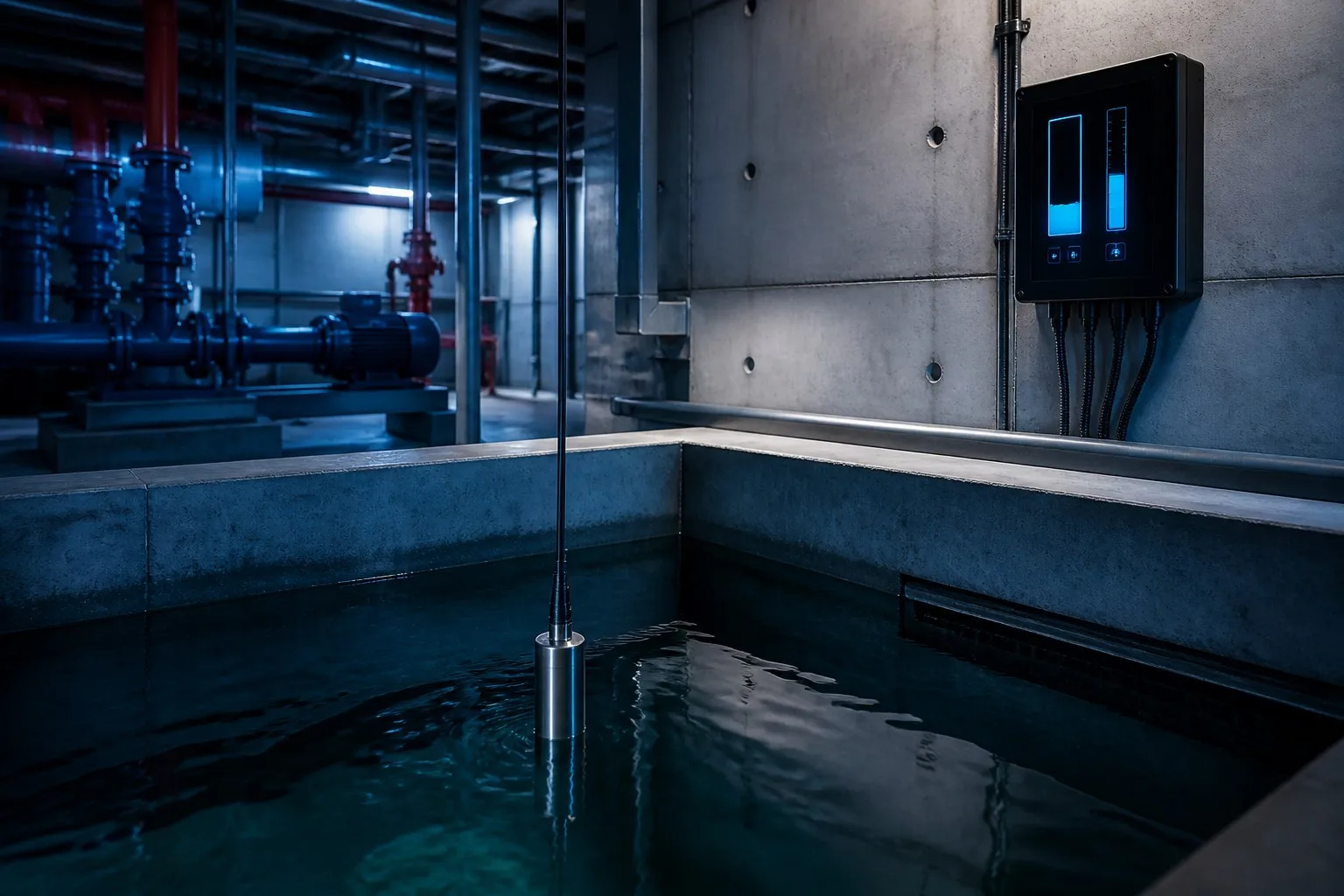
Continuous, maintenance-free fire water reservoir monitoring in a modern building
Industry Background
Accelerating global urbanization — with UN-Habitat reporting that 65.2% of the world's population now lives in urban areas (2024) — has driven intensive construction of high-rise buildings, large commercial complexes, and data centers, all of which require substantial investment in fire protection infrastructure. The global fire water systems market was valued at approximately USD 28 billion in 2024, with a compound annual growth rate of 7.3%.
Fire water storage tanks serve as the last line of defense in building fire protection systems. Whether for automatic sprinkler systems, standpipe/hose systems, or water curtain systems, their effectiveness hinges on one critical prerequisite: that the reservoir holds an adequate supply of fire water at all times. Mandatory codes — including NFPA 25 (North America), EN 12845 (Europe), and China's Technical Code for Fire Protection Water Supply and Hydrant Systems — all require minimum storage volumes and mandate regular inspection and recording.
However, fire reservoirs present a unique challenge: they remain static and unused for extended periods, yet must be instantly available in an emergency. Leakage, evaporation, inadvertent drainage through valve misoperation, and malfunctioning fill valves can all cause gradual water level drops — declines that often go undetected without continuous monitoring. When a fire actually occurs, "no water available" can have catastrophic consequences. This makes highly reliable, maintenance-free, remotely monitorable level measurement an essential component of any intelligent building fire system upgrade.
Industry Pain Points
Five systemic failures of conventional fire reservoir level monitoring — and why they demand a fundamentally different measurement approach.
Pain Point 1
Low Measurement Accuracy Fails to Detect Minor Leaks
Traditional float-type level gauges, constrained by their mechanical construction, typically offer accuracy of only ±5% of full scale. For a 10-meter-deep reservoir, this translates to an error band of ±50 cm — a margin larger than the water level drop caused by most slow leaks over several weeks. By the time the level drops to the low-level alarm threshold, tens of cubic meters of water may already have been lost, and the leakage path may have been eroding the building structure for an extended period.
Pain Point 2
High Manual Inspection Costs with No Continuous Coverage
Fire reservoirs are often located in basements or dedicated pump rooms with cramped spaces, poor lighting, and inadequate ventilation. Manual inspection requires opening access hatches and physically lowering probes — costing an estimated USD 400–800 per building per month. For large campuses with dozens of buildings, annual inspection expenditures can reach USD 2.5–4 million. More critically, even with weekly inspections, there remains a monitoring blind spot of up to 168 hours between checks — and leaks and faults do not wait for the next inspection cycle.
Pain Point 3
Mechanical Parts Prone to Seizure — False Alarms and Missed Alarms
Float switches rely on a buoyant float moving along a guide rod to actuate mechanical contacts. Prolonged immersion in stagnant water allows scale, algae, and rust to accumulate on the guide rod, eventually jamming the float in a fixed position. A seized float may continuously output a false "level normal" signal (a missed alarm) or, under vibration, cause contact chatter (false alarms). Industry field data shows that float switches in service for more than five years have false-alarm rates as high as 5–15%. Over time, control room operators become desensitized to frequent false alarms, further amplifying the risk that genuine emergencies are overlooked.
Pain Point 4
Unstable Signal Transmission — Attenuation and EMI
Fire pump rooms concentrate high-power fire pumps, jockey pumps, control cabinets, and variable-frequency drives — creating one of the harshest electromagnetic environments in any building. Conventional analog sensors are highly susceptible to interference in this environment; combined with signal attenuation over cable runs that can extend hundreds of meters from basements to the central control room, this results in additional measurement deviations of ±3–5%, rendering the data virtually useless.
Pain Point 5
Data Silos Across Multiple Buildings Prevent Unified Situational Awareness
Large campuses and multi-building properties often operate dozens or even hundreds of independent fire reservoirs, each with its own local display. Without data aggregation, facility managers cannot see the overall water level status across the portfolio, nor perform comparative analyses (e.g., identifying which buildings have abnormally high refill frequencies). Fire safety management remains stuck in a building-by-building inspection model, with no systematic risk-prediction capability.
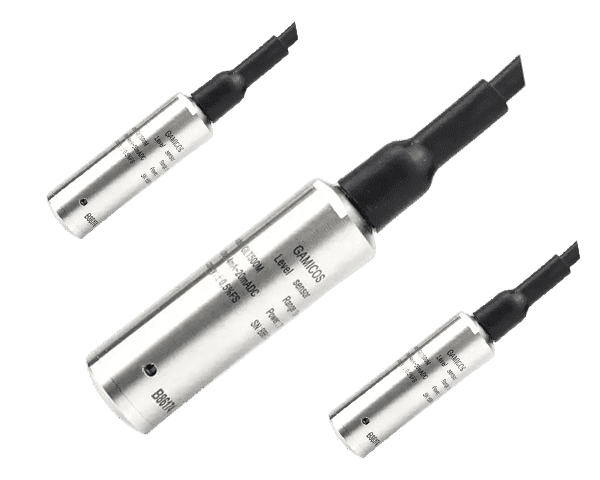
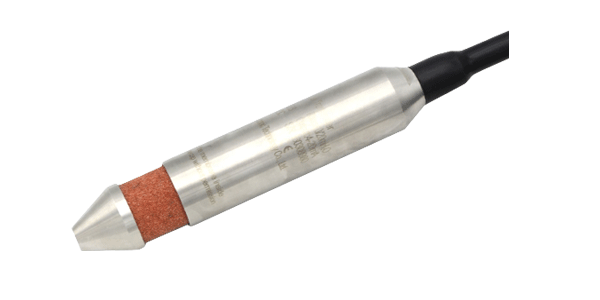
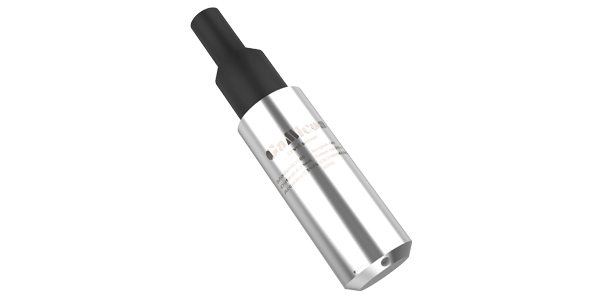
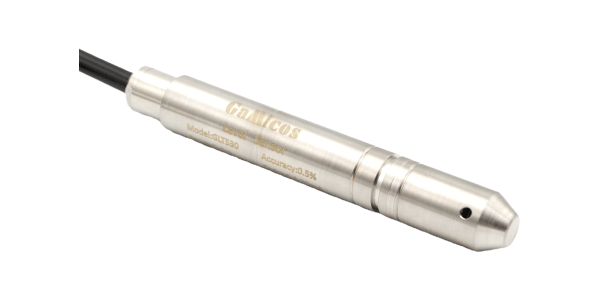
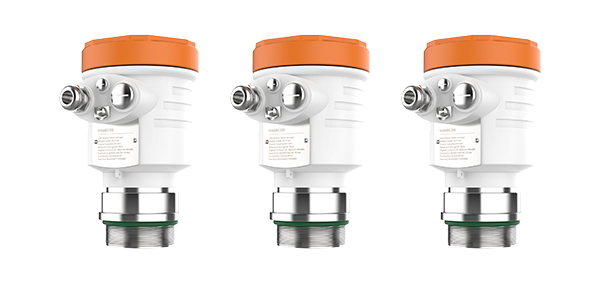
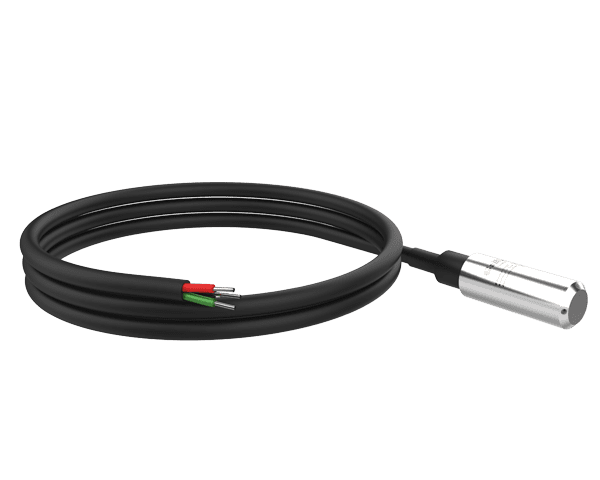
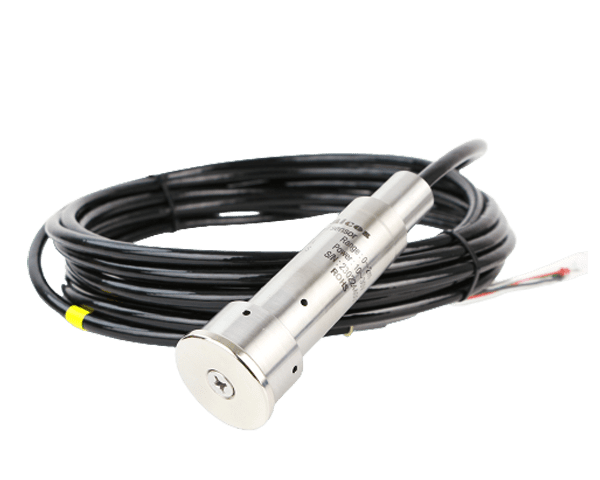
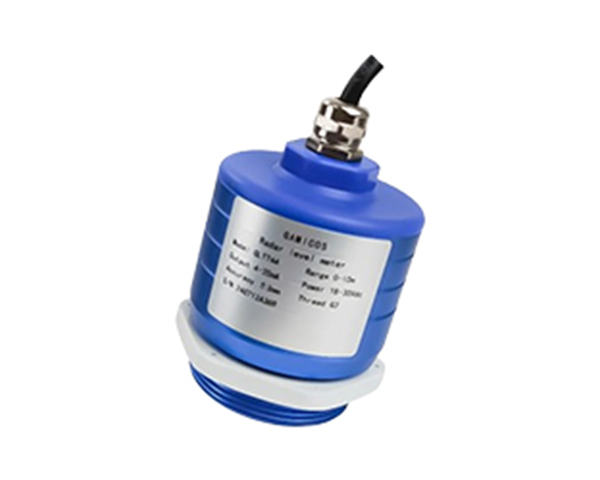
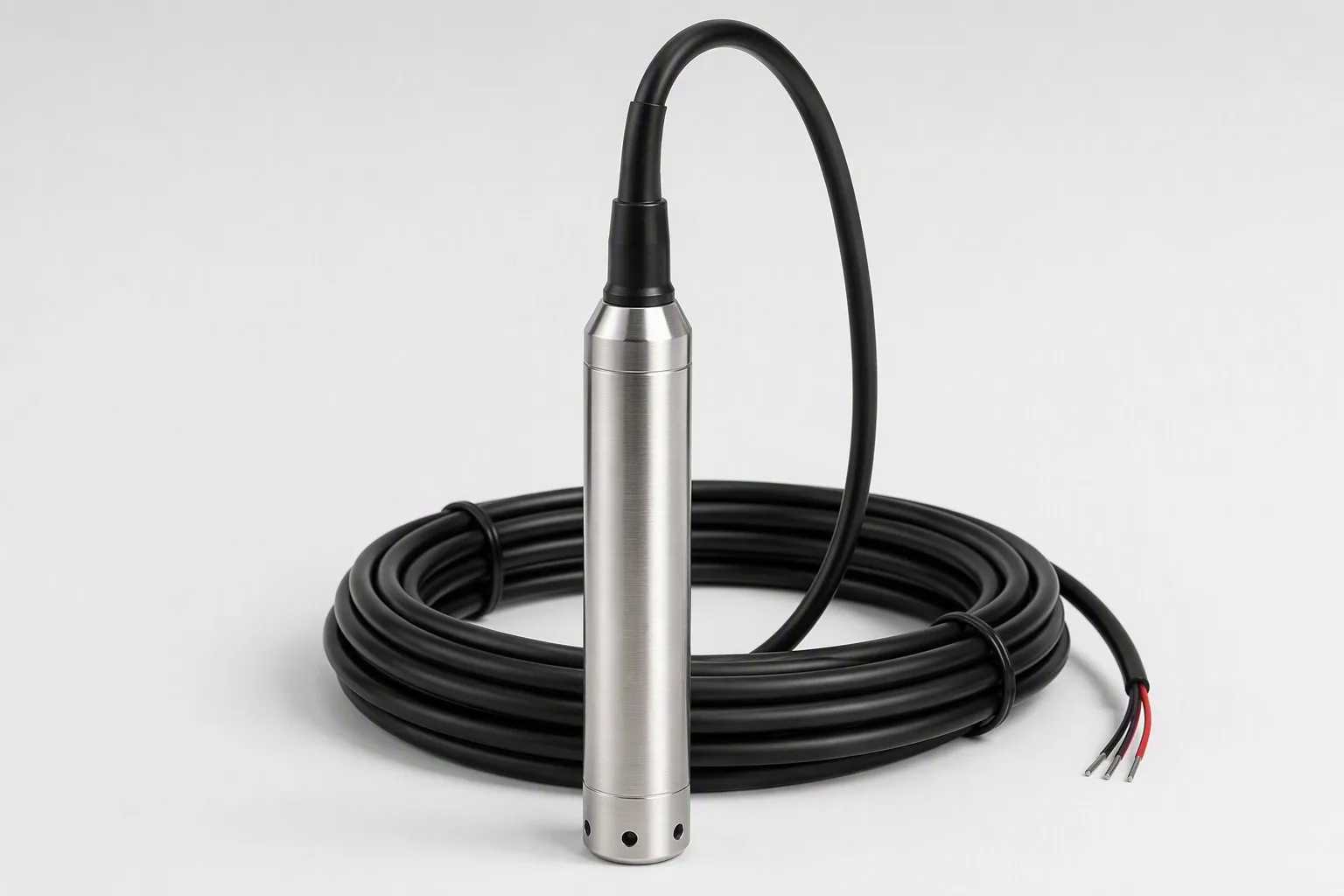
The GLT500 is a submersible level transmitter developed by GAMICOS for long-term immersion applications including water treatment, municipal fire protection, and hydrological monitoring. Its probe and vented cable form an integrated, fully sealed assembly that can be continuously submerged without requiring periodic retrieval for maintenance.
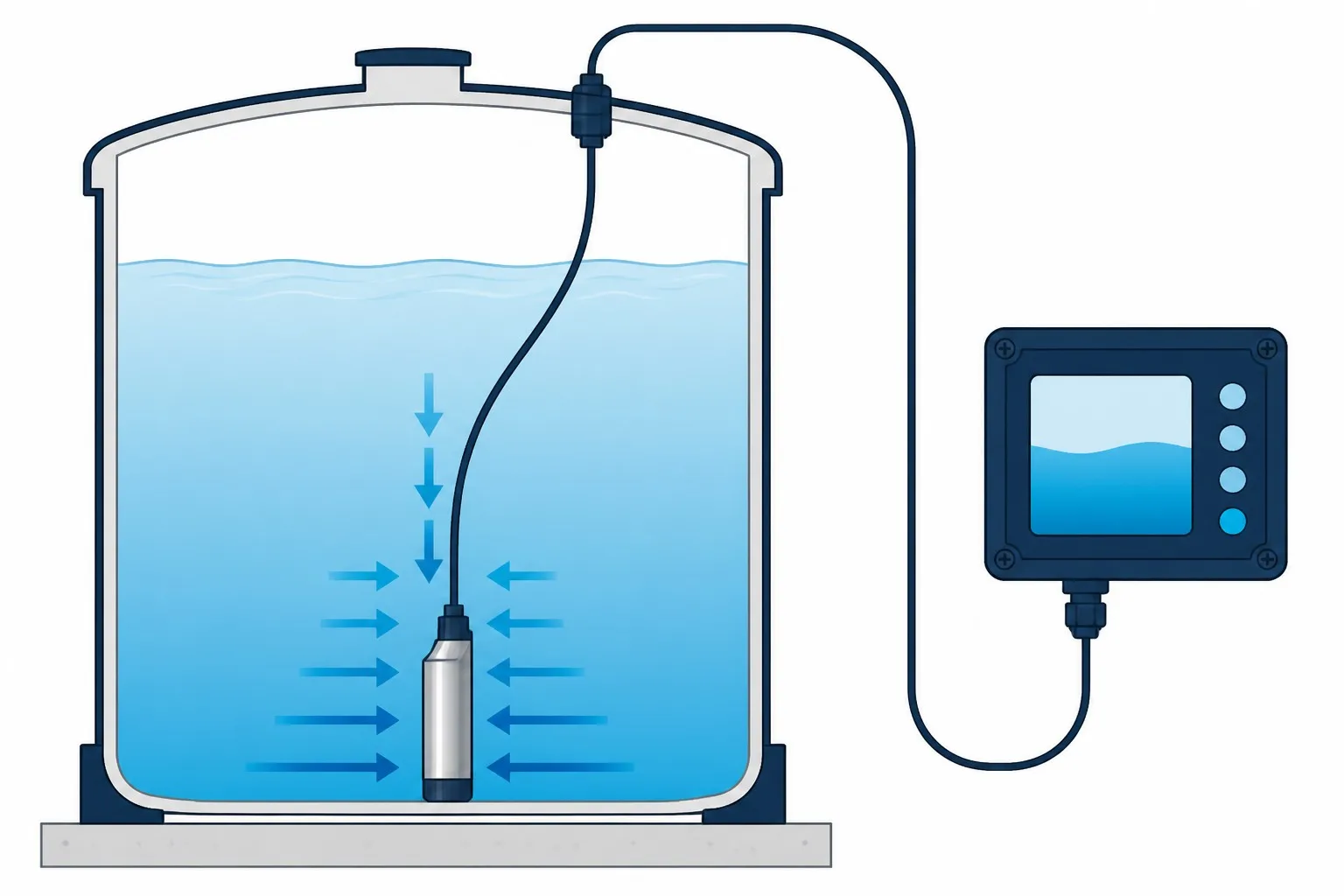
The GLT500 operates on the hydrostatic level measurement principle. When the probe is lowered to the bottom of the reservoir, the sensing diaphragm experiences pressure equal to the hydrostatic pressure of the water column above it, which is directly proportional to the liquid level height:
P = ρ · g · H
Hydrostatic measurement principle: pressure at the probe is proportional to liquid level height
An internal high-stability silicon piezoresistive sensing element converts this pressure into an electrical signal, which is then amplified and temperature-compensated to produce a standard industrial output.
A critical design feature is the vented cable: a capillary tube built into the cable connects the reference side of the sensing diaphragm to the atmosphere, ensuring that the measurement reference always tracks real-time ambient barometric pressure. This design inherently eliminates measurement errors caused by weather-related atmospheric pressure fluctuations — a prerequisite for maintaining long-term absolute accuracy.
Key Product Features
ACCURACY
High Accuracy for Early Leak Detection
Standard accuracy ±0.5% FS; optional ±0.2% FS. For a 10-meter range, this yields an error of just ±5 cm — a tenfold improvement over the ±50 cm error of float gauges. This level of precision enables trend-analysis algorithms to capture level drops of just a few centimeters at the very onset of leakage.
Directly addresses Pain Point 1
NO MOVING PARTS
All-Welded, Maintenance-Free Design
The 316L stainless steel housing is laser-welded — no threaded joints, no moving parts, and no mechanical contacts. This eliminates the jam-and-seizure failure modes common to float switches, eradicating the physical root causes of both false and missed alarms, and substantially reducing the need for personnel to enter the reservoir for manual checks.
Directly addresses Pain Points 2 & 3
IP68
IP68 Rating for Long-Term Submersion
The entire unit is IP68-certified for continuous underwater operation without risk of ingress. The sealing structure has been validated through pressure-cycle and thermal-shock testing to ensure stability in fire-reservoir applications where "install once, service for years" is the norm.
The cable's microporous hydrophobic vent tube keeps the reference pressure equal to real-time atmospheric pressure, eliminating systematic errors introduced by seasonal and weather-related barometric changes — ensuring long-term data comparability and effective trend analysis.
RS485
Noise-Immune Output with Surge Protection
Available with 4–20 mA two-wire analog or RS485 Modbus-RTU digital output. RS485 digital signals suffer no attenuation or distortion even in the high-EMI environment of a fire pump room over long cable runs (hundreds of meters). Built-in TVS transient voltage suppressors, with optional external surge protection modules, provide resilience in outdoor and lightning-prone areas.
Fundamentally solves Pain Point 4
NETWORKING
Digital Networking for Centralized Multi-Point Management
The RS485 Modbus-RTU protocol supports bus-based networking of multiple devices. Combined with data gateways, it enables centralized aggregation of data from dozens or even hundreds of reservoirs across an entire campus into a single management platform.
Breaks down the data silos of Pain Point 5
Technical Parameters
Parameter
Specification
Measuring Range
0–100 m / 0–200 m (customizable)
Accuracy
±0.5% FS (±0.2% FS)
Temperature Drift
< 0.02% / °C
Response Time
< 100 ms
Output Signal
4–20 mA / RS485 Modbus-RTU
Operating Temperature
-20 °C ~ +70 °C
Contact Materials
316L stainless steel (all-welded)
Ingress Protection
IP68
Surge Protection
Built-in TVS; external surge arrester optional
Certifications
CE / RoHS
Customer Case Study: Digital Fire System Upgrade at a Central European Business Park
Project Background
This business park, located in Central Europe, comprises 50 Class-A office buildings with a total floor area of 2.68 million m², making it one of the region's leading commercial campuses. The buildings were completed between 2005 and 2012, with the original fire-reservoir monitoring consisting of "float switch + local alarm light" setups.
The 50-building business park campus — fire-water monitoring unified across all reservoirs
As the buildings entered mid-to-late service life, the property management team faced growing issues: on average, 2–3 buildings per month experienced float-switch seizure failures; the false-alarm rate at the central control room reached 8–12%; maintenance staff had to conduct weekly physical inspections to verify actual water levels — a heavy labor burden with confined-space safety risks. Worse still, at the campus level, there was no visibility into the overall water level status. Any leak could only be detected manually, with an average lag of 3–7 days.
Core Requirements
Real-time, accurate water-level data for each building's reservoir
Leak detection and alerting within 24 hours of occurrence
A unified data management platform covering all 50 buildings across the campus
7×24 unattended automatic monitoring to eliminate reliance on manual inspections
Solution
Hardware Deployment
Based on the varying reservoir volumes and configurations of each building, 1–3 GLT500 units were deployed per building, totaling 120 units across the campus. Probes were lowered through existing reservoir access hatches and secured to fixed brackets at the bottom — installation required no draining of the reservoirs and did not affect the fire system's standby readiness.
Configuration Item
Selection
Model
GLT500 Submersible Level Transmitter
Measuring Range
0–10 m (per individual reservoir depth)
Accuracy
±0.5% FS
Output Signal
RS485 Modbus-RTU
Wetted Materials
316L stainless steel
Ingress Protection
IP68
Quantity Deployed
120 units (covering 50 buildings)
System Integration
GLT500 units in each building were connected via RS485 buses to floor-level data acquisition gateways. The gateways aggregated data over the campus Ethernet backbone to a central BMS (Building Management System). A web-based management platform displayed real-time water-level status for all 50 buildings on a campus map, with historical trend charts and cross-building comparative analysis available for any measurement point.
Alarm Logic
The platform implemented a three-tier alarm scheme for each reservoir:
AdvisoryLevel < 95% of design capacity
Early awareness that the reservoir is not at full design level.
WarningLevel < 90%
Notification pushed to the property manager.
EmergencyLevel < 85%
Alert to both property management and the local fire authority.
In addition, the platform incorporated a leak-trend identification algorithm: if any measurement point showed a sustained unidirectional downward trend without any known refill operation, it would generate a "suspected leak" advisory even if no alarm threshold had yet been triggered.
Results
10× accuracy
Measurement Accuracy
From ±5% (float gauge) to ±0.5% FS. For the 10-meter reservoirs, the error band narrowed from ±50 cm to ±5 cm, enabling detection of incipient leaks.
< 24 h vs 3–7 days
Leak Discovery Time
In the first year of operation, the trend-analysis algorithm successfully detected 7 early-stage leaks — all repaired before any structural damage occurred.
0.3% false-alarm rate
Alarm Credibility Restored
Reduced from 8–12% to below 0.3%. The all-welded, moving-parts-free design eliminated float-seizure failure modes, significantly improving operator response quality.
-92% inspection manhours
Manual Inspection Effort
Annual inspection manhours reduced from 260 to 20 hours, with labor-cost savings of approximately 65% — equivalent to USD 120,000 per year — while dramatically reducing confined-space safety exposure.
99.5% availability
System Availability over 4 Years
All 120 units remained stable under continuous submersion, with zero monitoring interruptions attributed to sensor failure.
5 months payback
Return on Investment
Including labor savings, avoided leakage damage, and insurance-premium reductions, total first-year benefits reached USD 980,000.
Conclusion
The GLT500 deployment at this business park successfully transitioned the building fire-water systems from experience-based to data-driven management. The all-welded 316L construction and IP68 protection resolved the reliability challenges of long-term submersion; ±0.5% FS accuracy combined with vented-cable compensation made early leak detection feasible; and RS485 digital networking broke down data silos across buildings, delivering campus-wide fire-safety situational awareness for the first time.
This solution has since been replicated across commercial complexes, data centers, hospitals, industrial parks, and other multi-building facilities. For property managers overseeing large portfolios, the GLT500 delivers more than just level data — it provides an auditable, traceable, and pre-alertable fire-water reserve assurance system. Full return on investment is typically achieved within six months.