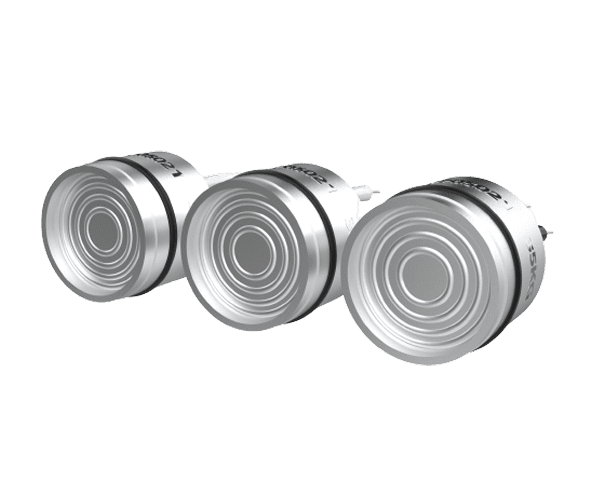
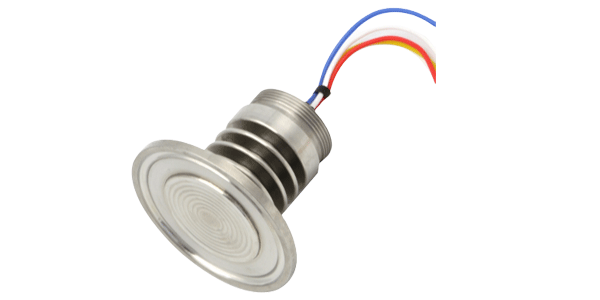
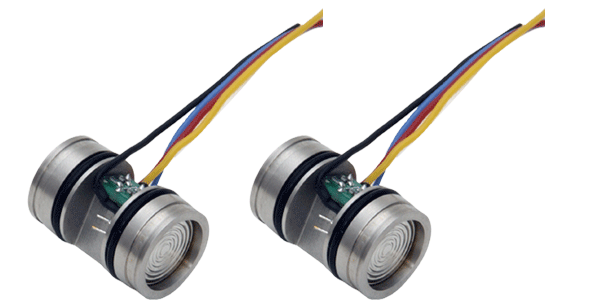
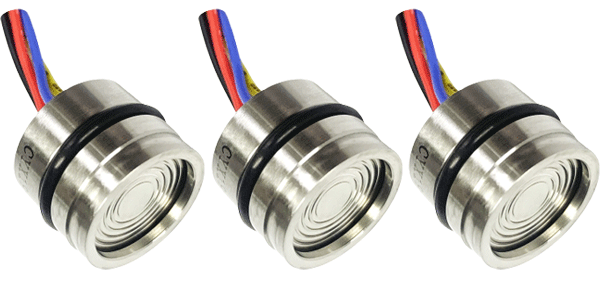




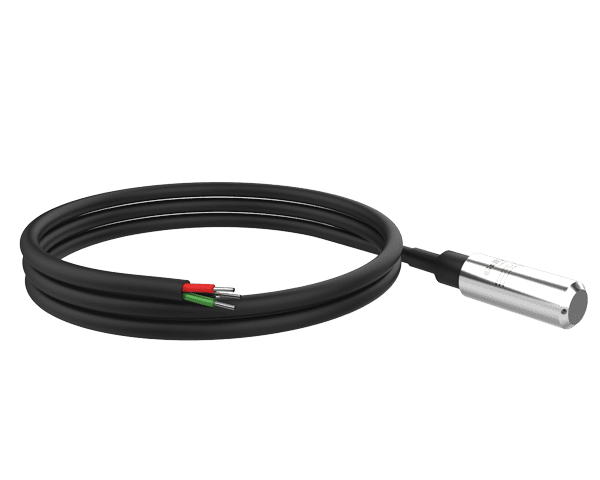
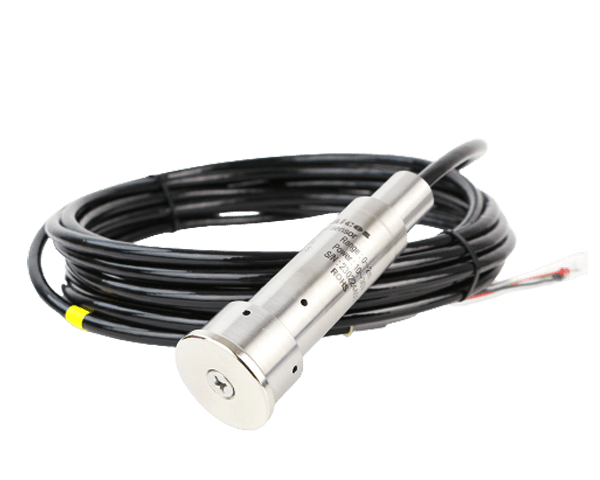
You can buy a submersible level sensor for $50 — or spend $500 on one that looks almost identical. On the outside, both have a stainless-steel body, a cable, and a pressure port. So where does the extra money go? And more importantly, is the expensive one always the right choice?
This guide breaks down the six areas where cheap and expensive submersible sensors genuinely differ, helping you decide where to invest and where you can save. Whether you are specifying sensors for a municipal water network, an industrial process, or a remote monitoring station, understanding these differences will prevent both over-spending and premature failures. We will use the GAMICOS GLT500 as a real-world example of a premium-grade submersible sensor, and compare its construction against typical budget alternatives.
1. Diaphragm and Pressure-Sensing Element
The sensing element is the heart of any submersible pressure sensor — and the single biggest cost driver. Premium sensors typically use a piezoresistive silicon or ceramic sensing cell manufactured by a reputable foundry. These cells undergo laser-trimmed compensation and are individually calibrated against traceable pressure standards.
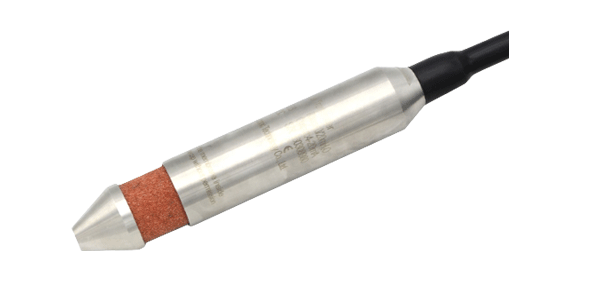
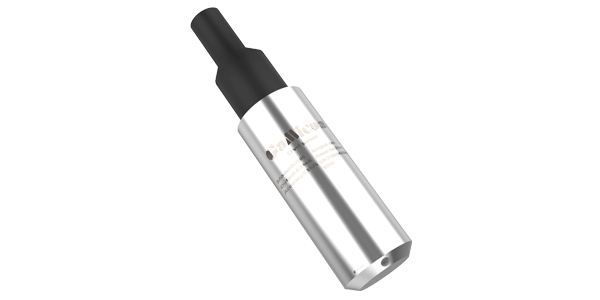
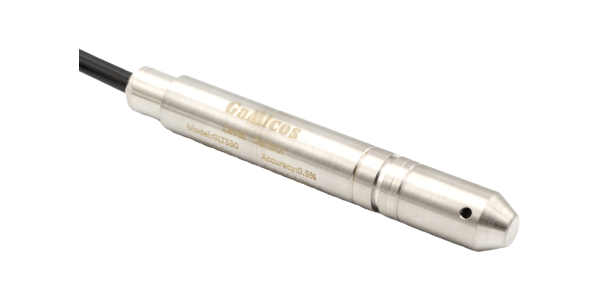
The GLT500 water tank level sensor, for example, uses a silicon piezoresistive core as its sensitive element, with an integrated design that ensures long-term stability. Its comprehensive error is rated at ±0.5% FS standard (with ±0.25% FS available for higher-precision applications) and its long-term drift is held under ±0.2% FS per year — meaning the sensor keeps its accuracy over years of continuous submersion.
Budget sensors, in contrast, often use a generic, unbranded sensing element with minimal or no individual calibration. The diaphragm material may also be thinner, making it more susceptible to pressure spikes and fatigue over time. A typical budget sensor can drift by 2–5% FS within the first year — enough to make your tank readings unreliable.
Key distinction: The sensing element accounts for roughly 30–40% of the total manufacturing cost. This is where "cheap" cuts the deepest — you literally cannot see the difference from the outside, but it shows up in long-term drift data.
2. Sealing Technology and Long-Term Waterproofing
Submersible sensors live underwater permanently. If water reaches the electronics, the sensor is dead — and so is your data. The quality of sealing between the cable and the sensor body is the second most important cost differentiator.
Premium sensors use multiple redundant seals: an O-ring face seal, a potting compound (usually epoxy or polyurethane), and often a vent tube integrated directly into the cable jacket for atmospheric pressure reference. The GLT500 , for example, is rated IP68 with an integrated vent tube inside its cable — so even after long-term submersion, atmospheric pressure compensation remains stable, and the cable entry stays sealed against capillary water ingress.
Budget sensors often rely on a single layer of potting compound at the cable entry, with no dedicated vent path. Over time, thermal cycling causes the potting to micro-crack, and water creeps in — typically within 12–24 months of submersion. The failure is silent: the sensor keeps sending readings, but they drift progressively until total failure.
Key Takeaway
If your sensor will be submerged continuously for more than one year, the sealing quality matters more than the accuracy spec. A ±0.1% sensor that floods in 18 months is more expensive than a ±0.5% sensor that lasts 10 years. Sensors like the GLT500 are specifically engineered for continuous submersion up to 200 m, making them suitable for deep wells, reservoirs, and long-term outdoor deployments.
3. Temperature Compensation Circuitry
Water temperature fluctuates — daily, seasonally, and with depth. Pressure sensing elements are inherently sensitive to temperature changes. Premium sensors include a dedicated temperature sensor and compensation circuit that corrects the pressure reading in real time.
The GLT500 uses a compensated temperature range of −10 °C to +70 °C, while its operating range extends further to −30 °C to +80 °C. This means readings remain accurate across most climate-zone deployments — from freezing winter reservoirs to warm industrial process tanks.
Budget sensors either omit temperature compensation entirely or apply a single-point factory correction that only works accurately at room temperature. In real-world conditions where water temperatures swing by 15–20 °C between seasons, an uncompensated sensor can introduce errors of 1–3% FS purely from thermal drift.
4. Signal Conditioning and Output Stability
The electronics board inside the sensor converts the raw sensing element signal into a stable, usable output (4–20 mA, 0–5 V, or RS-485). Premium sensors use high-precision amplifiers, low-noise voltage references, and surge protection circuitry. The output is stable, linear, and immune to electrical noise from nearby pumps and motors.
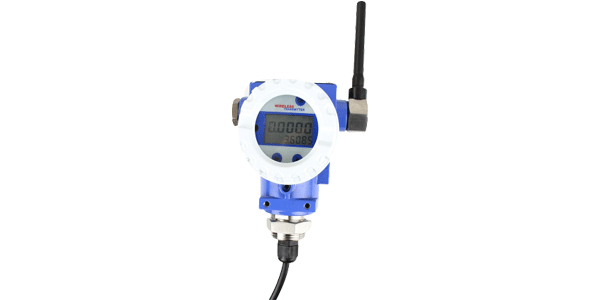
A major practical advantage of industrial-grade sensors like the GLT500 is flexible output options in a single unit. The GLT500 supports 4–20 mA, 0–5 V, 1–5 V, 0.5–4.5 V, 0–10 V, and RS-485 (Modbus RTU), so the same sensor can be plugged directly into PLCs, panel meters, SCADA systems, or data loggers — no extra signal converter required. Power supply is also flexible at 5 V DC or 10–30 V DC.
Budget sensors often use minimal signal conditioning — sometimes just a basic op-amp circuit with no filtering. The result is noisy, jittery readings that fluctuate even when the water level is constant. In a data-logging application, this noise translates to hundreds of false level-change events per day.
5. Material Quality and Corrosion Resistance
Both budget and premium sensors may claim "316L stainless steel" housing, but the actual material quality and surface treatment differ significantly:
- Premium: Genuine 316L with electropolished internals, passivated surfaces, and CNC-machined dimensional tolerances. The GLT500 water level transmitter uses 316L stainless steel for both the housing and the diaphragm, providing broad compatibility with freshwater, seawater, and mild chemicals — ideal for rivers, lakes, and chemical tanks.
- Budget: May use 304 stainless or a lower-grade alloy stamped "316L". Surface finish is rougher, creating micro-crevices where corrosion initiates. Cable is often PVC, which degrades and hardens after 2–3 years underwater.
In corrosive environments (seawater, wastewater, chemical tanks), these material differences are the difference between a 10-year service life and a 2-year replacement cycle.
6. Certification, Traceability, and Quality Assurance
This is the area most buyers overlook — and where premium manufacturers add the most value. Established manufacturers like GAMICOS ship sensors that have passed CE, RoHS, and ATEX testing (the GLT500 carries all three), with batch-level traceability, individual calibration certificates, and full mechanical shock/vibration ratings (20 g vibration, 100 g shock on the GLT500).
Budget sensors often come with no individual calibration certificate, undocumented IP68 ratings, and no hazardous-area certification. The price tag may be lower — but the operational and legal risk is higher.
| Factor | Budget Sensor | Premium Sensor (e.g., GLT500) |
|---|---|---|
| Calibration certificate | None or generic batch certificate | Individual 3-point or 5-point certificate with traceable serial number |
| Pressure test | Spot-checked or untested | 100% pressure-cycled before shipment |
| IP68 proof | Claimed but undocumented | Tested to rated depth (e.g., 200 m on GLT500) for rated duration |
| Hazardous area cert | Not available | ATEX / IECEx / CSA available (where applicable) |
| Batch traceability | None | Full DMC (device management chain) records |
| Mechanical ratings | Not specified | Documented vibration & shock ratings (e.g., 20 g / 100 g) |
Why this matters: If a sensor fails in a critical application (e.g., flood warning, chemical overflow), the absence of a calibration certificate and batch traceability means you cannot prove the sensor was fit for purpose. This has legal and regulatory implications — and is why many industrial tenders now require CE / ATEX certification as a minimum.
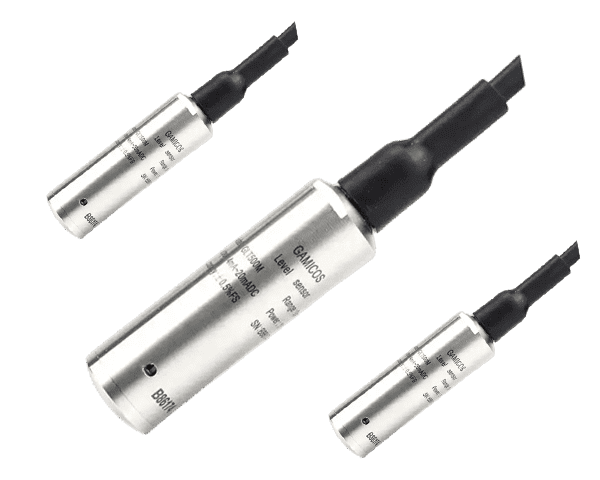
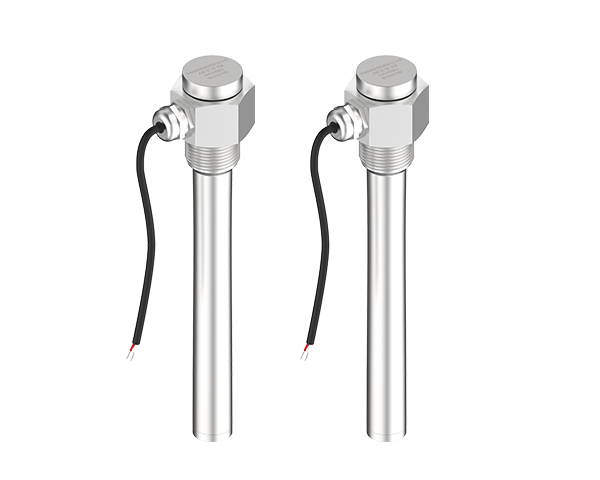
GAMICOS GLT500 Submersible Level Sensor
A premium-grade hydrostatic level sensor built for continuous submersion in tanks, wells, rivers, and chemical tanks — up to 200 m depth.
Quick Comparison: Where the Money Goes
Understanding the cost structure helps you identify which premium features are worth paying for in your specific application:
| Cost Component | Budget ($50–$80) | Premium ($300–$500, e.g., GLT500) | Impact on You |
|---|---|---|---|
| Sensing element | Generic unbranded | Calibrated silicon piezoresistive | Accuracy & drift |
| Sealing | Single potting | O-ring + potting + vent tube | Service life |
| Electronics | Basic op-amp, no filter | Precision amp + surge protection | Signal stability |
| Temperature comp. | None or single-point | Real-time digital compensation | Seasonal accuracy |
| Materials | 304 SS / PVC cable | 316L SS / PUR cable | Corrosion resistance |
| QA & certification | Minimal | Full traceability + CE/RoHS/ATEX | Regulatory compliance |
When to Choose Budget vs. Premium
The answer is not always "buy the expensive one." The right choice depends on your application criticality, maintenance access, and expected service life.
Choose Budget When:
• The application is non-critical (e.g., a decorative pond, a rainwater tank)
• The sensor is easily accessible for periodic replacement
• Water temperature is stable year-round
• Accuracy of ±2–3% is acceptable
• Budget is genuinely the binding constraint
Choose Premium (e.g., GLT500) When:
• The sensor monitors critical infrastructure (water supply, flood warning, chemical process)
• The sensor is installed in a deep well or submerged location where retrieval is costly
• Water temperature varies significantly across seasons
• Regulatory compliance requires calibration certificates and CE/ATEX
• The media is corrosive (seawater, wastewater, chemicals)
• Downtime cost far exceeds sensor cost
• You need flexible output (4–20 mA, RS-485, voltage) from a single SKU
Frequently Asked Questions
Q: Can a cheap submersible sensor be "good enough" for short-term projects?
Yes. For temporary installations of 6–12 months in non-corrosive water at stable temperatures, a budget sensor will deliver usable data. The risk increases with submersion duration, temperature variation, and media corrosiveness. Plan to replace budget sensors at least once per year. For longer deployments, an industrial-grade sensor like the GLT500 provides significantly better long-term value.
Q: What is the typical lifespan difference between budget and premium submersible sensors?
In continuous submersion under normal freshwater conditions, budget sensors typically last 1–3 years before failure or significant drift. Premium sensors are designed for 7–10+ years. The GLT500, for example, is rated for continuous submersion up to 200 m with a long-term stability of ±0.2% FS/year. In corrosive media, the gap widens further — budget sensors may fail in under 12 months, while premium units with proper material selection can exceed 5 years.
Q: Is it worth upgrading only the sensing element while keeping other components budget-grade?
Not recommended. A high-grade sensing element in a poorly sealed housing will still fail when water ingresses. The value of a premium sensor comes from the system-level integration — good element + good sealing + good electronics + good materials. Upgrading one component while skimping on others negates the benefit.
Q: How can I verify a sensor's quality claims before purchasing?
Ask the manufacturer for: (1) an individual calibration certificate with serial number, (2) material certificates for the housing and diaphragm, (3) IP68 test data including depth and duration, and (4) long-term drift test data. GAMICOS, for instance, provides full documentation with every GLT500 unit including CE, RoHS, and ATEX certificates. A manufacturer who cannot provide these is almost certainly selling a budget-grade product regardless of the price tag.
Conclusion: Pay for What Matters
The price gap between cheap and expensive submersible sensors is not arbitrary markup — it reflects real differences in sensing element quality, sealing reliability, signal conditioning, temperature compensation, materials, and quality assurance. The mistake is not choosing a budget sensor; the mistake is choosing a budget sensor for a premium application.
By understanding which cost components matter most for your specific use case — sealing for long-term submersion, materials for corrosive media, temperature compensation for variable climates — you can make a targeted investment that delivers the best value, not just the lowest or highest price.
If your application demands long-term reliability, accurate readings across temperature variations, and verifiable quality, a sensor like the GAMICOS GLT500 delivers the right balance of performance, durability, and total cost of ownership. Share your operating conditions (media, depth, temperature range, criticality) with our engineering team, and we will recommend the right configuration — no over-specification, no under-specification.